REVIEW · TORONTO
Old Town Toronto Highlights 3 Hour Walking Tour | Gratuity-Based
Book on Viator →Operated by Vancouver Toonie Tours Ltd. · Bookable on Viator
Downtown tunnels and big-city history in three hours. This gratuity-based Old Town Toronto walking tour blends street-level architecture with a trip through The Path under the financial core, plus plenty of practical tips for first-time visitors. I really like the low-sticker entry price and the way the guide keeps the group moving, but it is still a lot of walking and the pace can feel brisk at some stops.
I also like how flexible it is for your schedule. You can pick from different start times, and you can choose an English or Spanish-speaking guide, which matters in a city where downtime often turns into confusion.
One more thing: since it’s gratuity-based, your total cost is not just the $5 booking fee. If you’re hoping for lots of downtime or a slow, sit-and-stretch style tour, this one may feel more talk-heavy than you expect.
In This Review
- Key highlights worth your time
- Getting oriented: meeting at Berczy Park and why this route works
- Berczy Park to the Gooderham Building: Toronto’s quirky start
- Old Toronto facades and the Old Toronto Post Office stop
- Financial District towers: big banks, tint choices, and street-level realism
- Enter The Path: underground shortcuts when the weather turns
- Old City Hall and the public-service look: the details you’ll miss alone
- Campbell House Museum area: maple syrup stories without needing a ticket
- Entertainment District to CN Tower vibes: murals, music venues, and what to do at night
- David Pecaut Square and Terry Fox: a pause with meaning
- Nathan Phillips Square and the Toronto Sign: the photo stop that doubles as a rest
- Brookfield Place: arches, hockey talk, and a big indoor view
- Concert hall, theatre, and the TIFF area: where Toronto performs
- Toronto Union at the end: your transit questions get real answers
- Guides, pacing, and what you should bring
- Should you book the Old Town Toronto Highlights walking tour?
- FAQ
- Is the tour really only $5?
- Do I have to pay admission to see the stops?
- What languages are available?
- Where do I meet, and where does the tour end?
- Does the tour include The Path underground?
- Can I cancel for a full refund?
Key highlights worth your time
- The Path tunnel walk: a real underground shortcut system that links much of downtown
- Berczy Park warm-up: William Berczy stories plus the famous dog fountain vibe
- Photo-ready Toronto Sign: a quick stop in Nathan Phillips Square for that classic candid shot
- City Hall details: Renaissance-style Old City Hall and the story behind E.J. Lennox
- Terry Fox moment: David Pecaut Square and the Eternal Flame of Hope for the Disabled
- Different downtown worlds in one route: finance, entertainment, transit, and civic Toronto
Getting oriented: meeting at Berczy Park and why this route works
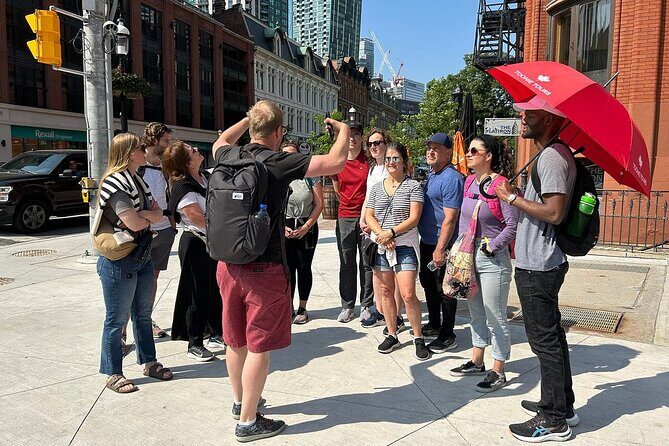
I like starting in Berczy Park because it feels like a true neighborhood beginning, not a “stand in front of a landmark and suffer” start. The meeting point is 35 Wellington St E, and the tour loops back to the same spot at the end. That makes it easy to plan lunch or hotel check-in after.
You’re out in the center of Toronto for the full experience, and the route is designed to connect the major story zones without making you figure out directions on your own. The tour is about 3 hours, and the group size is kept to a maximum of 30, which helps the guide manage the timing and keep everyone together.
Also, this is a good choice if you’re trying to compress Toronto into a single “what matters most” evening or morning. You’ll hit the historic core, the financial district, the entertainment area, and the transit hub near the end, so the tour naturally turns into a practical orientation.
Other Old Town Toronto tours we've reviewed in Toronto

Berczy Park to the Gooderham Building: Toronto’s quirky start
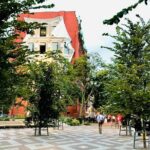
Berczy Park is where the tour earns its keep right away. It’s described as whimsical, and your guide will explain who William Berczy was and how the park became part of the city fabric. The dog fountain is the obvious visual draw, but the point of the stop is the story behind why the details exist and how Torontonians think about public art and public space.
From there, you move to the Gooderham Building, the famous flatiron-style landmark on Front Street. Your guide will point out the red-brick look and the triangular shape that makes it so recognizable from a distance. What I like here is the angle your guide takes: how Toronto’s downtown was shaped by ambition, and how this building’s timing mattered in the city’s early growth.
Tip for you: bring your phone camera. Even if you’re not a “photo person,” the geometry of these buildings is hard to fully appreciate without seeing it through a lens.
Old Toronto facades and the Old Toronto Post Office stop
Next comes the historic-street energy of Old Toronto. The focus here is on facades and what they suggest: who built what, what changed, and how the city layers itself over time. The stop at the Old Toronto Post Office is especially fun if you like the idea that old architecture can still play a role in modern life.
Your guide may mention that it can double as a film set for a TV production, depending on what’s happening around town. Even if that’s not actively “in the news” that day, it helps you see the building as more than just a relic. It’s part of Toronto’s working visual identity.
One caution: the tour is story-forward. If you want every stop to be pure sightseeing with minimal listening, you may feel the pacing shifts from place to place.
Financial District towers: big banks, tint choices, and street-level realism
The Financial District stop is short on purpose, but it’s built for understanding. You’ll look up at the skyscrapers and learn why so many of Canada’s major banks have headquarters concentrated in these blocks. You’ll also hear about the choice of window tint colors within these city streets—small details like that are exactly what makes the stop feel like more than a “look at tall buildings” moment.
I like this segment because it gives you a reason to notice what you’d otherwise ignore. When you walk these blocks later on your own, you’ll already have a framework for what you’re seeing: corporate power, urban design decisions, and how the street crowd changes with the time of day.
Enter The Path: underground shortcuts when the weather turns
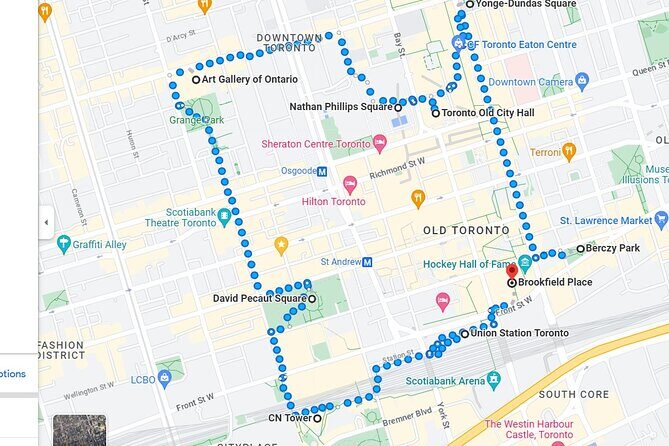
This is the stop that often convinces people the tour is worth it. You go underground from Commerce Court and enter The Path, Toronto’s tunnel system that connects a lot of the downtown core. The big idea for you is simple: Toronto’s weather can swing hard, and The Path turns a walk in bad conditions into a protected route.
Your guide will explain that the style of each section can differ because building owners shape the interiors. That’s why it doesn’t feel like one long, identical corridor. You get little contrasts as you move through it—changes in layout, finishes, and overall mood—so your brain stays engaged.
A practical note: it’s still walking, just with indoor surfaces. If you’re traveling in winter, this part can save your day. One past highlight in the tour’s vibe is that people like it specifically when snow is heavy, because it helps you move without fighting the elements.
Other walking tours we've reviewed in Toronto

Old City Hall and the public-service look: the details you’ll miss alone
When you reach Old City Hall, the tour shifts toward architecture again. The building uses Renaissance-style design, and your guide will point out hidden details that most people simply don’t slow down to notice. You’ll also hear the story connected to E.J. Lennox and his approach to leaving a mark on the building’s design.
Right after that, you’ll see where the public service works today before continuing on toward the next historical stop. I like the way this segment connects civic identity to everyday function. It’s not only about old stone. It’s about how government and city institutions shape what’s around you.
Campbell House Museum area: maple syrup stories without needing a ticket
At Campbell House Museum, you don’t go inside on this walk, but you still get the “why it matters” version. The house dates to 1822, and your guide will share stories that connect the building to Canadian identity themes, including maple syrup and what makes Court Justice Campbell legendary.
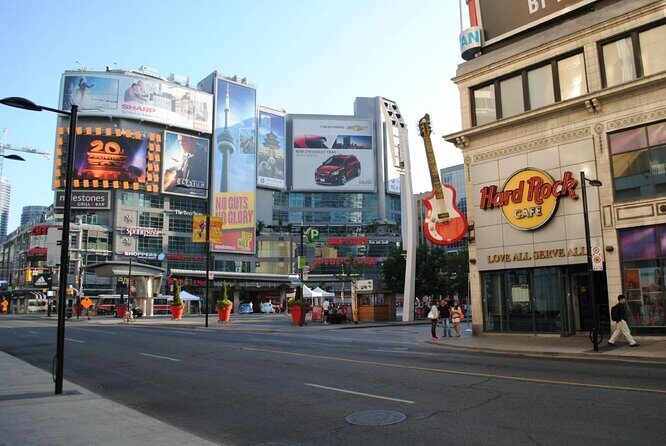
There’s also mention of the Canada Life weather tower in the distance, which is a neat kind of Toronto map trick. It helps you connect what you’re seeing underground and on the street to bigger city landmarks.
If you like history but also prefer hands-on learning, this is a stop that can create a to-do list. The tour specifically recommends returning later and even joining a cooking class that the museum offers.
Entertainment District to CN Tower vibes: murals, music venues, and what to do at night
As you head into the Entertainment District, the street atmosphere changes. You’ll notice street art murals and get a sense of how music venues show up in the neighborhood. The CN Tower may hover in the skyline above you, and your guide will help with the timing for getting a good shot when it peeks between buildings.
This section is also where the guide’s local recommendations start to feel useful. You’ll hear about the nightlife options, whether that’s dancing and drinks or evening shows of theatre. If you only have a day or two in Toronto, this part gives you a path from “I’m here” to “I know what I can do tonight.”
David Pecaut Square and Terry Fox: a pause with meaning
David Pecaut Square is where the tour gets quieter in a good way. You’ll visit the Eternal Flame of Hope for the Disabled, and your guide will talk about Terry Fox and why his story matters. The focus is on his diagnosis and the next steps he took after cancer affected his life and future.
I appreciate this stop because it grounds the rest of the tour. After finance and entertainment, you’re reminded that Toronto is also shaped by national figures and public memory.
Nathan Phillips Square and the Toronto Sign: the photo stop that doubles as a rest
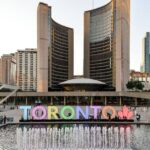
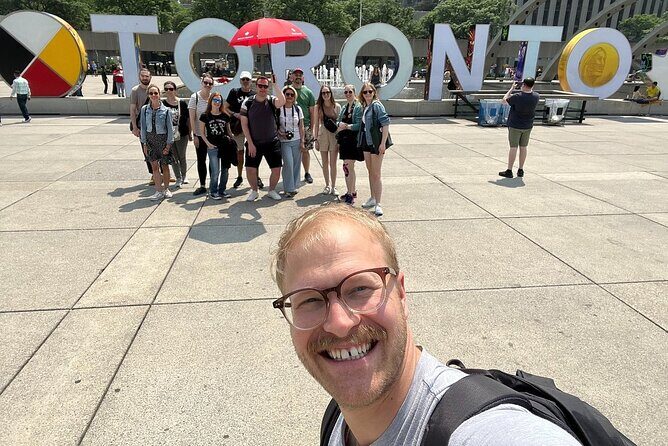
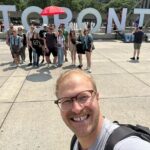
Then you hit the big, tourist-proof photo moment: the Toronto Sign at Nathan Phillips Square. It’s a quick stop, designed for that candid picture where your friends can tell you’re really in the city and not stuck at the airport.
You’ll also get a short rest period here, which matters more than people think. The tour notes that it’s time for the public toilet and a chance to browse markets if they’re happening.
If you’ve walked through the financial core and The Path already, this rest feels like a reset. It’s also the moment where the guide can check in with you about what you want to do next.
Brookfield Place: arches, hockey talk, and a big indoor view
After the square, the tour heads toward Brookfield Place, where the interior space and architecture do the work for you. Your guide will point out high ceilings, white arches, and an older banking facade look.
This stop also comes with a very Toronto kind of theme: hockey and the connection to Hockey Hall of Fame. Even if you’re not a hockey fan, it’s an easy way to learn what Toronto is proud of and how the city markets itself through sports culture.
If you’re traveling in cold months, this is also one of those stops that can feel like relief, because you’re moving through a controlled environment.
Concert hall, theatre, and the TIFF area: where Toronto performs
The tour then slides through the performance world: you’ll pass by an intimate concert venue known for acoustics and connected with the Toronto Symphony Orchestra. Next is an opulent century-old beaux arts style theatre that hosts touring plays and musicals. Finally, you’ll see where the TIFF festival takes place.
I like that this section is short but focused. It tells you that Toronto’s identity isn’t only about skyline and streetcars. It’s also about the arts calendar and the places you’ll actually want to remember for later.
And if you’re the practical type, this helps you plan: you’ll know what kind of venues exist near each other, so you don’t waste time hunting for tickets on the fly.
Toronto Union at the end: your transit questions get real answers
Near the end, you arrive at Toronto Union, one of the city’s most important hubs. It’s a solid “wrap-up” location because it’s right where you’ll naturally go next, whether you’re taking the TTC, GO Train, VIA Rail, or a bus.
Your guide will answer questions about getting around, and you’ll also learn how Toronto Union and The Path connect as part of the city’s movement system. The practical value here is huge: even if you don’t use transit that day, you’ll know what your options are once you leave the tour.
Guides, pacing, and what you should bring
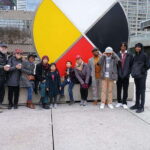
The guide experience matters a lot on a tour like this, and there’s a strong pattern in the way different guides are described. Guides such as Alex and Maya have been praised for encouraging conversation and using photos to help you picture history. Joel has been singled out for helping people get great shots at the Toronto Sign, and Maria and Zak are mentioned for being friendly and easy to hear.
That said, pacing is the thing you should plan around. The tour is built as a walk with frequent story stops, so you’ll be standing at some points and walking quickly at others. If you’re older or have mobility limits, this is the part to take seriously.
Bring water, and consider a small snack. A past participant also noted the walk can feel like around 7 km, even though it’s spread over a few hours. Comfortable shoes are not optional for a route like this.
Should you book the Old Town Toronto Highlights walking tour?
Book it if you want the best kind of first impression: the city’s big landmarks plus the practical context that makes them make sense. It’s also a strong pick for winter or shoulder season because The Path can save you from bad weather while still giving you variety.
Skip it or choose a different style of tour if you need lots of sitting time or you dislike tours that are heavy on narration. The route is designed to keep moving, and the stops can involve extended explanations.
If you’re arriving in Toronto with limited time and you want to get your bearings fast, this tour is one of the simplest ways to do it.
FAQ
Is the tour really only $5?
The price shown is $5 per person, and the tour is described as gratuity-based. The information also notes that gratuities are not included, and that fees paid here are booking fees.
Do I have to pay admission to see the stops?
No. The tour’s stops are listed as Admission Ticket Free, so you’re not paying separate entry fees at each location during the walk.
What languages are available?
The tour offers guides in English, and Spanish when that language is selected.
Where do I meet, and where does the tour end?
You meet at Berczy Park, 35 Wellington St E, Toronto. The tour ends back at the same meeting point.
Does the tour include The Path underground?
Yes. One of the main highlights is going underground into The Path from Commerce Court.
Can I cancel for a full refund?
Yes. You can cancel for a full refund if you cancel at least 24 hours before the experience’s start time. If you cancel within 24 hours of the start time, the amount paid is not refunded.