REVIEW · TORONTO
Toronto Essentials Tour: Old Town & Downtown Highlights (PWYC)
Book on Viator →Operated by Tour Guys · Bookable on Viator
Two hours, and Toronto clicks into place. This tour gives you a smart overview of Old Town and downtown, with stand-out stops like CN Tower viewpoints and a guided walk through part of the PATH. I also like how the route mixes grand public buildings with street-level details, so you come away with a clearer sense of where Toronto’s money, religion, and modern identity meet.
One thing to keep in mind: it’s time-tight. You get quick looks at big landmarks, so if you want long indoor visits or slow photo sessions, you’ll need to plan follow-up stops on your own.
In This Review
- Quick take: what really makes this tour work
- Starting at Union Station Great Hall: where you’ll actually find your guide
- CN Tower and the Royal York Hotel: skyline power in plain sight
- Learning Toronto’s underground: a short PATH walk that saves real energy
- Brookfield Place: Calatrava’s white-glass wow moment and the idea of public space
- Old Town anchors: Berczy Park dog fountain, St. James Cathedral, and the politics-religion mix
- Berczy Park and the dog fountain
- The Cathedral Church of St. James
- Financial District on foot: banks like cathedrals, plus a useful history punch
- City Hall and Nathan Phillips Square: the finish that feels like Toronto’s living room
- Price and value: why PWYC works especially well for a short downtown walk
- Who should book this Toronto Essentials Tour?
- Should you book it or skip it?
- FAQ
- How long is the Toronto Essentials Tour?
- Where does the tour start and end?
- What time does the tour leave?
- What’s the price?
- What language is the tour in?
- Will the guide help with getting around the PATH?
- What if I’m late?
- What is the cancellation policy?
Quick take: what really makes this tour work
- CN Tower sightlines without the usual wandering
- A guided PATH segment that helps you avoid getting turned around
- Brookfield Place and its Calatrava-designed public space energy
- Old Toronto anchors: Berczy Park dog fountain and St. James Cathedral
- A finish at Toronto City Hall + the TORONTO sign with a great public-squares vibe
- Small group feel (up to 30) for an easier walk-and-learn pace
Starting at Union Station Great Hall: where you’ll actually find your guide
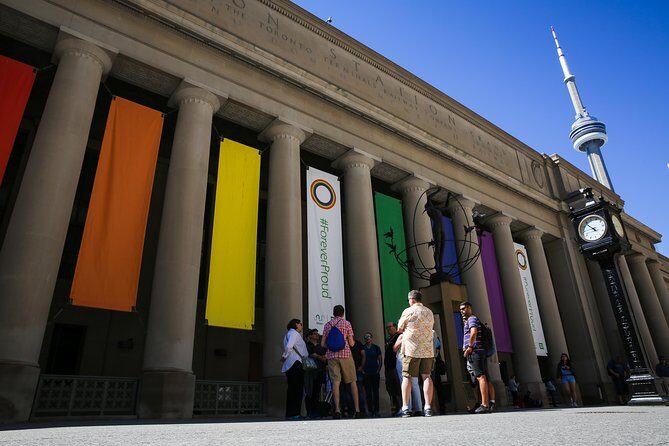
Union Station is one of Toronto’s most confusing “where do I meet” spots, mostly because there are multiple tourist areas that look important. The good news here is that the meeting point is inside the station, in the Great Hall, above ground, with huge windows and high ceilings.
Here’s how to spot it without stress:
- look for the big, open room with a high ceiling
- find the tourist info booth under a clock in the center area of that Great Hall
- plan to meet your guide near that booth, not out on the sidewalk
Why this matters for your trip: if you start clean and calm, the whole walk goes better. You’ll be focused on the city instead of doing a mini scavenger hunt before you even begin.
Also, Union Station is a natural jump-off for downtown. You’ll get your bearings fast for the rest of the day, especially if you’re arriving by train or you like to start your sightseeing from transit hubs.
Other Old Town Toronto tours we've reviewed in Toronto


CN Tower and the Royal York Hotel: skyline power in plain sight
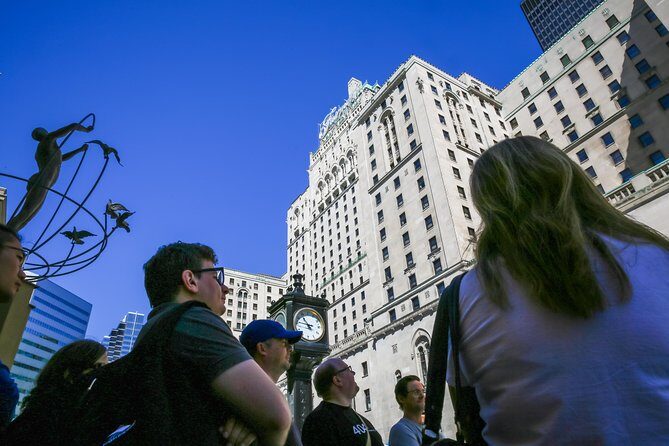
Right after the station, the tour leans into one of Toronto’s easiest “wow” moments: CN Tower views from prime angles. You don’t have to chase postcards. You’ll get positioned so the tower reads clearly in the skyline, and you’ll also hear the real reason it became so influential beyond pure height.
The CN Tower story isn’t just about architecture or record-setting. It’s tied to how the city improved TV and radio reception back in the 1970s, which helps you understand why Torontonians care about it day-to-day, not only as a tourist icon.
Next comes the Royal York Hotel. You won’t be going inside, but you will see why this building still signals Toronto’s old wealth and global ambition. The Royal York opened in 1929, just ahead of the economic collapse. That timing is the kind of detail that changes how you look at a landmark from “nice building” to “how Toronto got shaped.”
A useful way to think about this stop: these two landmarks together show Toronto in two modes.
- CN Tower = modern reach and engineering confidence
- Royal York = early 20th-century prosperity and rail-era glamour
If you like architecture and city identity, this segment does a lot of work for very little time.
Learning Toronto’s underground: a short PATH walk that saves real energy
After the skyline, the tour drops down to the underground with a walk through part of the PATH. The PATH is not simple. It’s a network of corridors and food-court spaces that connect building basements to subway stations, and without a plan, it’s easy to waste time or lose the thread.
The tour’s goal here is practical: you’ll understand how the PATH functions and why it exists. You’ll also walk a portion with your guide so you learn the logic of it instead of just getting dragged around.
Why this is a highlight, even if you don’t love tunnels:
- It helps you move faster later on your own.
- You’ll spot how downtown life is designed to flow indoors, especially when weather is rough.
- You’ll get context for the “public-private” feel of downtown spaces.
There’s a light, humorous warning built into the experience too: keep close, because the network is full of distractions and you don’t want your day to turn into an endless loop of storefronts and food courts.
If you’re the kind of traveler who likes efficient city navigation, this is where you’ll feel the tour paying off.
Brookfield Place: Calatrava’s white-glass wow moment and the idea of public space
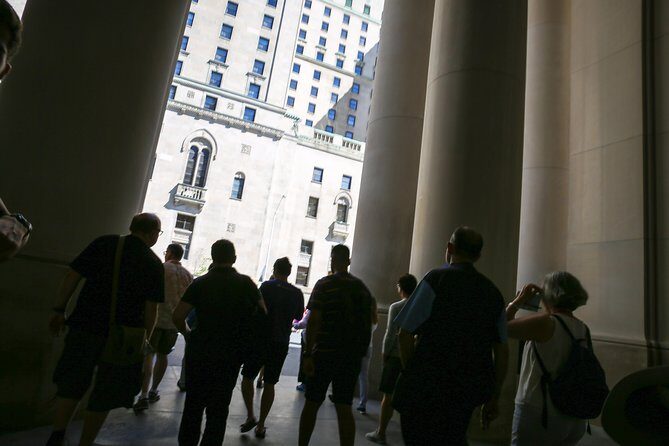
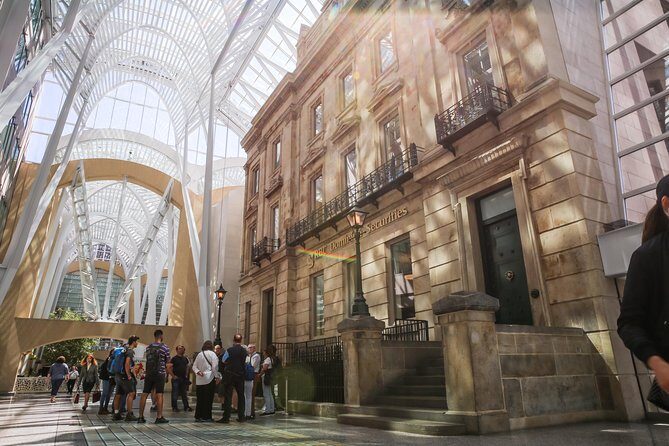
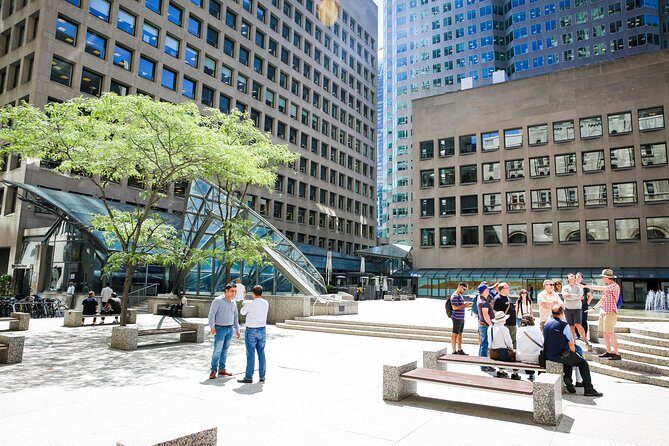
Brookfield Place is where the tour shifts from history-first to architecture-and-city-planning curiosity. It’s designed by Santiago Calatrava, and it has a dramatic look: high vaulted ceilings, white steel and glass, and a public space that feels almost theatrical.
I like that this stop isn’t just about snapping photos. Your guide will also talk about private and public space in Toronto, which is a big deal in a downtown shaped by office towers, malls, and indoor streets.
You’ll also get a glimpse into the PATH concept again from this vantage: those connections that link basements, corridors, and transit aren’t random. They’re part of how downtown Toronto manages movement and comfort.
Practical takeaway for you: if you’ve never spent time in a Canadian winter downtown, this stop gives you the why behind indoor networks. You’ll understand how people keep going when it’s cold, windy, or just not ideal for walking.
And yes, it’s a great place to check your camera roll. The space is photo-friendly in a way that doesn’t feel forced.
Old Town anchors: Berczy Park dog fountain, St. James Cathedral, and the politics-religion mix
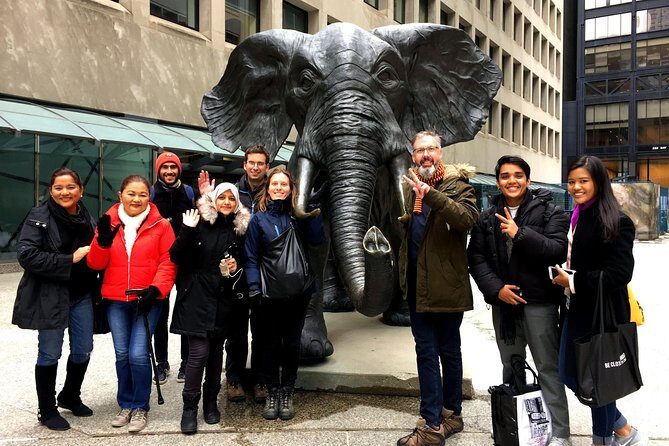
This tour doesn’t only focus on modern downtown. It also slides into older Toronto identity with two strong stops.






Berczy Park and the dog fountain
At Berczy Park, you’ll see the famous dog fountain. It’s one of those Toronto quirks that makes you smile, and your guide will explain why it’s here and what it represents.
Even if you’re not a “fountains and statues” person, this is worth a look because it shows how the city uses public art to build character. Toronto doesn’t always announce itself loudly. Sometimes it does it with clever details.
The Cathedral Church of St. James
Then it’s on to the Cathedral Church of St. James, described here as the spiritual center of Old Toronto and the seat of power in the 19th century. The building is Gothic-Revival, and it helps connect Toronto’s civic and religious story.
Your guide will also tie religion and politics together in the context of early Toronto, sometimes called Muddy York. That kind of framing makes the cathedral feel less like a standalone church and more like a power center that shaped decisions.
For many visitors, cathedral visits can feel either too solemn or too abstract. Here, you get enough context to understand why it mattered in the city’s growth.
Financial District on foot: banks like cathedrals, plus a useful history punch
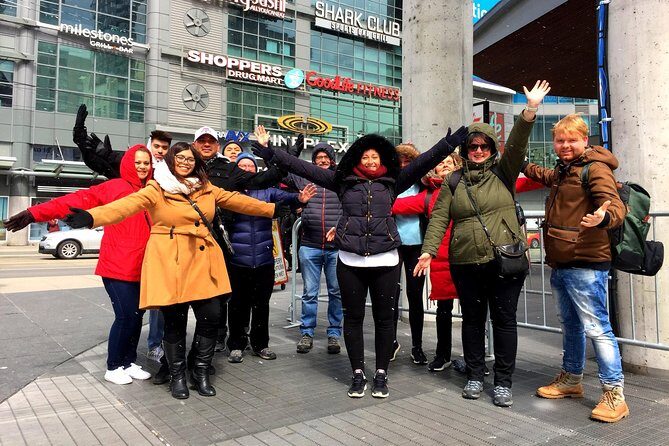
Next comes the Financial District, where you walk between some of Canada’s biggest skyscrapers. The buildings are impressive, but the best part is how your guide turns them into stories you can actually remember.
You’ll cover:
- Canadian bank history and why these headquarters can feel like cathedrals
- the Great Fire of 1904 (and the detail that it wasn’t great if your name was John Croft)
- what commuting to a finance job feels like in practice, including the idea of buy low and sell high and the joke that you might even smell the money
That last line might be a joke, but it’s also the point: Toronto’s finance district can look like pure office towers. The tour gives you the human frame—why these places were built, what they represent, and what daily life is like when people are “on the clock.”
One more practical note: this segment is where your walking pace matters. With a group of up to 30, staying with the guide keeps the stories cohesive and prevents you from breaking away at the wrong moment.
City Hall and Nathan Phillips Square: the finish that feels like Toronto’s living room
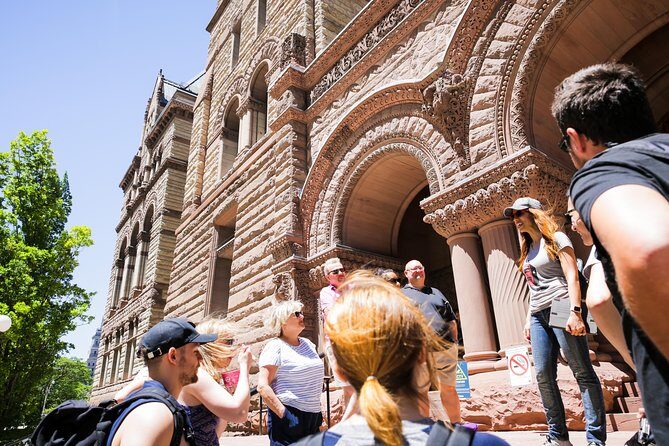
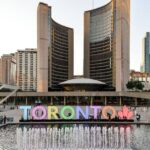
The tour ends at Toronto City Hall, where it’s not just a building—it’s part of the city’s visual identity. City Hall is completed in 1965 and has that futuristic concrete look. It’s literally featured in Toronto’s logo, and you’ll also see the less subtle, very photogenic Toronto sign out front.
If you’re thinking about what to do after the tour, this ending is smart:
- Nathan Phillips Square is a public gathering place with big-city energy
- the tour mentions it as a spot for New Year’s Eve, farmers markets, and protests
- there are public washrooms nearby, which is a real quality-of-life detail when you’ve been walking
This is a great place to regroup, compare notes, and decide where you want to go next. If you still have questions about a landmark you saw briefly, the square’s central location makes it easier to keep exploring rather than feeling like you’ve ended in the middle of nowhere.
Price and value: why PWYC works especially well for a short downtown walk
This experience is priced at $4.50 per person under a pay-what-you-wish model. That’s an unusually low entry point for a guided city overview that covers multiple “big name” stops in about two hours.
Here’s why I think it’s good value:
- You’re not paying mainly for access to buildings. You’re paying for orientation, context, and route clarity.
- The tour gives you a tight downtown circuit: CN Tower viewpoints, Union Station start, PATH routing help, Brookfield Place architecture, and a City Hall finish.
- You get tips you can use immediately, not just facts you forget.
You’ll also notice the guide skill level from real examples. Reviews mention guides like David (knows how to make bank architecture land), Michael (a recently retired history teacher-style approach), Aaron (strong communicator), and Ulysses (architecture-focused and detail oriented). That kind of teaching style is what makes a low-cost tour feel worth it.
If you’re on a time budget and you want the city to make sense quickly, the price fits the outcome.
Who should book this Toronto Essentials Tour?
Book it if:
- you want a fast orientation to Old Town and downtown
- you like city stories that connect landmarks to how Toronto works
- you want help navigating the PATH without spending your whole day lost underground
- you value a friendly group pace and short, well-timed stops
Consider other options if:
- you want long museum-style visits or lots of indoor time
- you hate walking and prefer slow, sit-down sightseeing
- you want a deep dive into one neighborhood, instead of a broad overview
The tour’s structure is clearly designed for getting your bearings fast. That’s its strength.
Should you book it or skip it?
I’d book this if your main goal is to understand Toronto quickly and feel confident exploring on your own afterward. The CN Tower sightlines, the PATH guidance, Brookfield Place architecture, and the City Hall finish create a strong “mental map” in a short window.
Skip it only if you expect a slow, detailed day with lots of inside stops. This tour moves, and it keeps you on schedule.
If you’re staying downtown or you want an easy first day outing, this is a smart, low-risk choice.
FAQ
How long is the Toronto Essentials Tour?
It runs for about 2 hours.
Where does the tour start and end?
The tour starts at Union Station, inside the Great Hall off Front Street (55 Front St W). It ends at Nathan Phillips Square in front of Toronto City Hall near the TORONTO sign (100 Queen St W).
What time does the tour leave?
The start time is 10:00 am.
What’s the price?
The tour lists a price of $4.50 per person and is pay-what-you-wish.
What language is the tour in?
The tour is offered in English.
Will the guide help with getting around the PATH?
Yes. The tour includes a walk through part of the underground PATH with your guide, and the guide will help you stay oriented since it’s not easy to navigate on your own.
What if I’m late?
The tour leaves on time, and if you are late the guide cannot wait.
What is the cancellation policy?
Free cancellation is available up to 24 hours in advance for a full refund. If you cancel less than 24 hours before the start time, the amount paid is not refunded.