REVIEW · TORONTO
Toronto: City Sightseeing Hop-On Hop-Off Bus Tour
Book on GetYourGuide →Operated by City Sightseeing Worldwide · Bookable on GetYourGuide
Toronto moves fast, so this bus helps you pace it. You get 13 hop-on stops across big sights like the CN Tower, plus live English narration on board. If you want an easy way to get your bearings, this is a solid pick.
Two things I especially like: the buses match the season (open-top in summer, wide-window trolley in winter) and the route gives you smart choices for when to get off and explore. One thing to keep in mind is that sound quality can vary depending on the bus setup, so if you care about every word of the narration, plan to sit where you can hear clearly.
In This Review
- Key things to know before you ride
- Why this Toronto hop-on hop-off route is such a smart first day
- Open-top in summer, trolley in winter: the view rules
- Sankofa Square launch point and how vouchers really work
- Downtown-to-hill views: Sankofa Square through Yorkville and Casa Loma
- Stop 2: Yonge & Wellesley
- Stop 3: Yorkville
- Stop 4: Royal Ontario Museum / Park Hyatt
- Stop 5: Casa Loma
- Spadina, Bloor, Chinatown, and the Art Gallery of Ontario
- Stop 6: Spadina & Bloor
- Stop 7: Art Gallery of Ontario / Chinatown
- CN Tower North and South plus MTCC and Ripley’s
- Stop 8: CN Tower North / MTCC
- Stop 9: CN Tower South / Ripley’s Aquarium
- Harbourfront, Hockey Hall of Fame, and St. Lawrence Market
- Stop 10: Radisson Blu / Harbourfront
- Stop 11: Hockey Hall of Fame / Meridian Hall
- Stop 12: St. Lawrence Market South Building
- Distillery District for evening stroll energy
- Stop 13: Distillery District
- Guides, audio, and comfort: why the narration can make this better
- Price value check: is $49 per person worth it
- Who should book this Toronto hop-on hop-off bus tour
- Should you book this Toronto hop-on hop-off bus tour?
- FAQ
- What is the starting point for the hop-on hop-off bus tour?
- Can I use a mobile voucher instead of printing it?
- How long is the bus tour?
- How often do the buses depart from Stop 1?
- What time is the first and last departure from Stop 1?
- Is admission to attractions included?
- Are the buses open-top year-round?
- What languages are available for the tour commentary?
- Is the tour wheelchair accessible?
- Is smoking allowed on the bus?
Key things to know before you ride
- 13 stops across Toronto with an especially convenient run through downtown and top attractions
- Open-top views in summer; winter trolleys with wide windows for comfortable, photo-friendly sightseeing
- Live English guide or multilingual audio (audio is available in 9 languages)
- Paper vs mobile vouchers: paper must be printed and redeemed at Stop 1 (Sankofa Square)
- Tour timing: first departure from Stop 1 at 10:00am, last at 4:00pm, with departures spaced every 2 hours
- You’re near major museums and sights like the Royal Ontario Museum and Art Gallery of Ontario (admission not included)
Why this Toronto hop-on hop-off route is such a smart first day
This tour is built for one simple goal: help you understand Toronto fast, without locking you into a rigid schedule. You ride, you look, and you decide what’s worth your next hour. That makes it especially useful when your trip is short or when you’re not sure where the best neighborhoods actually start.
The route is also laid out in a way that makes sense for first-time visitors. You pass major anchors—downtown intersections, museum areas, the waterfront, and the entertainment zone near the CN Tower. Then you can hop off close enough to walk, browse, and come back when you’re ready.
For me, the value is strongest when you use it as your planning tool. Do one full loop early in your trip to spot what grabs you. Then use your second day ticket (if you get the 48-hour option) to come back for museums, food stops, or a longer walk in an area you like.
Other hop-on hop-off bus tours we've reviewed in Toronto
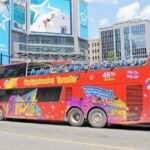
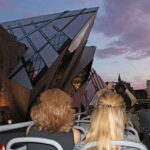
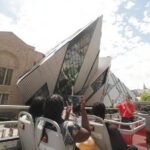
Open-top in summer, trolley in winter: the view rules
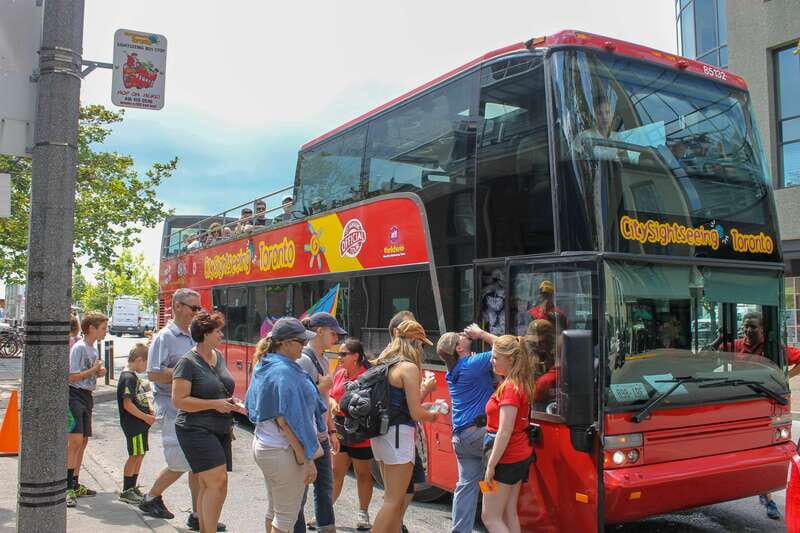
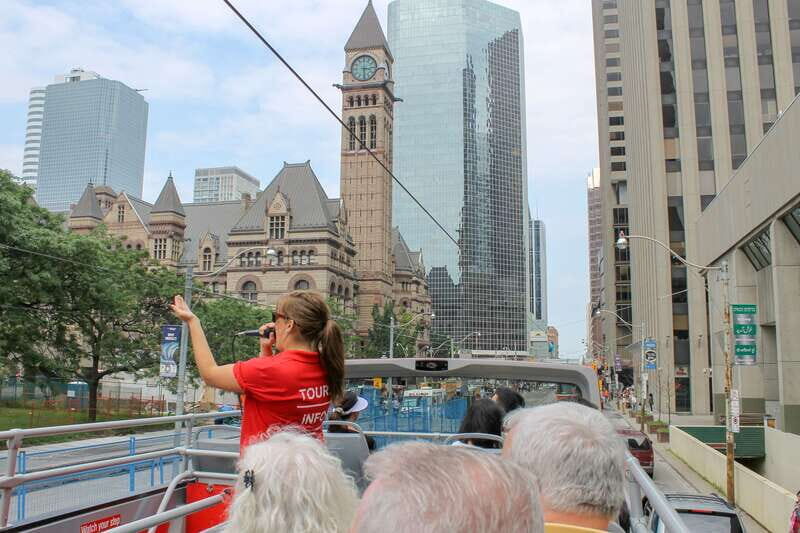
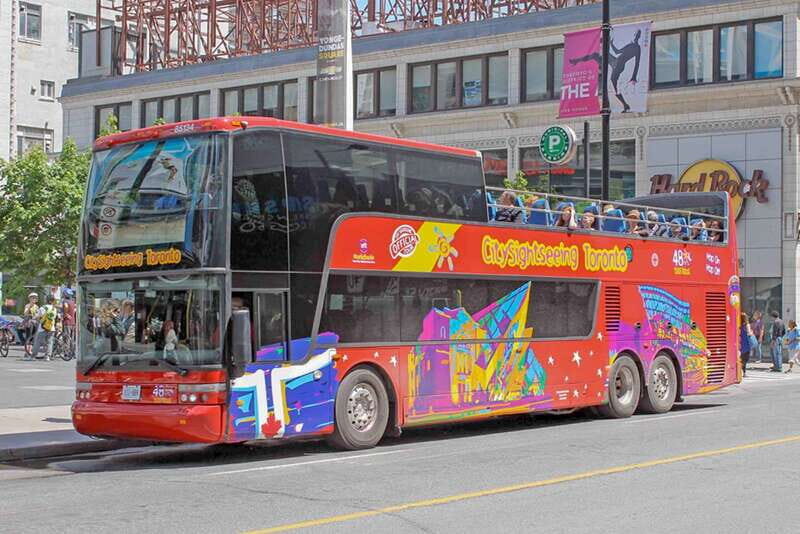
Toronto weather is real. That’s why I like that this tour changes how you see the city. During summer, you’re mainly on open-top double-decker buses, which is the best setup for skyline photos and that look-down-the-street feeling. Late fall and winter shift you to a more comfortable trolley with wide windows. It won’t be as “roof-down” as summer, but it’s easier when it’s cold, wet, or windy.
Practical tip: if you’re coming for photos, go upstairs when the bus has that option. Even on the lower deck, the wide windows on the winter trolley help a lot. Bring a sun hat and water when it’s warm, and if it’s cold, dress like you’re expecting weather to change every hour—because it can.
Also, this is a sightseeing bus, not a museum. Expect to share space, and keep your belongings secure. You’ll be moving your body on and off at stops throughout the day.
Sankofa Square launch point and how vouchers really work
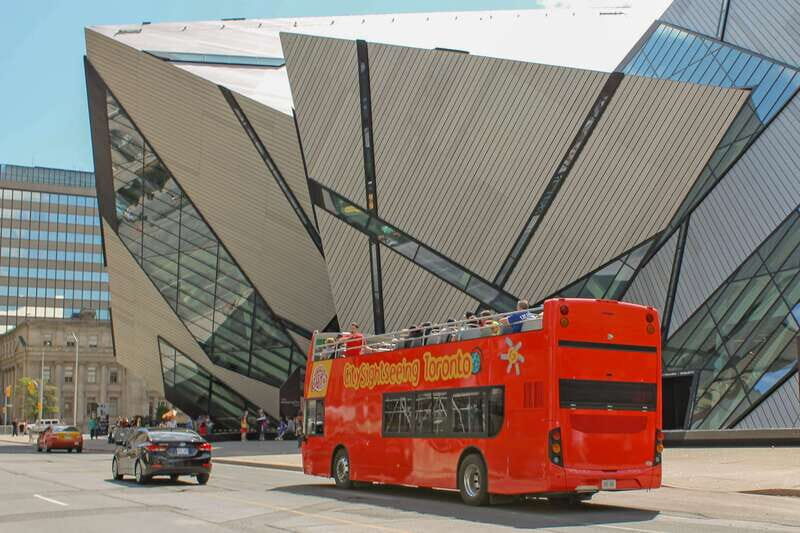
Everything starts at Stop 1: Sankofa Square (formerly Yonge-Dundas Square). That matters because the voucher rules depend on whether you print or use your phone.
- Paper vouchers must be printed and redeemed at Stop 1.
- Mobile vouchers can be redeemed at any bus stop along the route.
So if you’re using a phone ticket, you’re more flexible. If you printed your voucher, be sure you’re ready at the start point, since that’s where redemption happens.
Timing-wise, the tour runs with a clear schedule rhythm. The first departure from Stop 1 is 10:00am, and the last departure is 4:00pm. Buses depart every 2 hours, and the ride time per loop is about 2 to 2 hours 15 minutes.
In plain terms: you can’t treat this as a late-night tour. Plan your day so you’re on the bus by mid-afternoon at the latest if you still want to complete a full ride and hop off for a quick walk.
Downtown-to-hill views: Sankofa Square through Yorkville and Casa Loma
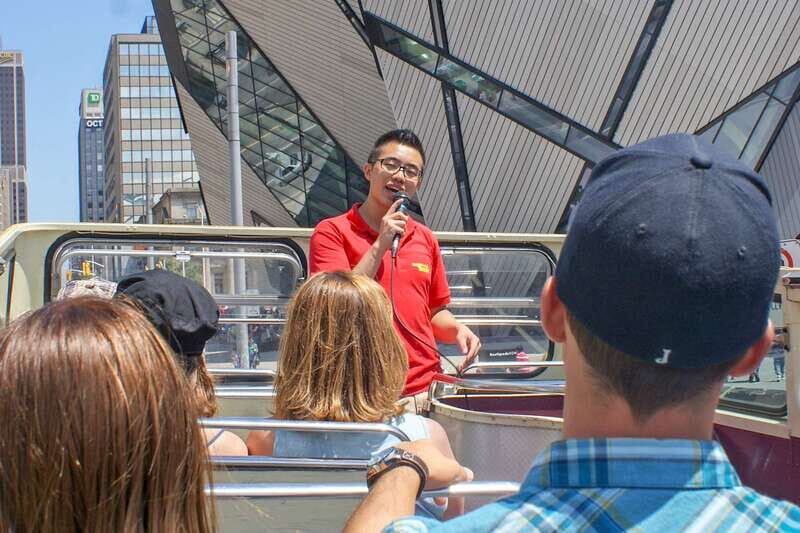
The route starts in the heart of the action, and then it starts climbing in feel. From Sankofa Square, you’re in a zone of big intersections and quick access to core landmarks.
Stop 2: Yonge & Wellesley
This is a good area to orient yourself. If you want to understand where major shopping streets and transit connections are, this stop helps.
Other city tours we've reviewed in Toronto



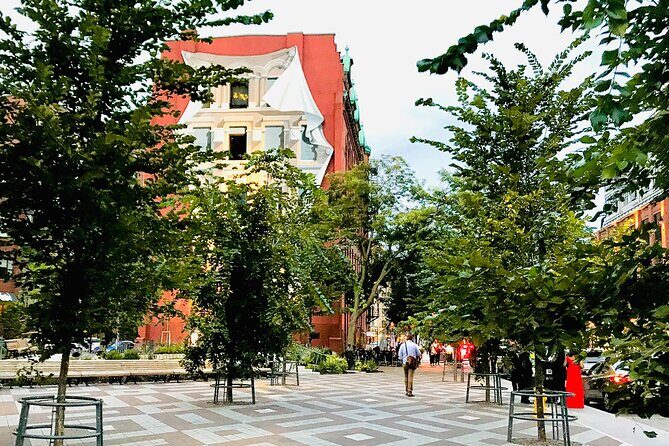
Stop 3: Yorkville
Yorkville has that calmer, upscale downtown vibe. It’s a smart hop-off point if you want to walk, browse, and get a feel for how Toronto changes as you move away from the busiest core blocks.
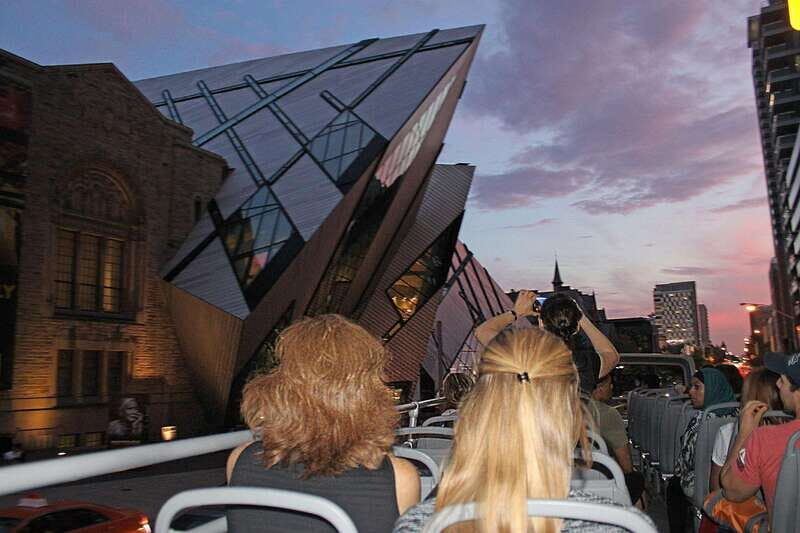
Stop 4: Royal Ontario Museum / Park Hyatt
This is one of the most valuable stops on the tour because it gives you immediate access to the Royal Ontario Museum area. Even if you don’t buy a ticket inside, you can still enjoy the surroundings and use this stop to plan your museum time later.
A note on cost: attraction admission is not included, so you’ll decide separately how deep you want to go at each site.
Stop 5: Casa Loma
Casa Loma is the kind of stop that makes a short Toronto trip feel bigger. If you like “wow” buildings and photo angles, it’s worth getting off here for a walk. The best move is to hop off for a focused block of time, because the tour is designed for quick get-on/get-off decisions.
How I’d use this section: If it’s your first day, this run is your “see the shape of the city” stretch. Get off at one or two stops maximum, not five. You’ll enjoy it more.
Spadina, Bloor, Chinatown, and the Art Gallery of Ontario
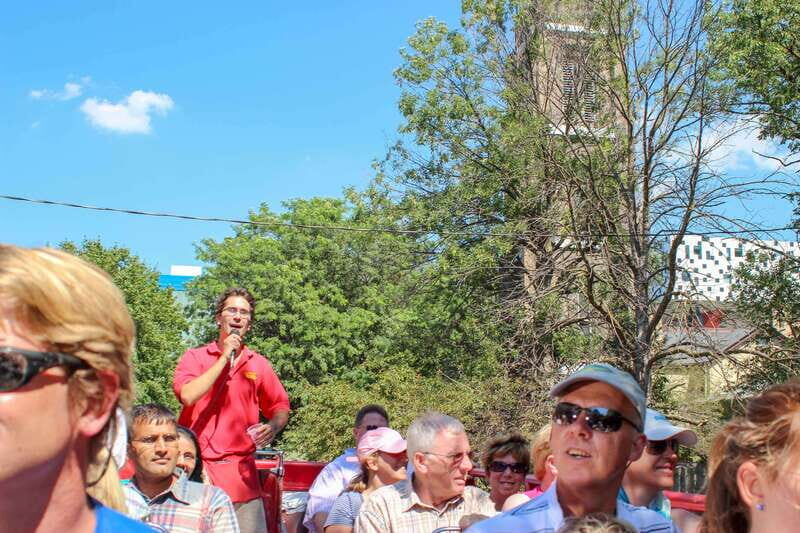
After Yorkville, the city gets more layered. The next stops bring together neighborhood character and a major cultural anchor.
Stop 6: Spadina & Bloor
This is an excellent stop for understanding Toronto’s grid and the shift from more central streets into areas with distinct local energy. It’s also useful if you want to jump off for a quick coffee or to reposition yourself for walking.
Stop 7: Art Gallery of Ontario / Chinatown
Two different worlds under one convenient stop. The Art Gallery of Ontario is a major museum destination, and Chinatown adds street-level texture right nearby.
This stop is a great example of why hop-on hop-off tours can be more than sightseeing rides. You can choose the museum route for a calm indoor block, or you can skip museums and spend time browsing Chinatown streets for snacks and atmosphere.
If you’re museum-minded, consider staying on the bus for one more stop before hopping off, then return later with your energy—museums take time, and you’ll feel rushed if you try to do everything in a single day.
CN Tower North and South plus MTCC and Ripley’s
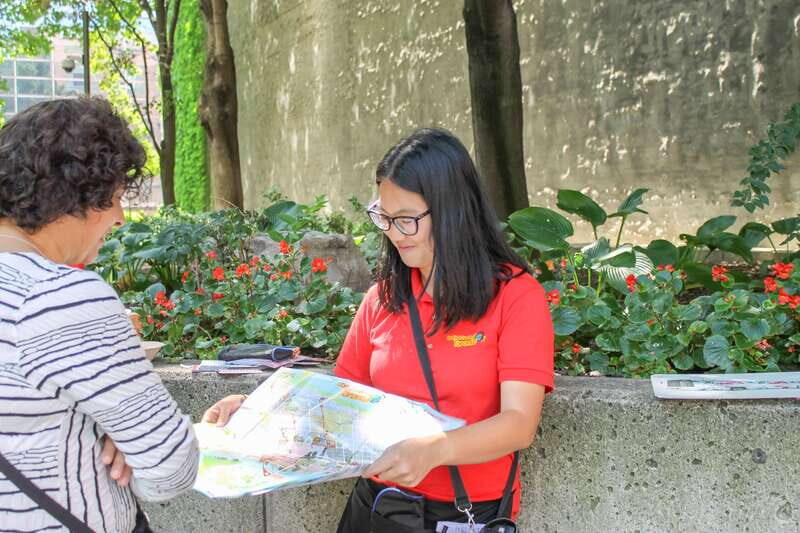
Then comes the moment most people come to Toronto for: the CN Tower area. This is where the skyline view payoff is strongest.
Stop 8: CN Tower North / MTCC
MTCC is a key event space, and the CN Tower area is where Toronto looks most “iconic” from street level. If you want that big-city perspective and you’re taking photos, this is one of the best zones to get off and reframe where you stand.
Stop 9: CN Tower South / Ripley’s Aquarium
This stop complements the north side with another angle. It’s also the gateway to Ripley’s Aquarium area.
Even if you don’t plan to enter the aquarium, walking the waterfront-to-tower vicinity is part of the experience. If you do plan to go inside a ticketed attraction, you’ll want to time your entry so you don’t lose too much of your afternoon to lines and getting around.
Small but useful idea: If you’re unsure which aquarium-style attraction you want, hop off for a short look here first. Then decide later based on time, weather, and your energy.
Harbourfront, Hockey Hall of Fame, and St. Lawrence Market
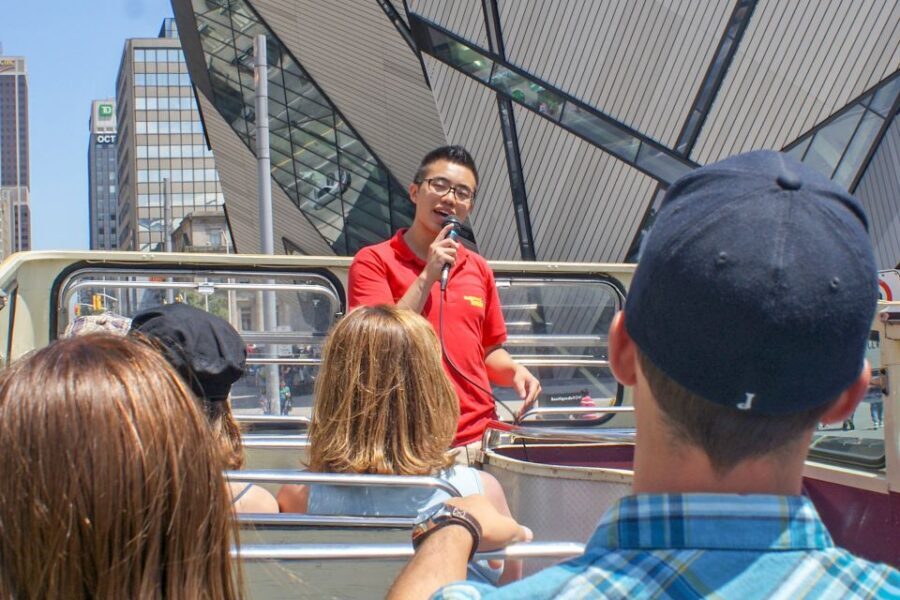
This stretch feels like Toronto with personality. It’s where the city shifts from landmark sightseeing into places you’ll actually enjoy lingering.
Stop 10: Radisson Blu / Harbourfront
The Harbourfront area is where you get that water-and-walkway feel. It’s ideal if your feet want a break from museums and you’d rather watch the city than just photograph it.
Stop 11: Hockey Hall of Fame / Meridian Hall
If you’re into sports, this stop is a natural one. But even if you’re not, it’s one of those Toronto-defining anchors. The area helps you understand how deep hockey culture is in the city.
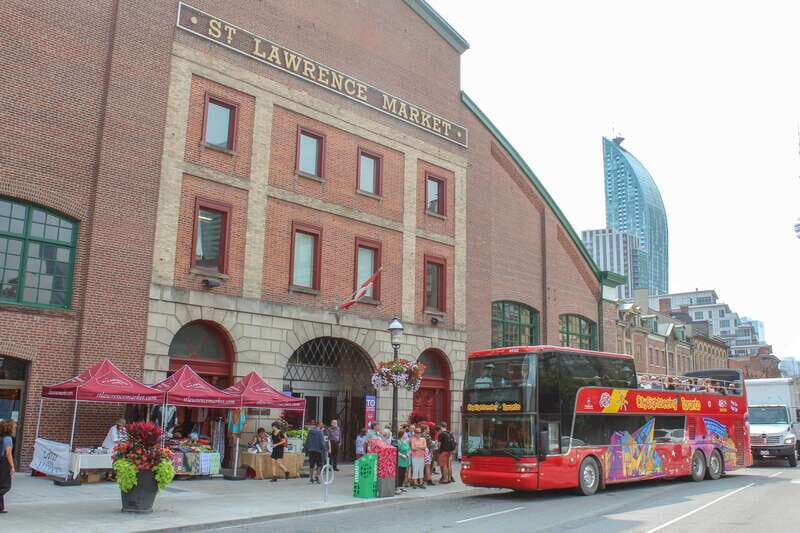
Stop 12: St. Lawrence Market South Building
This stop is a practical gift if you’re planning meals. St. Lawrence Market is a place you can turn into a full mini-plan: snack first, browse second, then go back out if you want. Since food and drink aren’t included on the bus, this stop is where you can turn your touring into actual refueling.
How to avoid the usual mistake: don’t hop off at every stop in this zone. Pick one: either Harbourfront for a walk, Hockey Hall of Fame for the attraction, or St. Lawrence Market for a food-focused break.
Distillery District for evening stroll energy
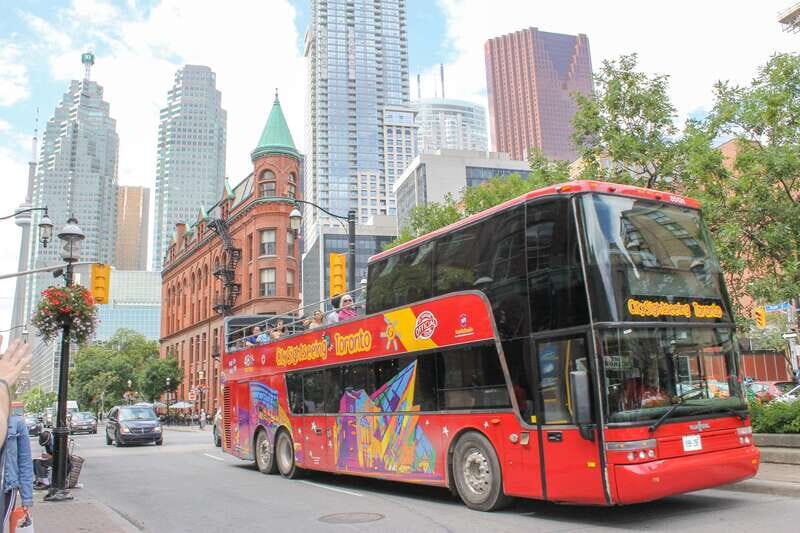
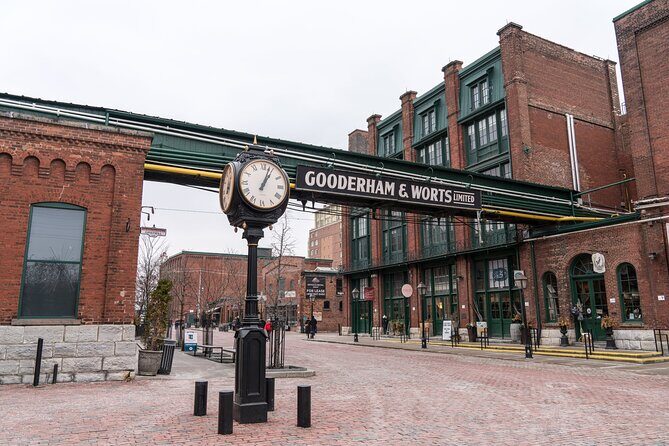
Stop 13: Distillery District
This is the stop that works best when you have time to slow down. Distillery District is a place you’ll want to wander—especially when the streets feel calmer and the light turns softer.
It’s also the kind of stop that pairs well with a 48-hour ticket. Do a quick look on your first loop. Then, if you like it, return on your second day when you’re not running on a tight schedule.
Guides, audio, and comfort: why the narration can make this better
The tour includes a live guide in English and also offers multilingual audio in 9 languages. In winter months, you’ll typically have a live English-speaking guide only, which simplifies things if you’re trying to follow the story without switching devices.
What stands out in the feedback I’ve seen is that guides often lean into humor and local feel. Names that come up include Mashaal, Pietra, Curtis, Adam, Mohammed, and Johan. People specifically mention that some guides are funny, fast, and willing to answer questions on the spot.
That said, there’s one caution: the audio setup can be inconsistent depending on the bus. Some people describe distortion or spotty sound, and on certain buses you might hear the guide through different systems (PA versus headphones, depending on how the bus is set up). If hearing every fact matters to you, choose a seat with clearer sound and be ready to ask questions directly when possible.
Comfort notes from real-world experiences also matter. One theme is that cleanliness can vary by bus and by how others leave their seats. Not a deal-breaker for most people, but it’s smart to do a quick seat check when you board.
Finally: no smoking is allowed. Standard rule, but good to know.
Price value check: is $49 per person worth it
$49 per person sounds straightforward, but value depends on how you plan to use your time.
Here’s the math logic I’d use:
- You get a 1- or 2-day hop-on hop-off pass option.
- You can use it to cover 13 stops near key attractions.
- You get live English narration (or multilingual audio), which helps turn the bus into a moving orientation lesson.
- Attraction admission is not included, so you’re paying for access to the sightseeing transport and guiding, not for museum entry.
So when does it make sense?
- If you’re trying to maximize first-day orientation and then pick a couple attractions for deeper time.
- If you’re traveling solo, short on time, or unsure where to start—this helps you stop guessing.
- If you plan to get off multiple times, especially in clusters like the CN Tower area, the ROM/AGO zones, and St. Lawrence Market.
When might it not be the best deal?
- If you already know exactly where you want to go and you don’t want any flexibility.
- If you’re skipping most stops and only planning to see one or two places far apart.
One extra detail that can improve the value: guides may offer discount tickets for some attractions. Even if it’s not every stop, those small savings can offset part of the cost.
Also, it’s flexible in the way many modern passes are: you can reserve and pay later, and you can enjoy a validity window tied to your travel date selection. That helps if your schedule is still shifting.
Who should book this Toronto hop-on hop-off bus tour
This tour fits best if you want:
- flexibility to choose what to see next
- a straightforward way to handle Toronto’s size without arranging a dozen rides
- a guided introduction that makes neighborhoods easier to read
It’s also a good option for visitors with a limited schedule who still want to see both landmark Toronto (CN Tower, waterfront) and cultural stops (ROM and AGO areas).
If you’re the type who hates “slow days” and wants everything scheduled minute by minute, you might feel boxed in by the hop-on hop-off style. But if you like making decisions in real time, you’ll probably enjoy it.
Should you book this Toronto hop-on hop-off bus tour?
If you’re visiting Toronto for the first time, or if you want a low-stress way to plan, I’d book it. The biggest strength is that it turns your day into choices: quick hop-offs to scout, then deeper visits where you actually want to spend time.
Book it especially if you’re excited about the CN Tower area, want museum access near the Royal Ontario Museum and Art Gallery of Ontario, and plan to enjoy Toronto neighborhoods at walking pace for at least a little of each day.
The main reason not to book is simple: if you already have a tightly planned route with minimal stop changes, a hop-on hop-off bus may feel like you’re paying for flexibility you won’t use. If that’s your style, you may prefer point-to-point transport and skip the pass.
FAQ
What is the starting point for the hop-on hop-off bus tour?
The tour starts at Stop 1, Sankofa Square (formerly Yonge-Dundas Square).
Can I use a mobile voucher instead of printing it?
Yes. Mobile vouchers can be redeemed at any stop along the route. Paper vouchers must be printed and redeemed at Stop 1.
How long is the bus tour?
The tour loop runs about 2 hours to 2 hours 15 minutes.
How often do the buses depart from Stop 1?
The schedule lists departures from Stop 1 every 2 hours.
What time is the first and last departure from Stop 1?
The first departure is 10:00am, and the last departure is 4:00pm.
Is admission to attractions included?
No. Admission to attractions is not included, though the stops are near major sights like the ROM and AGO.
Are the buses open-top year-round?
No. In summer you’ll mainly ride open-top double-decker buses. In late fall and winter, you’ll ride a trolley with wide windows.
What languages are available for the tour commentary?
A live English guide is available, and audio guides are offered in English, Spanish, French, German, Italian, Chinese, and Russian.
Is the tour wheelchair accessible?
Yes. The tour is wheelchair accessible.
Is smoking allowed on the bus?
No. Smoking is not allowed.