REVIEW · TORONTO
Toronto: City Walking Tour
Book on GetYourGuide →Operated by Buzz Tours · Bookable on GetYourGuide
Toronto can feel like a puzzle at first. This walking tour turns that puzzle into a plan, with a local guide and nonstop “how to get there” advice. You’ll spend real time in the PATH system and finish at St. Lawrence Market, so you leave with both direction and a food stop in hand.
I like the small group size (up to 10), which keeps questions going instead of getting shuffled to the end. I also like that the route mixes big landmarks with practical navigation skills, so you don’t just see downtown—you learn how to move through it. One consideration: it’s a steady walk and isn’t set up for wheelchair users or people with low fitness.
In This Review
- Key things you’ll notice on this Toronto city walk
- Starting at Roy Thomson Hall: your bearings in the first 20 minutes
- Entertainment District to the waterfront: CN Tower and the Rogers Centre story
- Queen’s Quay Terminal and the PATH system: your best Toronto tool for rain and winter
- Brookfield Place and the Union Station area: architecture you can actually place
- Old Toronto streets: the 19th-century contrast that changes the mood
- St. Lawrence Market finale: end with a food map, not an empty stomach
- Price, pace, and who this 3-hour walk is really for
- The value test: should you book this tour?
- FAQ
- How long is the Toronto city walking tour?
- What does the tour cost?
- Where do I meet the guide?
- Is the tour guided, and what language is it in?
- What’s included in the price?
- What’s not included?
- What should I bring, and what can’t I bring?
Key things you’ll notice on this Toronto city walk
- PATH navigation in one go: see how the downtown underground connects multiple destinations during rain or winter
- Entertainment District to waterfront orientation: quick bearings at major theatres and concert venues before you head out
- CN Tower and Rogers Centre, without the ticket cost: you get the context from the outside and don’t need entry
- Old Toronto character near the finish: shift from modern glass-and-steel to 19th-century streets and buildings
- St. Lawrence Market as the payoff: end with a ready-made list of what to eat and where to go next
Starting at Roy Thomson Hall: your bearings in the first 20 minutes
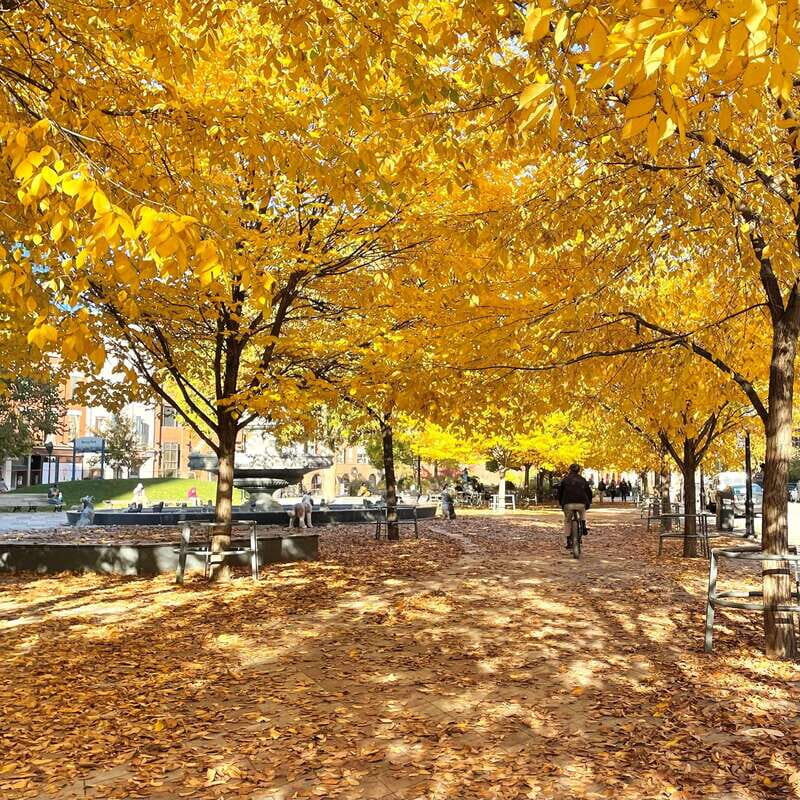
The meeting point is easy to spot once you know what to look for: the southwest corner of King Street West and Simcoe, just beneath the small electronic billboard for Roy Thomson Hall. From that spot, you’re already in the zone that shapes Toronto’s evening life—live theatres, restaurants, bars, and concert halls.
The first stretch matters more than it sounds. Toronto’s downtown feels huge, but the early landmarks give you a mental map. As you walk, your guide isn’t just naming buildings. The best part is the way they connect it to decisions you’ll make later: where the action tends to be, which directions make sense, and how to avoid backtracking when you’re trying to fit in “one more stop.”
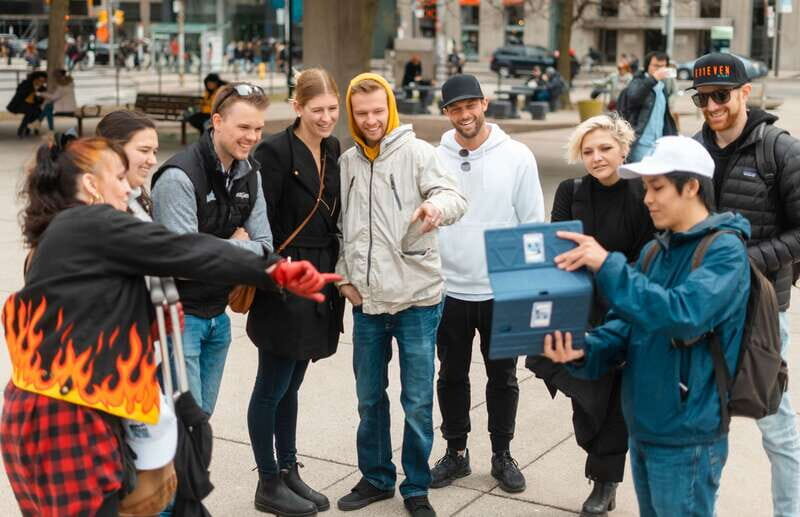
One reason this tour scores so high is the talk-and-walk approach. You’re in a small group, so the guide can actually respond to questions as you go, not at a single lecture stop. You’ll see guides praised for being funny and personable, including names like Nick and Neil—people specifically point out how naturally they handled questions. (If your guide uses visual aids, you might also get supporting photos or story context; at least one guide, Ken, is mentioned using flash-card style visuals in reviews.)
Other walking tours we've reviewed in Toronto

Entertainment District to the waterfront: CN Tower and the Rogers Centre story
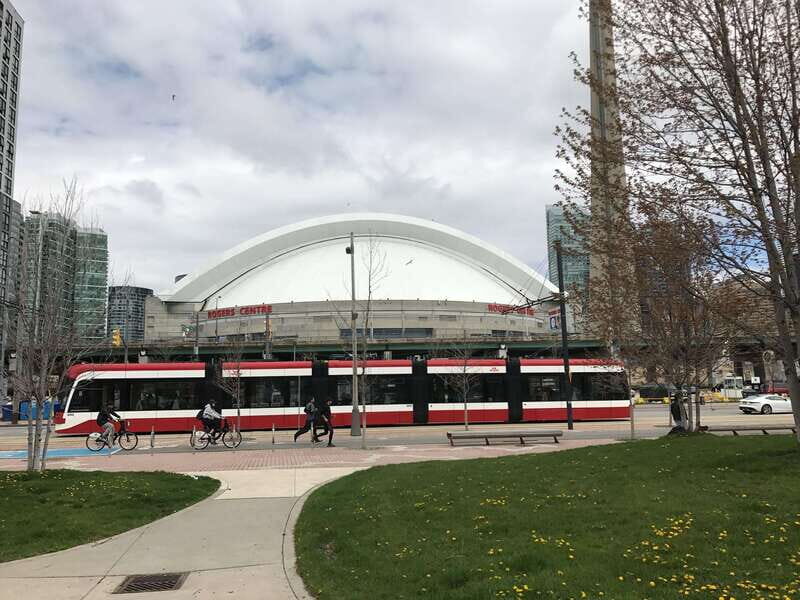
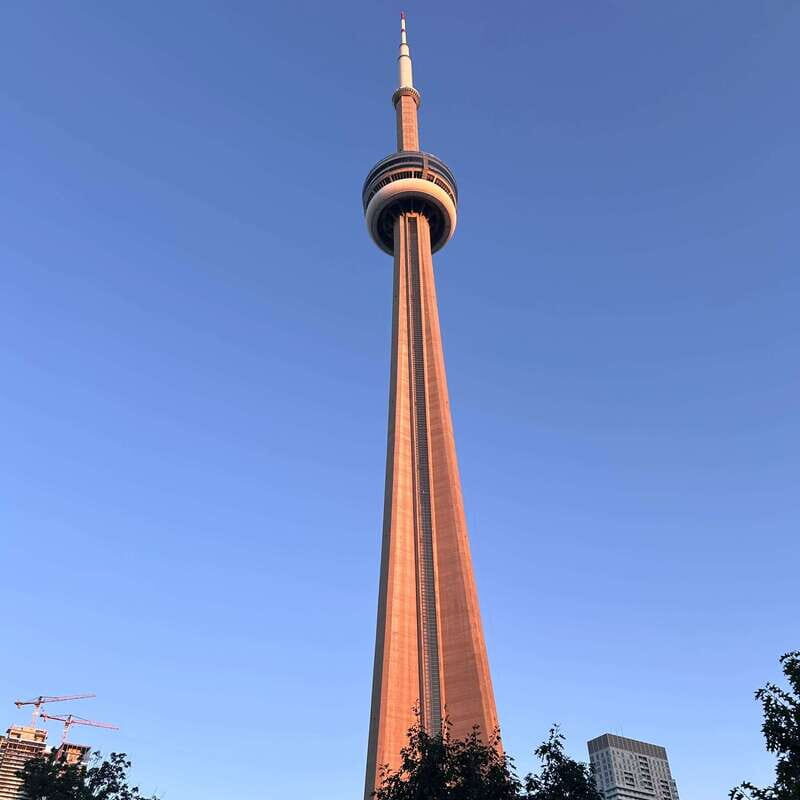
From the theatre-heavy core, you head toward the waterfront. On the way, you’ll pass some of the city’s most recognizable landmarks, including the CN Tower and Rogers Centre (often called the Skydome by locals). You don’t need to buy tickets to understand why these sites matter. Your guide helps you read them—why they’re there, how they fit into downtown’s growth, and what they’ve meant over time.
This is also the part where the tour becomes useful for day planning. If you’re only in Toronto for a short trip, you want a first pass that tells you what’s worth revisiting. When you see CN Tower and the Rogers Centre from the street, you can later decide whether you want the inside experience or whether the exterior views and stories are enough.
You’ll also get a short break at the waterfront area near Queen’s Quay Terminal, where the tour setup includes entry. Even if you don’t stick around for a long sit, that pause helps reset your legs before the underground section.
Practical note: because this tour mixes outdoor walking and indoor/covered pathways, it’s a good pick when weather is unpredictable. You’ll feel that shift in the route design.
Queen’s Quay Terminal and the PATH system: your best Toronto tool for rain and winter
This tour’s secret weapon is the PATH. You’ll step into it after the waterfront break and start using it like a local tool, not a tourist maze.
Here’s what makes PATH worth building into your day:
- It connects over 70 office towers in downtown Toronto.
- It stretches over 30 km / 20 miles, mostly underground.
- The scale is the point: 600 places to eat, 800 shops, 6 subway stations, and 7 hotels sit inside the system.
You don’t need to walk the full length to “get it.” What you’re doing is learning how to think like Toronto residents: when it’s cold or wet, you move through indoor routes so the city becomes more manageable.
Your guide also helps you connect dots beyond just the route. They share navigation tips for other parts of the city, including recommendations and guidance for the Toronto Islands—the kind of advice that’s hard to guess from a map. It’s the difference between seeing Toronto as a checklist and understanding it as choices.
In the real world, PATH also changes how you shop and eat. Once you’ve seen how many food and retail stops are tucked into the network, you can plan around it instead of treating it like an emergency shelter. That matters if you’re trying to avoid long lines or tight schedules.
One more reason this section lands well: your guide’s personality carries it. Multiple reviews mention humor and easy conversation. That matters because long indoor walking can get dull. Instead, you end up feeling like you’re getting a city lesson with a friend who knows where the shortcuts are.
Brookfield Place and the Union Station area: architecture you can actually place
After PATH, the tour shifts into a standout architectural stop: Brookfield Place, a building designed by Santiago Calatrava. Even if you don’t care about architectural theory, this is a good pause point because the guide can give you “what to look for” details and story context you would likely miss on your own.
This is where the tour balances two types of sightseeing:
- Famous skyline landmarks you recognize immediately (CN Tower, Rogers Centre).
- Buildings that are important because of design and how people use them day to day (Brookfield Place, and the Union Station area, which is part of the included entries).
Why that balance is valuable: Toronto isn’t just a skyline. It’s a machine for moving people—commuters, shoppers, event-goers, and tourists all moving on different schedules. When you include places tied to that flow, your future self gets smarter about timing.
A steady benefit you’ll feel here is context-building. After this section, you’ll start linking what you’re seeing with how downtown functions. And that makes later exploration less random.
Old Toronto streets: the 19th-century contrast that changes the mood
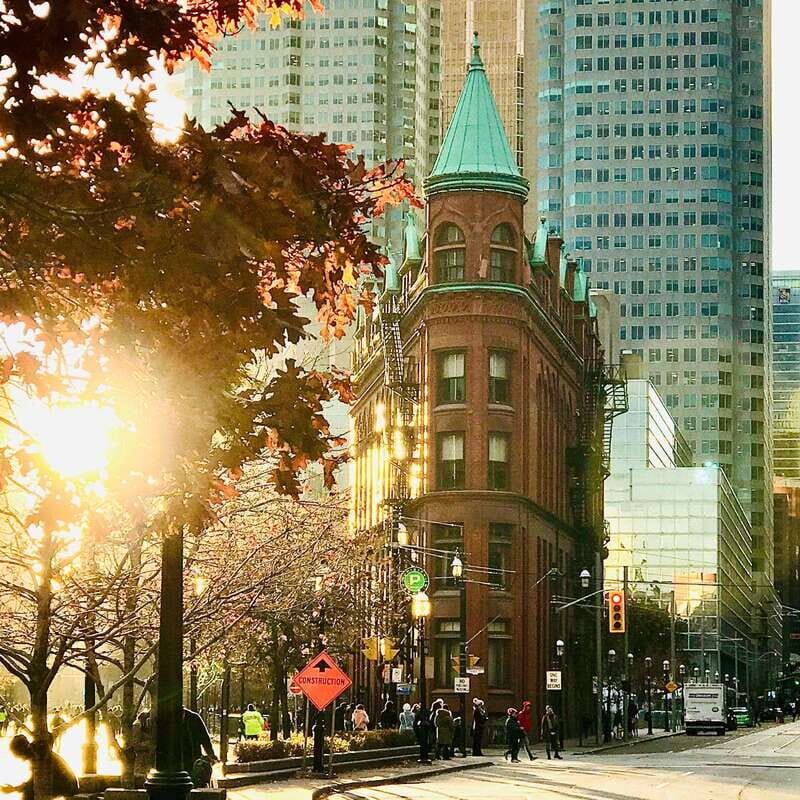
The final third of the walk moves into Old Toronto, an area with buildings original to the city’s 19th-century boom. This isn’t just a change of scenery. It changes the tone of the experience.
In Old Toronto, you get a different vibe than the office-and-entertainment rhythm near downtown towers. The buildings feel older, and the streets are easier to connect to stories about how Toronto grew. Your guide points out where you’ll find good restaurants and highlights historical buildings in the mix.
This is a good place to slow your pace mentally. If PATH taught you how to move, Old Toronto shows you why you’d want to wander on purpose. You’re more likely to notice street-level details—entryways, block patterns, and the way buildings sit close to the sidewalk—because the architecture is less “uniformly modern.”
Also, this zone sets up your last stop. By the time you reach the market, you’re not just hungry for food. You’re hungry for a sense of place.
Other city tours we've reviewed in Toronto



St. Lawrence Market finale: end with a food map, not an empty stomach
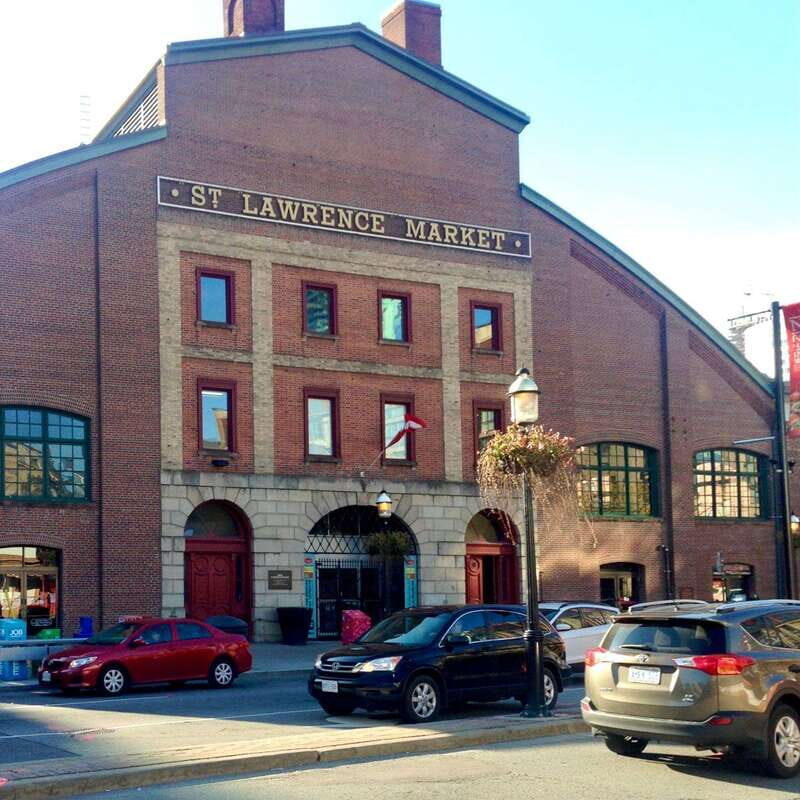
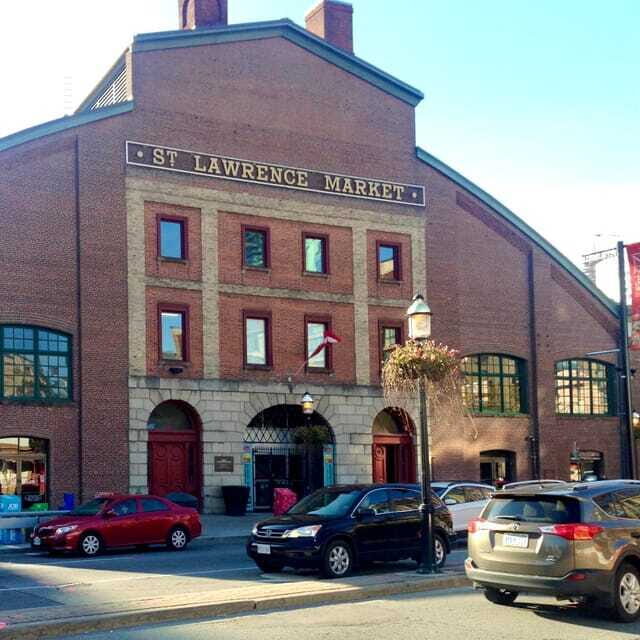
You’ll finish at St. Lawrence Market, one of the most useful travel endings in the city. The tour frames it as a top-ranked market in world-style rankings, and the practical point is what you’ll do once you arrive: your guide points out the popular venues and foods you can find inside.
Ending here is smart for two reasons:
- You can turn the tour into a meal right away.
- You get a guide’s “what matters most” list instead of wandering in and guessing.
This is also where the tour feels most Toronto. The market isn’t only about eating—it’s a gathering place with character, and it helps you translate what you learned earlier into a real-world plan: where you’ll return, what you’ll try, and how long you might want to linger.
If you’re traveling solo, this finish is especially helpful. It’s a safe, lively place to land and reset before heading back to your hotel or continuing with other plans.
Price, pace, and who this 3-hour walk is really for
At $38 per person for a 3-hour walking tour, you’re paying for three things: guided navigation, access to major indoor sites, and a route that saves you time in a huge city. What’s included isn’t just “standing in front of buildings.” The tour includes entry to Queen’s Quay Terminal, the PATH, Union Station, Brookfield Place, and St. Lawrence Market.
That matters because downtown Toronto can be expensive or time-consuming if you’re trying to cobble together paid entries and guesswork on your own. Here, you’re essentially buying a structured orientation plus entry access, and you get to ask questions as you go.
There are also clear limits:
- Food and drinks are not included, so come ready to spend at least a little if you want to sample at the end.
- Entry to CN Tower and Rogers Centre is not included, so you don’t get the museum-style ticketed experiences there.
As for pace: it’s listed as moderate physical fitness, and it’s not suitable for wheelchair users. Reviews frequently mention the walk felt engaging and not herded, with pauses to rest and take photos. Still, you should plan on real walking time, not just short hops.
Who it suits best:
- First-time visitors who need downtown orientation fast
- People who value practical local advice on how to plan routes (PATH navigation is a big deal)
- Travelers who like a guide with humor and a real conversation style (names like Nick, Neil, Ram, Ken, and Jason show up in reviews for being entertaining and informative)
Who should skip it:
- If you need wheelchair access, this one won’t be comfortable based on the stated unsuitability.
- If you struggle with walking for 3 hours at a steady pace, look for a shorter or more accessible option.
The value test: should you book this tour?
I’d book this if you want Toronto to feel more manageable by lunchtime. The PATH component alone is worth it for many people, because it teaches you a system you can keep using long after the tour ends. Add the waterfront orientation, Brookfield Place context, Old Toronto contrast, and the St. Lawrence Market finish, and you get a full downtown arc that’s more useful than a “highlight-only” route.
I might not book it if your priority is ticketed attractions like CN Tower or Rogers Centre interiors. This tour is built for understanding and navigating, not collecting paid entry stamps. It’s also not the best fit if mobility is limited.
If you do book, do yourself a favor: bring a camera, wear shoes you trust, and come ready to ask questions—because the best part of the tour is the guide interaction, not just the scenery.
FAQ
How long is the Toronto city walking tour?
The tour lasts 3 hours.
What does the tour cost?
It costs $38 per person.
Where do I meet the guide?
You meet at the southwest corner of King Street West and Simcoe, beneath the small electronic billboard for Roy Thomson Hall.
Is the tour guided, and what language is it in?
Yes, it’s a live tour with an English-speaking guide.
What’s included in the price?
The tour includes a 3-hour guided walking tour, a local guide, and entry to Queen’s Quay Terminal, Toronto’s PATH, Union Station, Brookfield Place, and St. Lawrence Market.
What’s not included?
Food and drinks are not included, and entry to CN Tower and Rogers Centre is not included.
What should I bring, and what can’t I bring?
Bring a camera. Pets and unaccompanied minors are not allowed.