REVIEW · TORONTO
Toronto: Distillery District Historic Walking Tour
Book on GetYourGuide →Operated by Go Tours Canada · Bookable on GetYourGuide
One hour can feel like a whole century. This walking tour takes you through the Distillery District’s cobblestone lanes and Victorian industrial buildings, where the story of Toronto’s early drinking world still hangs in the bricks.
I especially like the focus on what you can see from the inside and out, including a few spots most people don’t get to visit. And the guide matters here: names like Eric and Nicole show up in the guide chatter because they turn architecture into clear, fun street-level storytelling. One thing to consider: you’re walking the whole time, so plan for comfortable shoes and a steady pace, even though the walking level is described as easy.
In This Review
- Key things you’ll notice on this walk
- Toronto’s Distillery District: time travel on cobblestones
- The 1-hour format that keeps it fun (and manageable)
- Where you meet: the Distillery District office in Gristmill Lane
- Inside-and-out Victorian industrial architecture (the real star)
- Gooderham & Worts: the rise and fall that makes the buildings make sense
- Early Toronto’s wild years: stories that sound like a movie
- The guide experience: why storytelling quality shows up everywhere
- Today’s Distillery District: what to do with the tour after it ends
- Timing, photos, and small comfort tips that actually matter
- Who this tour suits best (and who might want a different option)
- Is $20 good value for a Toronto tour like this?
- Should you book this Toronto Distillery District Historic Walking Tour?
- FAQ
- How long is the Toronto Distillery District Historic Walking Tour?
- How much does the tour cost?
- Where do I meet for the tour?
- Is the tour wheelchair accessible?
- What should I bring?
- Is there a recommended age range for this tour?
Key things you’ll notice on this walk
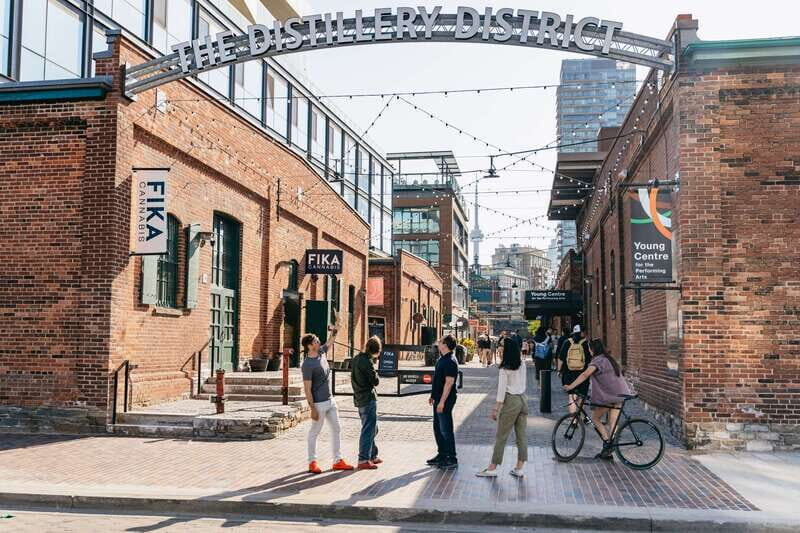
- Largest preserved Victorian industrial set in North America—you’ll learn why this district looks the way it does
- Gooderham & Worts, from glory to collapse—the company story connects to the neighborhood’s physical layout
- Indoor access—a few building interiors are part of the experience, not just photos outside
- Early Toronto’s wild years—stories blend business intrigue with the city’s rougher beginnings
- Small-group energy—you’ll have time to ask questions and get straight answers from the guide
Toronto’s Distillery District: time travel on cobblestones
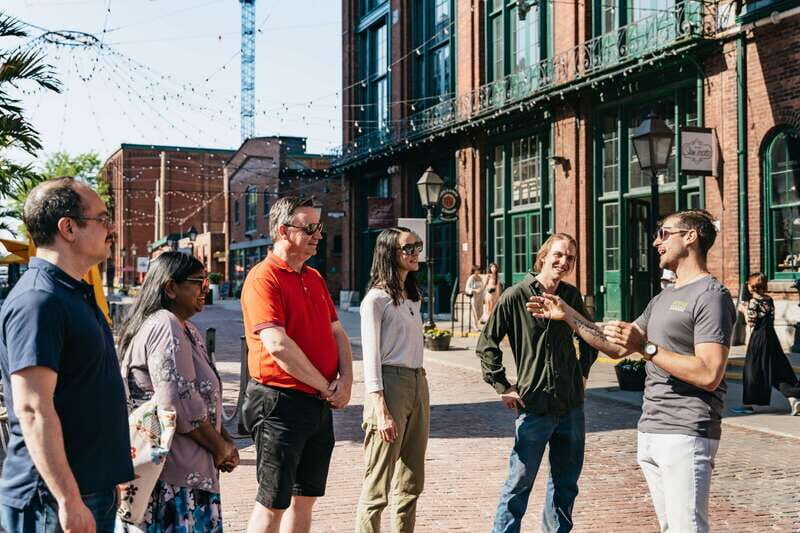
The Distillery District is one of those places that makes you slow down without trying. You’re in Toronto, but the vibe is different: Victorian-era industrial buildings, cobblestone underfoot, and a mix of old brickwork now surrounded by modern indie shops, bars, galleries, theaters, and restaurants. The tour works because it doesn’t treat the area like a theme park. It treats it like a working place that just happened to survive.
The big reason to go is the architecture. This is described as the largest and best-preserved collection of Victorian industrial architecture in North America, and you feel that scale immediately. You’re not wandering through generic historic streets. You’re walking inside a district that was built for production, storage, and power, and that original purpose still shapes what you see.
The other reason is the story focus. You’ll hear how the Gooderham & Worts Distillery rose to major fame—and then later faced its fall from grace. That business arc is the backbone of the tour, and it makes the buildings more than scenery. They become evidence.
Other Distillery District tours we've reviewed in Toronto



The 1-hour format that keeps it fun (and manageable)
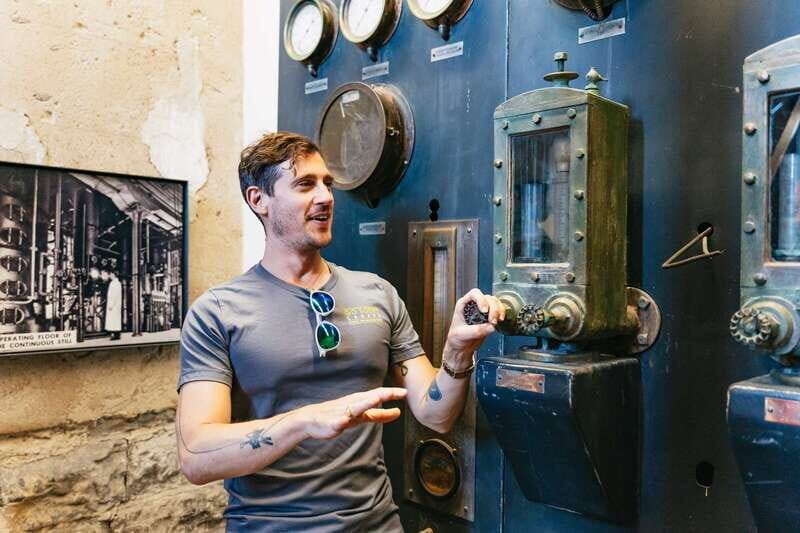
This is a 1-hour walking tour, which is exactly the right length for a focused history stop. You get enough time to learn the major thread—Gooderham & Worts and the district’s early years—without it turning into a lecture marathon.
The walking level is labeled easy, so you shouldn’t feel like you’re doing an all-day trek. Still, this is walking the whole time. Bring comfortable shoes, and keep your camera ready because you’ll want photos of both the exterior facades and the architectural details the guide points out.
In practical terms, the tour is paced like a “see it, understand it” walk. You don’t just pass buildings. You stop, look, and connect what you’re seeing to why it was built and how the distillery-era city worked.
Where you meet: the Distillery District office in Gristmill Lane

Your start is at Go Tours Canada, with check-in at 11 Gristmill Lane, Toronto, ON M5A 3C4. It’s inside the Distillery District, and the location is near the Red Heart at Parliament St. and Mill St., so if you’re using maps, that landmark area should help you orient fast.
The tour is framed as a simple out-and-back loop. You meet at the office, walk the district with the guide for about an hour, and then return to that same starting point.
Tip that helps: arrive a few minutes early. This kind of tour depends on timing—less for the company and more so you can start with a clear head instead of rushing to find the group.
Inside-and-out Victorian industrial architecture (the real star)
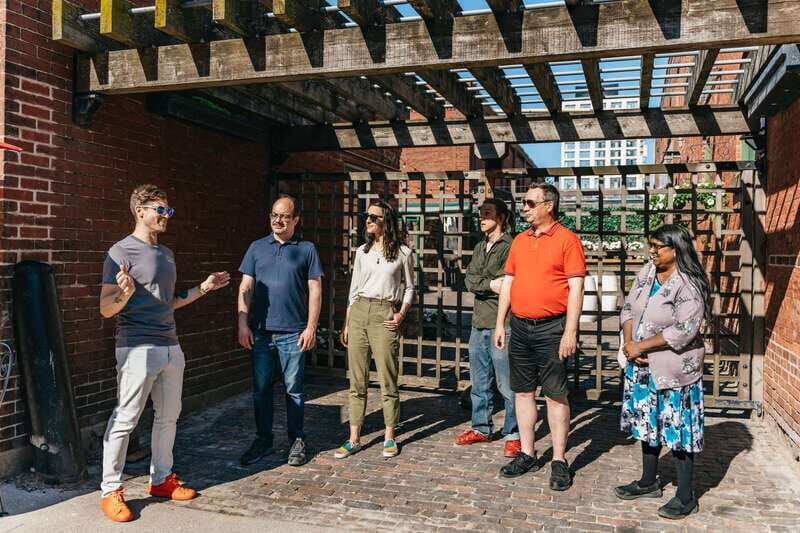
If you’ve visited the Distillery District before, you might recognize the streetscapes. But the tour’s main job is to help you see what you usually miss: the industrial design logic.
What you get is more than a pretty building walk. The district is described as a collection of Victorian industrial architecture that’s especially well preserved, and the guide experience leans hard into both inside and outside views. Some people specifically mention getting a sneak peek into interiors that the general public can’t access on their own. That’s a big deal, because it turns the tour from “look and go” into “step into the story.”
Expect the guide to point out how the buildings would have supported distillery production and the day-to-day reality of a working industrial complex. Even if you’re not a history buff, it clicks fast because industrial architecture is honest: shape, structure, and materials reveal purpose.
One specific detail that came up in the guide conversations: people mention a white building with very thick walls. The point isn’t just the trivia. It’s that you learn how the buildings were meant to handle storage, production conditions, and the realities of the time.
Gooderham & Worts: the rise and fall that makes the buildings make sense

The tour is built around one core storyline: the Gooderham & Worts Distillery. You’ll hear about the company’s growth into a major distilling operation—described as becoming the world’s largest distillery at one stage—and then how that prominence later shifted into decline.
That arc matters because it ties two things together:
1) the physical district you’re walking through, and
2) the wider story of Toronto’s early years.
You’ll get the sense of a city that was still figuring itself out—called out in the tour description as the moment when a young, inebriated city collides with a distillery that becomes huge. You’ll also hear about business intrigue, not just the clean, official version of history.
A theme that shows up strongly in the guide style is how the stories connect to real social effects. One guide, described as bringing the atmosphere of those years to life, also covered jobs created (including for women) and the social ripple effects. That adds weight to the architecture. You’re not just learning company facts—you’re seeing how industrial decisions affected real people.
Other walking tours we've reviewed in Toronto




Early Toronto’s wild years: stories that sound like a movie
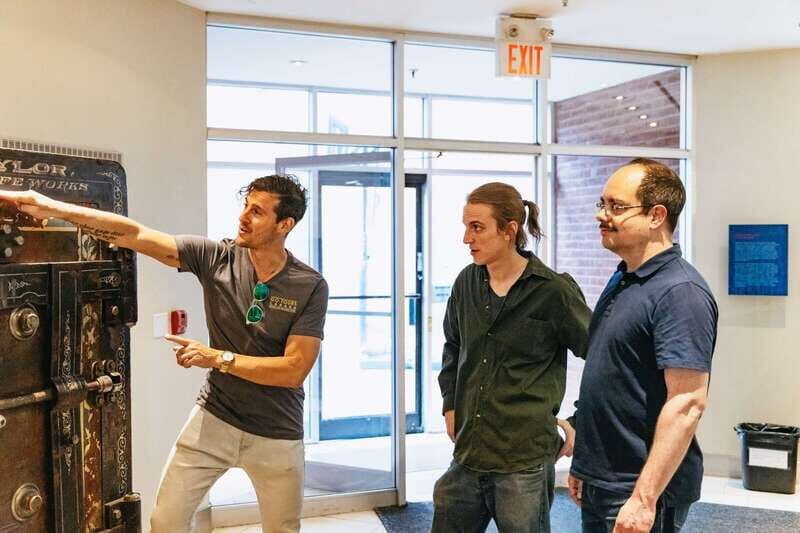
The tour description calls out early wild years, and the guide approach seems to deliver that feeling without getting silly. You’ll hear about Toronto’s earlier rough edges—how the distillery era fit into a city still developing its identity.
What makes this part work is that the guide doesn’t leave you with a list of dates. Instead, the guide ties scenes together: why the district looked the way it did, how it connected to the city, and what distilling meant back then.
One review highlight mentions the proximity of the lake to the original property compared to where it is now, and how the change happened over time. Even if you don’t memorize geography at the start, the idea helps you understand that Toronto’s shoreline story and the distillery story share the same timeline of development.
The guide experience: why storytelling quality shows up everywhere
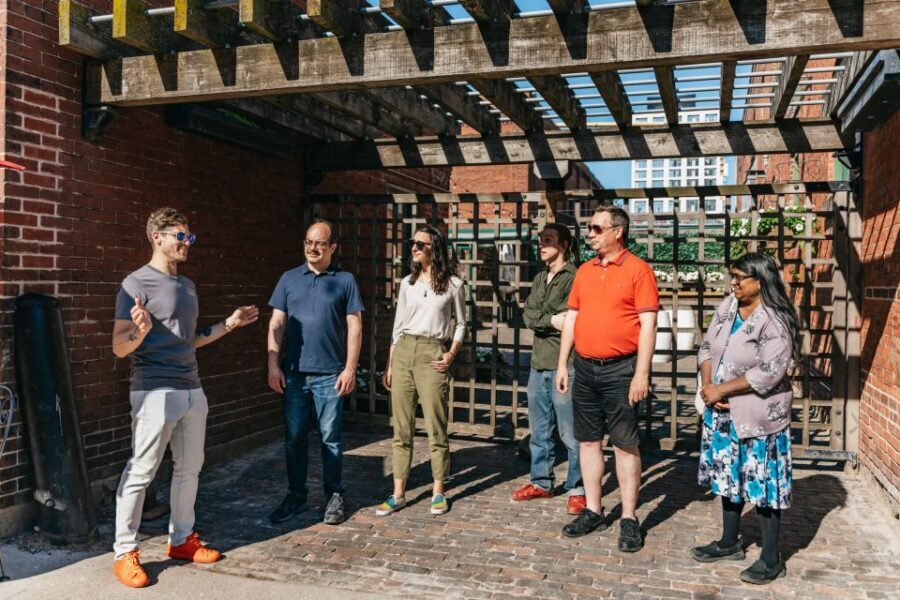
This is a guide-driven tour, and the ratings reflect that. Names like Devin, Tom, and Nicole appear often, and the common thread is energy plus clarity.
You’ll notice it in the structure:
- The guide sets the scene quickly.
- Then you walk to a spot, look closely, and the guide links that view to the distillery-era reason behind it.
- You get room for questions, and the guide uses your questions to guide the next stops.
Some people even mention that the guide kept the tour fun despite rain, with plans to keep more of the experience indoors when weather turned. That’s not something you can count on every day, but it’s a good sign that guides pay attention and adjust.
If you like tours where you learn, but you also laugh a bit, this matches that style. Several guides are described as funny and energetic while still sticking to the facts.
Today’s Distillery District: what to do with the tour after it ends
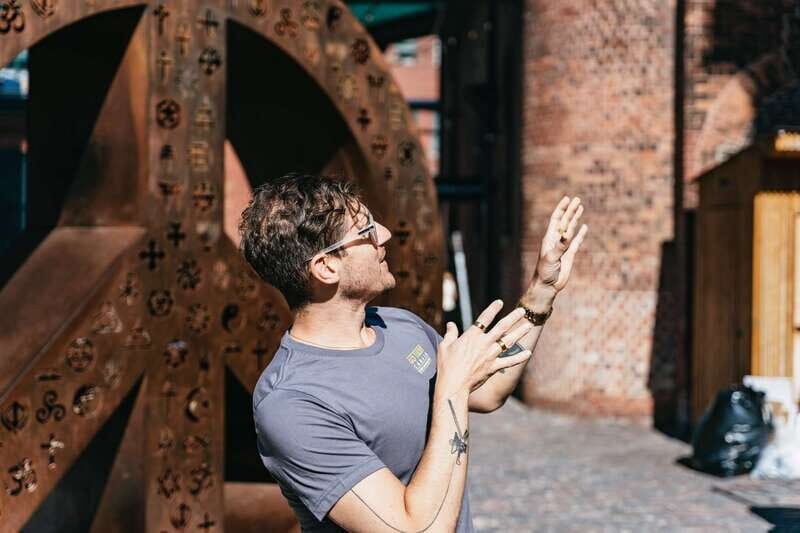
The tour doesn’t aim to be your whole day plan. It gives you context so the district feels intentional instead of random.
Since the area is now lined with indie restaurants, bars, boutiques, galleries, sculptures, and theaters, you can use the tour as a reset button. After the walk, you’ll know what you’re looking at. That means your next stop—coffee, a meal, a drink, or a browse through shops—feels more grounded.
A practical note from the on-the-ground experience: some people mention a small finale like chocolate, and a few mention beer tasting at the end. The official activity description you’re given doesn’t spell out alcohol tastings for this specific tour, so I’d treat any samples as a possible extra rather than a guarantee. Either way, planning for a quick snack afterward is always a safe move.
Timing, photos, and small comfort tips that actually matter
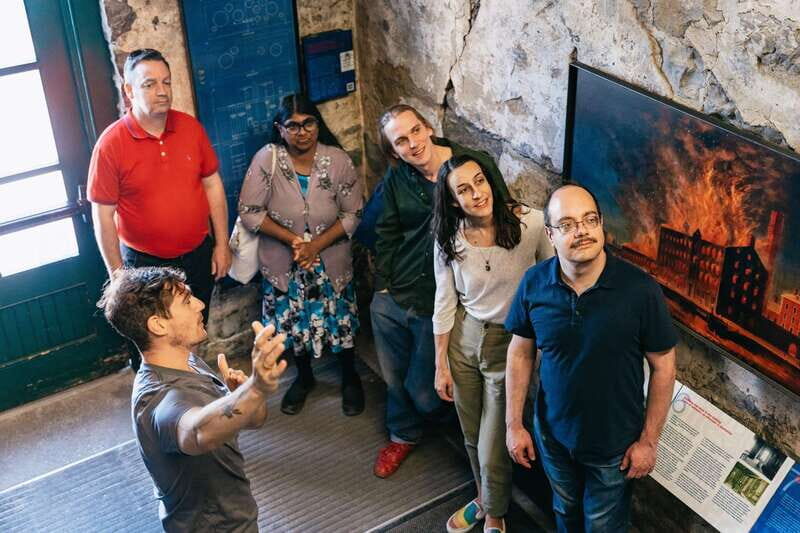
Because it’s one hour, the goal is to be ready from the first minute. Here’s how I’d set you up:
- Wear comfortable shoes. Cobblestones look charming, and they can also slow you down if your footwear isn’t stable.
- Bring ID or a passport if you have it listed as required. The activity notes say to bring one.
- Bring a camera. You’ll want exterior shots of the Victorian facades and interior views if your guide has access stops.
If you’re traveling in colder months, dress for it. The tour is described as wheelchair accessible and easy walking, but it doesn’t mention that it’s indoors the whole time, so layering helps.
Who this tour suits best (and who might want a different option)
This tour is ideal if you want:
- a compact history walk you can fit into a busy itinerary,
- strong architecture interpretation, and
- a clear story about Gooderham & Worts rather than scattered trivia.
It’s recommended for ages 10 and above, and walking level is described as easy. If you’re traveling with teens or older kids who like buildings and stories, this can feel like a smart mix.
If you’re the type who wants alcohol-focused content and tastings, note this tour is described as a Distillery District historic walking tour. The activity description points you to a different option—Prohibition & Spirits Walking tour—for a spirits flight tasting at the end. If tastings are your top goal, that’s the path to look at.
Is $20 good value for a Toronto tour like this?
At $20 per person for a one-hour guided walk, the value comes from three things:
1) you’re paying for a professional guide who connects the district’s look to the Gooderham & Worts story,
2) you’re getting access beyond what you’d likely get on a self-guided stroll (including interior sneak peeks that people specifically call out), and
3) you’re visiting a place that’s both architecturally distinctive and easy to enjoy afterward on your own.
If you’re staying a short time in Toronto, $20 is also a low-risk way to get oriented. The tour doesn’t just tell you what happened. It gives you a lens, so the Distillery District makes more sense the moment you step outside the group.
Should you book this Toronto Distillery District Historic Walking Tour?
Book it if you want a focused, easy one-hour walk with inside-and-out architecture and a straight storyline about Gooderham & Worts. It’s especially worth it when you care about context: why the district looks the way it does, how the distillery shaped the area, and how Toronto’s early years connect to these buildings.
Skip it or consider a different option if you’re hoping for a long, in-depth museum-style experience or if you primarily want alcohol tastings. For that, the separate Prohibition & Spirits tour is the one to compare.
If you’re on the fence, here’s the simple test: if you’ll enjoy learning from a guide who can answer questions while you walk, this hits the sweet spot.
FAQ
How long is the Toronto Distillery District Historic Walking Tour?
It lasts 1 hour.
How much does the tour cost?
The price is $20 per person.
Where do I meet for the tour?
Check in at 11 Gristmill Lane, Toronto, ON M5A 3C4, in the Distillery District near the Red Heart at Parliament St. and Mill St.
Is the tour wheelchair accessible?
Yes, it is listed as wheelchair accessible.
What should I bring?
You should bring a passport or ID card, comfortable shoes, and a camera.
Is there a recommended age range for this tour?
It is generally recommended for ages 10 years and above.