REVIEW · TORONTO
Toronto: Museum of Illusions Entry Ticket
Book on GetYourGuide →Operated by Museum of Illusions Toronto · Bookable on GetYourGuide
Your eyes will argue with you. That is the whole point at the Toronto Museum of Illusions: 100+ interactive exhibits that challenge what you think you see, especially the hologram scenes made for photos. I like that it is playful, hands-on, and easy to do in about an hour, but one catch is that at busy times the place can feel crowded and the “get the shot” moments may take longer than you expect.
The vortex tunnel effect is the kind of visual trick that makes your body react before your brain catches up, and the infinity room is a quick way to get a fun, surprisingly cinematic photo without planning a whole shoot. I also appreciate the small-group feel (limited to 8) and an English-speaking host/greeter, which helps the experience stay smooth for what is basically a self-paced ticket.
In This Review
- Key highlights I’d plan around
- What the Toronto Museum of Illusions ticket gives you
- A practical 1-hour route (self-paced, but don’t wander too long)
- Holograms and optical tricks: the best place to warm up
- Vortex tunnel: why you should take the effect seriously
- Infinity room: how to get the endless-space look
- Game room with 3D puzzles and brain teasers
- Crowds and photo bottlenecks: what to do about it
- Price and value: is $25 fair for a 1-hour illusion stop?
- Who should book this Toronto illusion experience
- Should you book the Museum of Illusions entry ticket in Toronto?
Key highlights I’d plan around

- Over 100 interactive illusion exhibits, not a passive sit-and-watch museum
- Holograms and light-based tricks that make it easy to take great photos
- Vortex tunnel that creates a shifting-floor illusion while you stand still
- Infinity room where space seems to stretch farther than it should
- Game room with 3D puzzles and brain teasers for real engagement
- Small group of up to 8, which usually keeps the flow calmer
What the Toronto Museum of Illusions ticket gives you
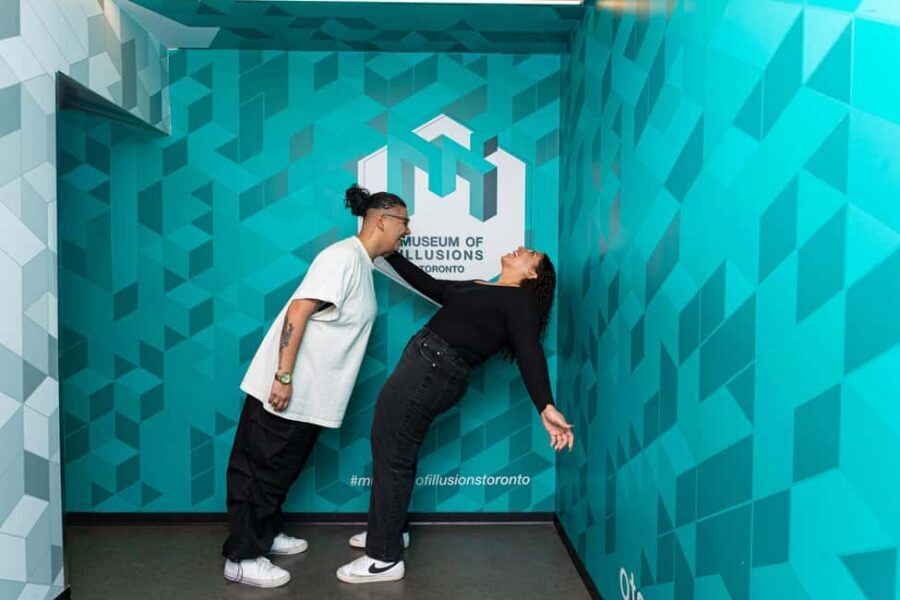
This is an entry ticket to the Museum of Illusions in Toronto. The big value is time and format: you get about 1 hour in a compact space packed with interactive visual challenges, with an English-speaking host/greeter and a small group limited to 8 participants.
The museum’s theme is simple: your brain is guessing all the time, and these exhibits make it prove that to itself. If you like hands-on stuff, weird effects, or just a good photo moment, this works well because most exhibits are designed for you to interact rather than read long explanations.
The price is $25 per person for a short visit. That can feel like a lot if you expect a big, multi-hour museum. But if you show up ready to play and you actually spend time in the star rooms, it becomes a fun, low-effort activity that fits neatly into a day of downtown sightseeing.
Other immersive & VR experiences we've reviewed in Toronto


A practical 1-hour route (self-paced, but don’t wander too long)

There’s no rigid itinerary you must follow, which is good. It also means you should have a basic plan so you don’t lose time. Here’s how I’d structure a solid hour so you hit the main moments without rushing.
Start with the earliest “wow” spaces, especially the holograms and visual illusions that use light and perspective. Then go for the vortex tunnel while you still have fresh patience for the head-spins and photos. After that, spend time in the infinity room—it is one of those spots where people often slow down because it looks endless. Finish in the game room, where the museum shifts from pure optical tricks to 3D puzzles and brain teasers.
If you do it in that order, you’ll usually end with a satisfying challenge instead of feeling like you only arrived at the puzzles at the last 10 minutes.
Holograms and optical tricks: the best place to warm up
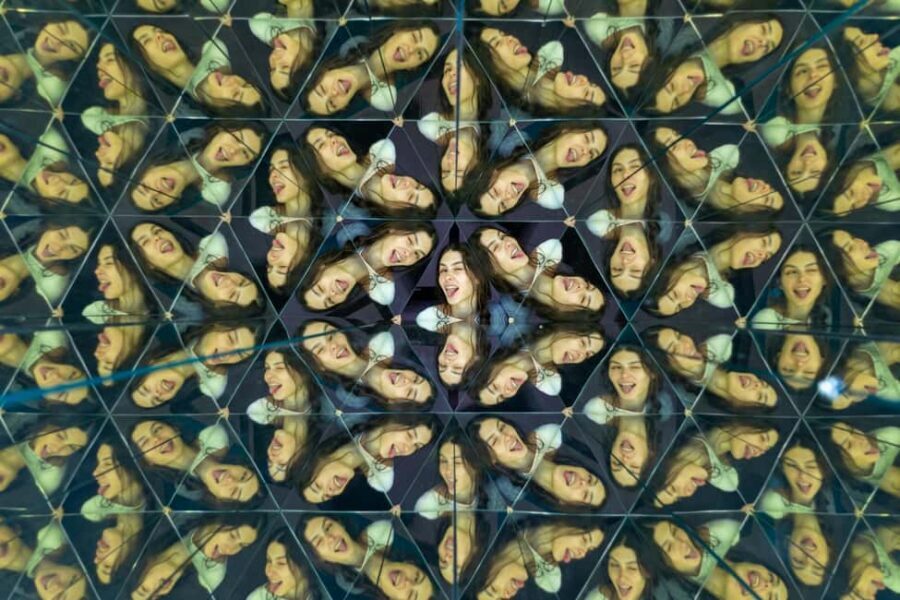
The museum starts strong with illusions that play with light and perspective, plus hologram displays that are built for photos. This is a great “warm-up” area because you’re not dealing with motion or anything physically intense yet. You can test different angles, stand back and zoom in with your camera, and figure out how the effects behave before you reach the star attractions.
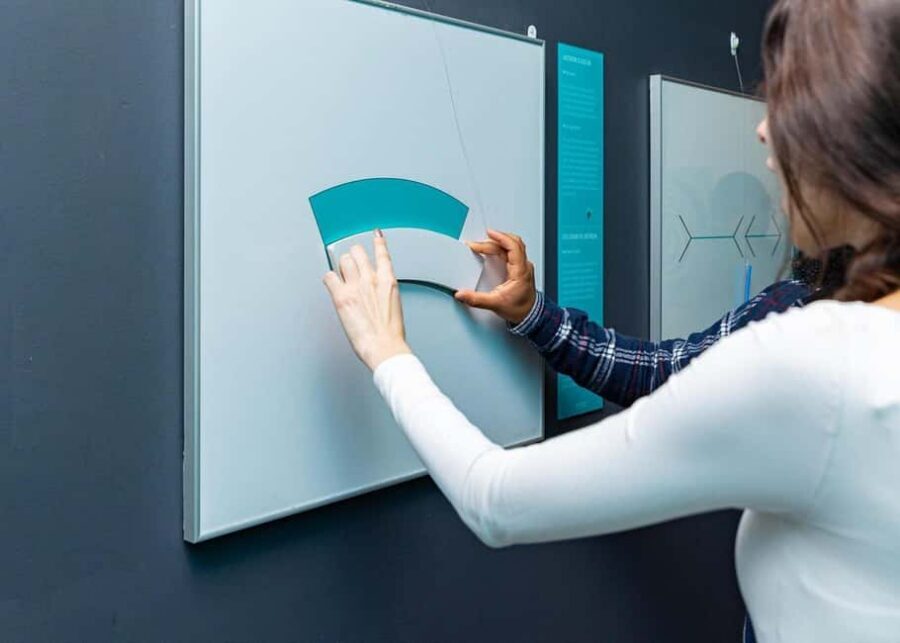
What I like about this section is how quickly you can get results. A lot of illusion museums ask you to read instructions or wait your turn. Here, the interaction is the payoff. You can experiment for a minute, laugh at the mismatch between what you see and what you expect, then move on.
Photo tip: pick one or two angles, take a few shots, and only then adjust your position. It keeps you from spending the whole visit chasing one perfect frame while the rest of the exhibits wait.
Vortex tunnel: why you should take the effect seriously
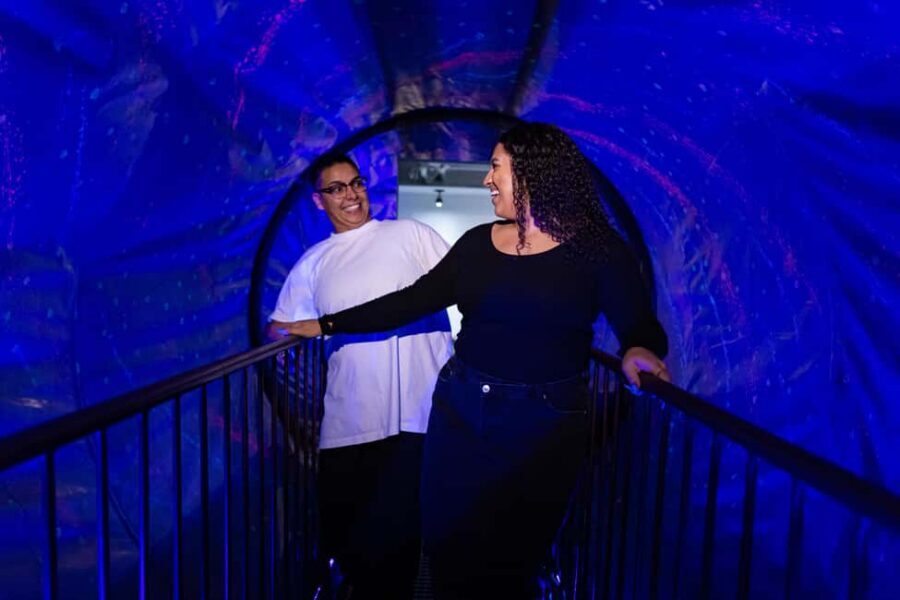
The vortex tunnel is one of the headline experiences: it creates the feeling that the ground beneath you is shifting even though you are standing still. That mismatch between sight and body reaction is exactly what makes it fun, and it is also the reason you should treat it like an activity, not just a photo stop.
Important: this is not suitable for people with vertigo. If you know that visual motion effects can trigger discomfort for you, skip the tunnel and focus on the rooms that are more stable.
If you’re going with friends or kids, you can still keep it relaxed. Just let people decide for themselves before they step in. A calm attitude matters more here than bravery, because the illusion is designed to feel real.
Infinity room: how to get the endless-space look
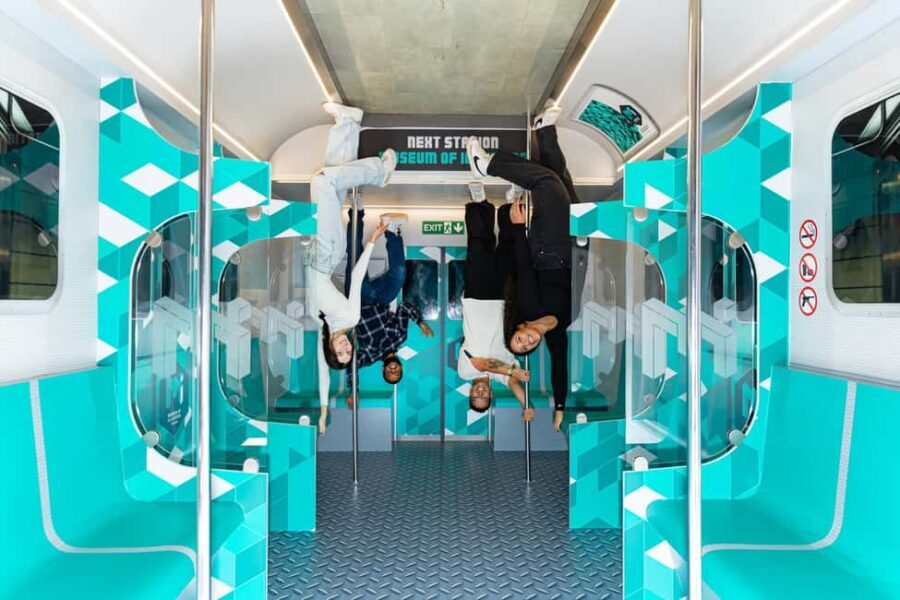
The infinity room is built around a space that seems to stretch endlessly. This is one of those exhibits where the illusion depends on perspective and timing, not force. You’ll likely spend more than a few minutes here because it’s fun to watch the effect change as you move.
For photos, think in terms of “pose, then adjust.” Get your framing, try a couple of positions, then try a different height or distance. The illusion works best when you’re not constantly spinning around. Slow movements give the camera time to capture the clean perspective lines.
I also like that this room is usually a comfortable option after the tunnel. It’s still mind-bending, but it doesn’t feel physically disorienting. It is also a good place to regroup if you come in a group of mixed comfort levels.
A few more Toronto tours and experiences worth a look





Game room with 3D puzzles and brain teasers
After the head-tricks, the museum switches gears. The game room adds 3D puzzles and brain teasers, and that matters because it turns the visit into an actual challenge instead of only visual entertainment.
If you’re traveling with teens or adults who like puzzles, this is where you’ll probably feel the most satisfaction. You get to test your thinking, not just your camera skills. And for families, it is a nice balance: kids often love the hands-on nature, while grown-ups appreciate that the puzzles give a clear sense of progress.
The only downside is time budgeting. Since the whole visit is about an hour, you can accidentally rush the games or get so distracted by photo spots that the puzzles become a quick stop. If you care about the puzzles, plan to arrive there with at least 20–25 minutes left.
Crowds and photo bottlenecks: what to do about it
The museum is popular, and you should expect that it can get crowded. When it’s busy, the most “photo-hungry” exhibits can turn into bottlenecks, especially in the spaces where people like to line up for the perfect angle.
Your best defense is timing and mindset:
- If you can, go earlier in the day or on a less packed time slot.
- Treat photos as a bonus, not the mission.
- Don’t fight the line—take your shots quickly, then move.
This is also why I like the small group limit. Even when the museum is busy, smaller groups can keep movement smoother and reduce the sensation that you are constantly waiting for other people to finish.
Price and value: is $25 fair for a 1-hour illusion stop?
$25 per person for about 1 hour is not a “cheap and cheerful” museum deal. It is more like a ticketed activity where the value depends on your expectations.
Here’s the honest math in plain terms:
- If you want a big museum experience with lots of reading and slow exploration, you may feel shortchanged.
- If you want interactive fun, quick wow moments, and photo-worthy scenes, the ticket often feels fair because you’re paying for entry into a concentrated set of effects.
There is also evidence that some people can finish quickly if they move briskly and focus only on the main attractions. That means you should plan to actually engage. Stand in the key rooms long enough to test angles. Play the puzzle section. If you do that, you turn a short visit into a full hour of value.
So yes, it can be worth it—but only if you go in ready to participate.
Who should book this Toronto illusion experience
This ticket is a strong fit if you want:
- A fun, all-ages indoor activity
- A rainy-day plan that does not require advanced planning
- A playful break between bigger attractions in downtown Toronto
- Lots of hands-on “try it yourself” moments
- Photo opportunities built into the exhibits
It may feel less satisfying if you mainly want long-form exhibits, extensive historical context, or a quiet museum where you can take your time without any crowds.
Should you book the Museum of Illusions entry ticket in Toronto?
Book it if you want a quick, interactive hit of visual tricks, especially the hologram moments, the vortex tunnel, and the infinity room. With 100+ exhibits in a compact 1-hour visit, it’s one of those activities that fits neatly into a day and leaves you with laughs and photos.
Skip it if visual-motion effects can bother you, because it is not suitable for vertigo. Also skip if your priority is a long museum outing—this is short by design, and a short visit can feel expensive if you’re expecting more.
If you like playful science, quick puzzles, and optical illusions that make you second-guess your own eyes, this is an easy yes for Toronto.