REVIEW · TORONTO
Private 2-Hour Walking Crime Tour in Toronto
Book on Viator →Operated by Toronto Crime Tours · Bookable on Viator
Tough stories start at 250 Yonge St. This private Toronto crime walking tour uses real cases and street-level landmarks to show the city’s darker side, guided by retired detectives who connect old incidents to what Toronto became. You’ll walk through downtown like a moving timeline, from street violence and courtroom drama to lingering mysteries.
Two things I especially like: you get former police experience right in the storytelling, and the route is built to be customized for your group. It’s not just a long list of crimes; the guide ties each stop to social change and the criminal-justice system, with a practical, no-nonsense tone.
The main thing to consider is that this is a walking tour with heavy, sometimes disturbing topics. You should wear comfy shoes, be ready for about two hours on foot, and plan ahead since bottled water is not included.
In This Review
- Key things to know before you book
- Entering the case files: what this Toronto crime tour is really like
- Price and timing: fitting 2 hours into a Toronto day
- Logistics that actually matter: where you meet and what to bring
- The 2-hour route: stop-by-stop from Yonge Street to the Distillery District
- Customization and pacing: how you get a tour that fits you
- Dark topics, real streets: what kind of person this tour suits
- Is it good value at $28.21?
- Should you book this private Toronto crime tour?
- FAQ
- FAQ
- What time does the tour start and where does it end?
- How long is the walking tour?
- Is this tour private?
- Is the tour customizable?
- What should I wear and bring?
- Do I need to be able to walk for the whole tour?
- What if the weather is bad?
Key things to know before you book
- Private, customizable format for your group’s interests and pace
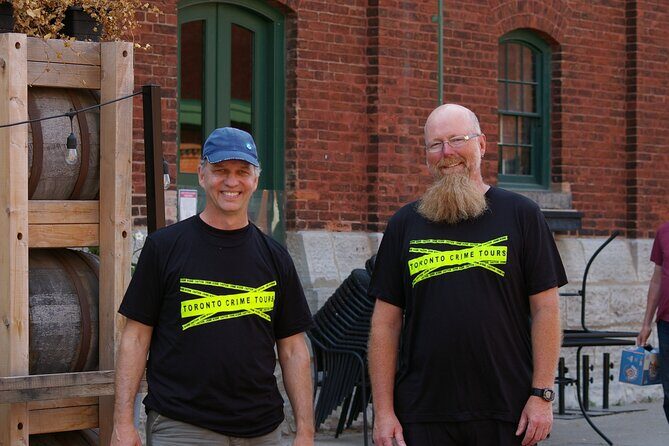
- Retired detective guides (Phil and Bob, with Dave also mentioned) who bring police-service perspective
- Built around major Toronto locations, from Yonge Street to Courthouse Square and the Distillery District
- Brisk but doable walking pace, with around 6,500 steps reported by one group
- Topic variety beyond murder, including riots, duels, mental health, and even public-morality questions
Entering the case files: what this Toronto crime tour is really like
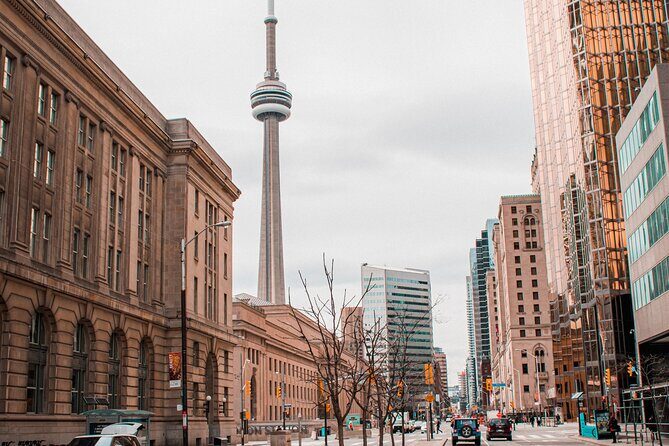
This is a 2-hour-and-change walking tour focused on crime, punishment, and the people affected by all of it. Instead of treating crime as pure spectacle, the stories are anchored to places: streets you already recognize, courthouses and civic spaces, markets, and the later industrial blocks around the Distillery District.
The guide team is the big reason it works. In the groups I read about, Phil and Bob (and Dave, too) are described as retired detectives with years of work at Toronto Police Services. That background shows up in the way incidents are framed: not just what happened, but how law enforcement and the system responded, and what that says about society at the time.
You’ll also notice the tour isn’t only about murder. You’ll hear about riots across eras, a duel that became a last-of-its-kind story, and courtroom cases that turned public attention into a full spectacle. You get a more rounded picture of how fear, media attention, and public order all collide in a growing city.
Other crime & brothel history tours we've reviewed in Toronto

Price and timing: fitting 2 hours into a Toronto day
At $28.21 per person with all fees and taxes included, the value here comes from what you’re buying: a private walking format with detective-level storytelling. It’s not a museum ticket where you stand alone. You’re moving, asking questions, and getting context as you go—especially helpful if you want a more adult, city-savvy experience than the usual sightseeing loop.
Timing matters. The tour runs about 2 hours 15 minutes, starting at 1:00 pm. It begins at 250 Yonge St and ends at 55 Mill St in the Distillery District. That ending location is convenient if you want to keep going after the tour, since it’s an easy place to pivot into food, photos, and evening plans.
One more practical note: the tour requires good weather, so if Toronto decides to rain on your parade, you may be offered another date or a refund. Plan a little flexibility into your schedule.
Logistics that actually matter: where you meet and what to bring
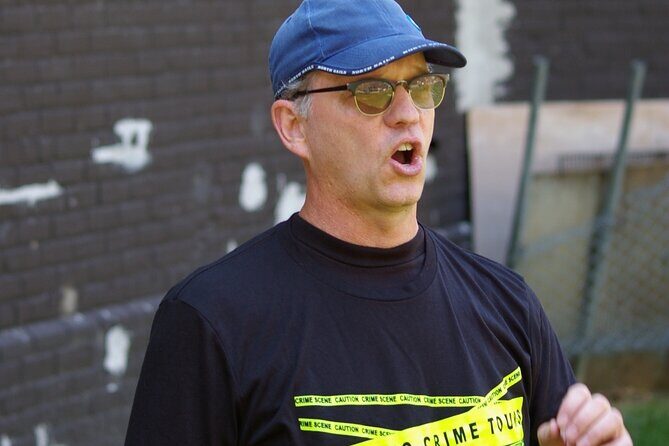
Meeting point is clear and central: 250 Yonge St. You’ll finish in the Distillery area at 55 Mill St, which can save you time later if you’re heading deeper into that neighborhood.
Because it’s a walking route, the simplest advice is also the most important: wear shoes that you can walk in for hours. One review mentioned around 6,500 steps, described as brisk but not so fast that shorter-legged walkers couldn’t keep up. Still, “brisk” is the keyword, so don’t plan to do this in dress shoes or brand-new sneakers.
Bring your own drink. Bottled water isn’t included, so pack a water bottle, especially on warm days. Also, if you’re the type who likes to take photos at each stop, factor in a few extra minutes for pauses.
The 2-hour route: stop-by-stop from Yonge Street to the Distillery District
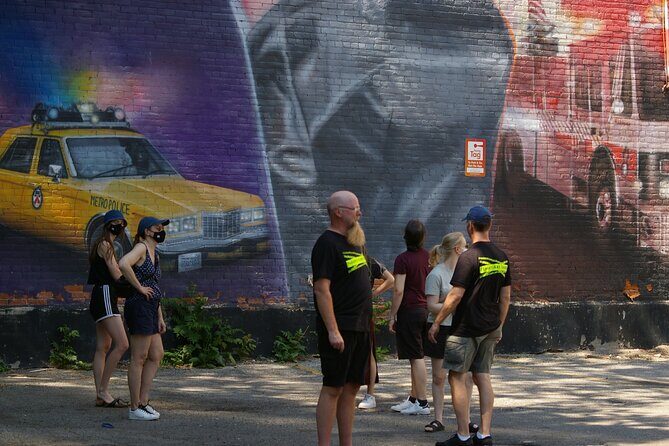
Below is the core arc of what you’ll see. Each stop is short—about five minutes—so the storytelling has to be efficient. That’s a feature, not a bug. You move quickly, but you still get enough detail to understand why each location matters.
Stop 1: CF Toronto Eaton Centre (1977 shoeshine boy murder)
You start with a case that hit hard: the shocking murder of a 12-year-old shoeshine boy in 1977. The story connects the crime to a turning point for downtown, including how it helped drive a cleanup effort. It’s a heavy opener, but it sets the tone: this tour isn’t “crime trivia,” it’s the social fallout you can feel on the ground.
Stop 2: Yonge Street (2005 Year of the Gun, Boxing Day crossfire)
Next is the 2005 Year of the Gun, plus the tragic Boxing Day murder of a 15-year-old girl caught in a streetgang shootout. This stop works well if you want to understand how violence can spill into public space and how holidays don’t protect anyone from city conflict.
Stop 3: Yonge Street (riots across eras)
Here you’ll hear about riots from the Upper Canada Rebellion in 1837 all the way to the G20 riots of 2010. The point is clear: protest and unrest aren’t new to Toronto. The guide uses the same main street idea—Yonge Street—as a thread linking different kinds of public anger over time.
Stop 4: The Path (mental illness and the criminal-justice system)
This stop shifts from sensational street crime to system-level issues: how mentally ill people are treated in the criminal justice system. It’s a reminder that crime stories aren’t only about villains and victims; they’re also about how institutions handle people who might be suffering but are still swept into legal processes.
Stop 5: Downtown (Ambrose Small disappearance, 1919)
You’ll move to Toronto’s greatest unsolved mystery: the disappearance of wealthy theatre owner Ambrose Small in 1919. A mystery like this changes the flavor of the tour. Instead of closure, you get lingering questions—and that’s often where media attention and public imagination grow.
Stop 6: Courthouse Square (last public gallows in Canada)
Courthouse Square is where the tour turns brutally literal. You’ll explore the last public gallows in Canada, plus the bizarre list of crimes that once carried capital punishment, including stealing turnips and stealing cattle. Even if you’re not squeamish, this kind of fact makes you recalibrate what “justice” meant in different eras.
Stop 7: Courthouse Square (1915 trial of Bert Massey)
Next comes the trial of the century in 1915, tied to the murder of Bert Massey of the Massey Ferguson empire. The emphasis here is on how a wealthy name can pull attention—and how a high-profile case turns into a public event, not just a legal proceeding.
Stop 8: Old Toronto (Boyd Gang and escape twice from Don Jail)
Then you’ll hear about the infamous Boyd Gang, including bank heists and their escape stories—escape-twice from The Don Jail. This stop tends to deliver energy because the case has momentum and drama, while still being grounded in real locations you can picture.
Stop 9: St. Lawrence Market (Jarvis Duel, 1817)
At St. Lawrence Market you’ll get the Jarvis Duel (1817) story, described as the last such duel once common in Toronto. Duels can sound old-fashioned, but the social context is what you’ll likely care about: honor codes, public rules, and how violence can be formalized before modern legal systems took over.
Stop 10: Old Town (1939 gangland slaying and The Corner)
You’ll hear about Canada’s first “gangland” slaying in 1939, plus the sordid state of The Corner at Dundas & Jarvis. This stop is about place-based reputations—how a neighborhood gets a label and how crime and poverty can reinforce each other in the public imagination.
Stop 11: Old Toronto (1855 clown riot and a police structure overhaul)
A strange-but-important story comes next: a riot between circus clowns and the Hook & Ladder fire company in 1855, and how it led to revamping the structure of Toronto police, described as still in effect 166 years later. If you’ve ever wondered how policing systems adapt, this is a real-world example—messy, human, and practical.
Stop 12: Old Toronto (serial killer targeting gay men in The Village)
This is a sensitive stop. You’ll hear about a serial killer targeting gay men in The Village, where police initially said there was no proof or links among victims, and then later eight victims were found buried in a ravine. Go into it knowing it includes graphic elements and themes that many people find difficult, even when handled respectfully.
Stop 13: Old Toronto (topless sunbathing: illegal or immoral?)
Then comes something that plays out like a culture question: topless sunbathing in the park—illegal? immoral? The guide uses this to show how crime tours aren’t only about violence. Sometimes the boundary between law and public opinion is the story.
Stop 14: Distillery Historic District (1832 whiskey boom and Gooderham & Worts)
As you reach the Distillery area, you’ll hear about the rapid growth of whiskey making in 1832 at Gooderham & Worts, plus the question of whether Wort’s ghost is still around. This stop gives you a shift in mood: from punishment and tragedy to industry, rumors, and the way stories stick to old brick.
Stop 15: Distillery part 2 (1922 bootlegging)
The final stop rounds out the Distillery era with the rougher side: bootlegging in 1922. It’s a fitting closer because it connects the legal world you saw earlier—courts, punishments, policy—with how people resisted those systems in later decades.
Customization and pacing: how you get a tour that fits you
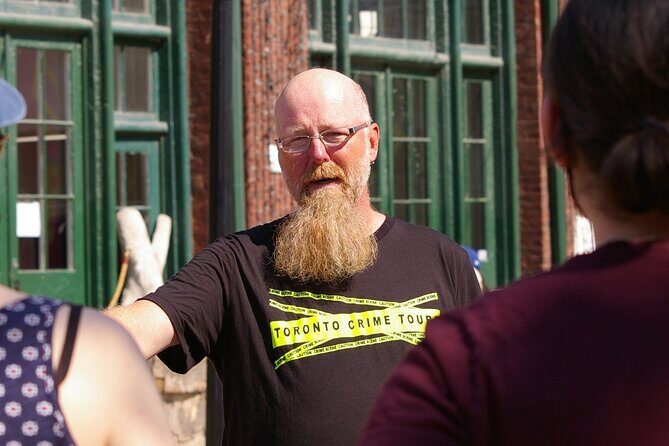
This is a private tour, so it’s designed for your group only, not a mixed crowd. The format is also described as customizable to suit your needs. In practical terms, that’s useful if you want more time on specific themes—riots versus court cases, for example—or if you’d rather keep it less intense around the most disturbing subject matter.
Pacing is worth calling out. Stops are short, so if your group likes long Q&A after each location, you might want to ask the guide to slow down slightly at a favorite stop. The tour has been described as brisk, but still manageable for people walking with short legs, which suggests it’s not a power-walk disguised as culture.
Other private tours in Toronto




Dark topics, real streets: what kind of person this tour suits

This isn’t the right pick if you want a light, jokey sightseeing stroll. The material includes murder, riots, the criminal-justice system, and a serial killer case. It’s also heavy enough that you should choose it intentionally if you’re sensitive to violent crime stories.
That said, it can be a great fit if you like:
- history that explains how society worked (and sometimes failed)
- crime stories that include the system side, not only the sensational parts
- learning Toronto through its most recognizable places, not only hidden alleys
It’s also a smart choice for locals who want a new way to see the city. When your guide frames modern Toronto through past patterns—unrest, policing, public reaction—it changes how you notice streets.
Is it good value at $28.21?

I think the value is strong for what you get: private guidance, a route that covers a lot of high-recognition Toronto landmarks, and a guide team with detective experience. The cost is also reasonable for a two-hour walking format, especially because all fees and taxes are included.
The main “cost” to you isn’t money. It’s energy and attention. You’re committing to walking and to reading the city through difficult stories. If that sounds like a fair trade, it’s one of the more cost-effective ways to get a guided Toronto experience that feels adult and specific.
Should you book this private Toronto crime tour?
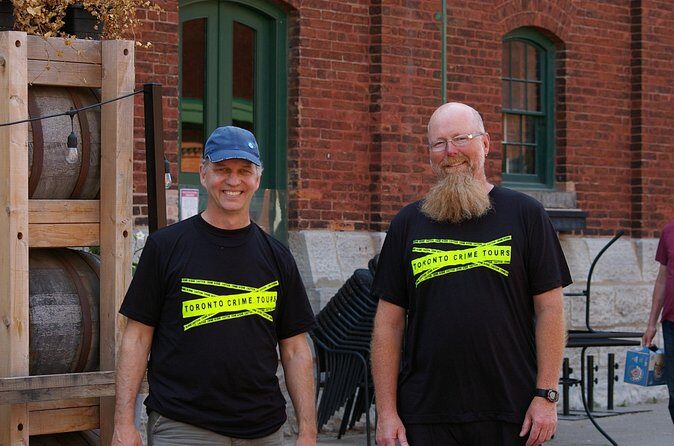
Book it if you want Toronto told through crime, law, punishment, and the public reactions that followed real incidents. It’s especially good if you like your sightseeing guided by professionals with investigative background—like Phil and Bob, with Dave also noted—because it makes the stories feel grounded.
Skip it (or choose another type of tour) if you’d rather avoid violent or disturbing topics, or if you’re not up for about two hours of walking. And plan ahead: bring your water and wear the comfiest shoes you own.
FAQ
FAQ
What time does the tour start and where does it end?
It starts at 1:00 pm at 250 Yonge St, Toronto and ends at 55 Mill St, Toronto in the Distillery District.
How long is the walking tour?
The duration is about 2 hours 15 minutes.
Is this tour private?
Yes. It’s a private tour, meaning only your group participates.
Is the tour customizable?
Yes. The tour can be customized to suit your needs.
What should I wear and bring?
Wear comfortable shoes since it’s a walking tour. Bottled water is not included, so bring your own beverage, especially if it’s warm.
Do I need to be able to walk for the whole tour?
Most people can participate, but the tour requires you to be able to walk for about 2 hours.
What if the weather is bad?
The tour requires good weather. If it’s canceled due to poor weather, you’ll be offered a different date or a full refund.