REVIEW · TORONTO
Kensington Market and Chinatown: A Self-Guided Tour
Book on Viator →Operated by VoiceMap Audio Tours · Bookable on Viator
Toronto’s best street stories are in your headphones. This self-guided Kensington Market and Chinatown audio tour ties together downtown parks, art spaces, and two immigrant neighborhoods with clear directions and on-the-walk narration.
What I like most is the lifetime access to the audio, so you can replay it later at your own pace. I also like the offline setup: maps and sound are available through the VoiceMap app, which makes walking feel smooth instead of tech-stressful.
One thing to consider: this tour is built for your phone. You’ll need your own smartphone and headphones, and you’ll be relying on GPS directions as you go.
In This Review
- Key things you’ll notice on this route
- A self-guided Toronto walk that keeps moving
- Price and time: $9.99 for about 1 hour 15 minutes of stories
- Getting started at Grange Park: VoiceMap basics that save time
- Art Gallery of Ontario and Grange Park: why this corner matters
- Kensington Market: 240-plus shops and the art of everyday browsing
- Chinatown street-life: herbs, produce mounds, and dried seafood
- OCAD University and the Kiever Synagogue: Toronto’s creative and faith landmarks
- How to walk it smart: comfort, pacing, and tech that behaves
- Who this tour is for (and who might not love it)
- Should you book this Kensington Market and Chinatown audio walk?
- FAQ
- How long is the self-guided Kensington Market and Chinatown tour?
- What does it cost?
- Is the tour in English?
- Does the audio tour expire?
- Do I need internet on the day of the tour?
- What app do I use for the audio?
- Do I need to bring a smartphone and headphones?
- Are museum tickets included for stops like the Art Gallery of Ontario?
- Where does the tour start and end?
- Can I cancel and get a refund?
- Is it available year-round?
Key things you’ll notice on this route
- Lifetime access audio you can use again, without expiration anxiety
- Offline maps and audio in the VoiceMap app so you’re not dependent on cell service
- Two neighborhoods, one walk: Kensington Market plus Chinatown energy
- Clear narration while you’re moving that explains what you’re seeing at street level
- Downtown context through Grange Park, the Art Gallery of Ontario, OCAD University, and Kiever Synagogue
A self-guided Toronto walk that keeps moving
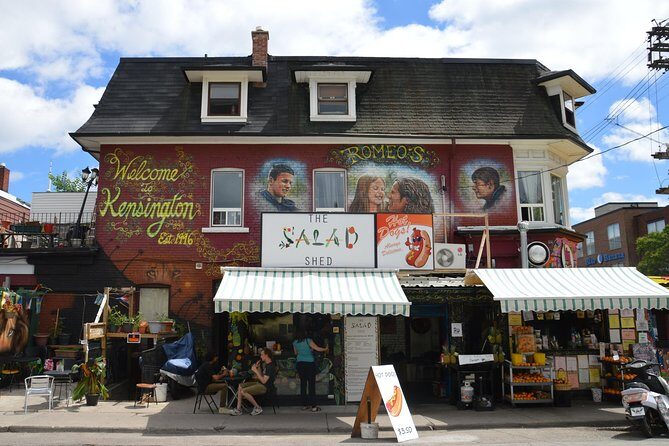
This tour works because it’s designed for real city wandering. You’re not sitting through explanations at each stop. You’re walking, looking up, and hearing the story as you pass it—so Toronto feels less like a checklist and more like a set of connected neighborhoods.
It also hits two places that can feel totally different from each other: Kensington Market and Toronto Chinatown. You get to compare the textures of the streets—one side full of small shops and casual market life, the other side heavy with food displays and storefront bustle—without having to plan multiple timed activities.
And the price is refreshingly sane for what you get. At $9.99 per person, you’re buying a guided experience without the cost of a traditional group tour. If you like independence, this is the kind of setup that lets you stop for a look, snap a photo, and keep going on your own schedule.
Other Kensington Market & Chinatown tours we've reviewed in Toronto



Price and time: $9.99 for about 1 hour 15 minutes of stories
The tour costs $9.99 per person and runs about 1 hour 15 minutes. That time window matters. It’s long enough to feel like you actually covered something meaningful, but short enough that you can still keep the rest of your day flexible.
Think of it as street-side orientation plus history. You’ll learn what a park was before it became a park. You’ll hear how a neighborhood like Kensington grew into a marketplace. You’ll get the “why” behind the streets in Chinatown and how these areas connect to the wider Chinese-Canadian community in the Toronto region.
Value-wise, the big win is that the audio access is included forever. If you come back to Toronto someday, you won’t have to pay again just to reuse the route. For the cost, that’s where it starts to feel like a deal rather than a novelty.
Getting started at Grange Park: VoiceMap basics that save time
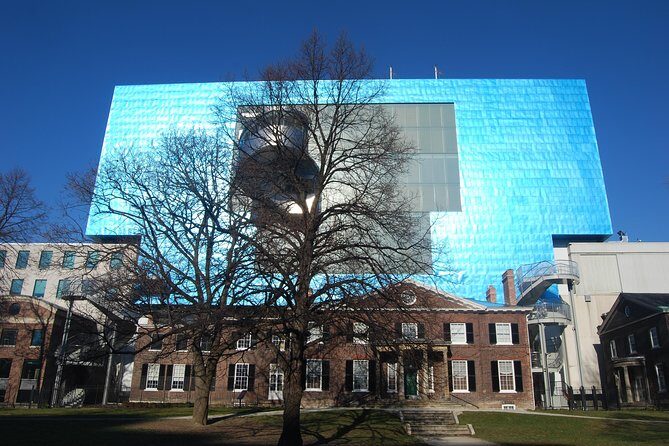
Your start point is Grange Park Dog Off Leash Area, at Beverly Street & McCaul St (near McCaul and Beverly). Your end point is College St & Augusta Ave. The walking flow is built around being able to pick up the route quickly and keep it simple.
You’ll use the VoiceMap app on Android or iOS. The tour includes:
- voice narration in English
- offline access to audio, maps, and geodata
Plan for the part that isn’t included: you provide the smartphone and headphones. Also, download your offline content before you head out, especially if you expect spotty reception. That way your tour keeps running even if your phone switches networks.
One more practical tip: start at the correct meeting spot. The tour is designed for a specific beginning and ending. If you start two streets over, you can still walk around, but you may lose the clean direction timing that makes this tour feel easy.
Art Gallery of Ontario and Grange Park: why this corner matters
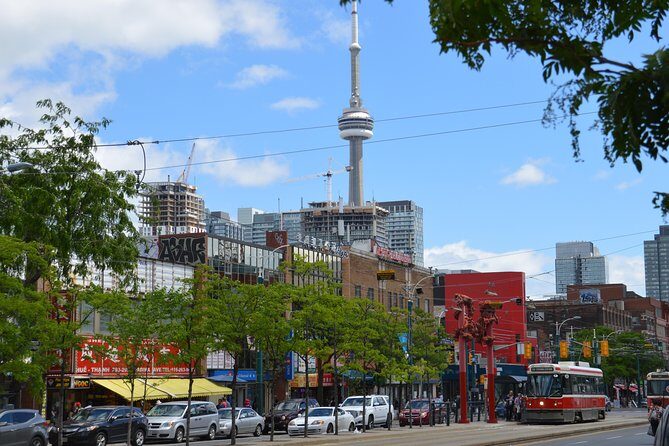
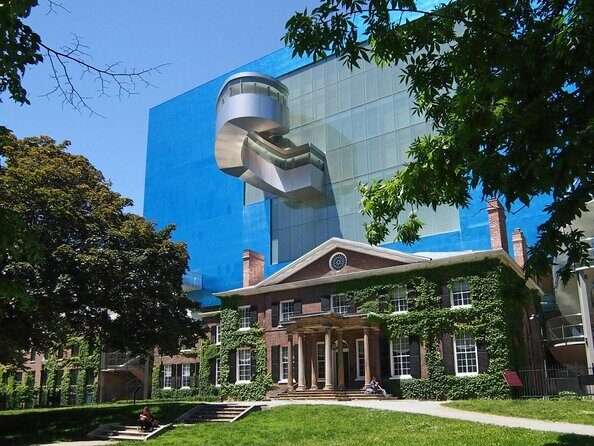
This route starts by connecting two major downtown anchors: Grange Park and the Art Gallery of Ontario area.
Grange Park isn’t just “a place to sit.” It’s historically tied to the manor called The Grange. Long story short: the park’s land was once the backyard of The Grange, and later that expanded manor area helped become what is now the Art Gallery of Ontario. Hearing that as you walk makes the park feel like part of the city’s construction timeline, not just a green patch downtown.
Then there’s the Art Gallery of Ontario itself, described as one of North America’s larger museum spaces—spanning modern times and going way back. The tour framing is useful here because it sets expectations. You’re not being asked to buy tickets along the way. Museum entrance fees aren’t included, so treat this stop as orientation and context. If you do decide to go inside, you’ll need to plan separate admission.
A small drawback: because tickets aren’t included, you should avoid expecting a full museum visit inside the tour. If you want indoor gallery time, use the audio tour to decide whether you’ll add that later.
Kensington Market: 240-plus shops and the art of everyday browsing
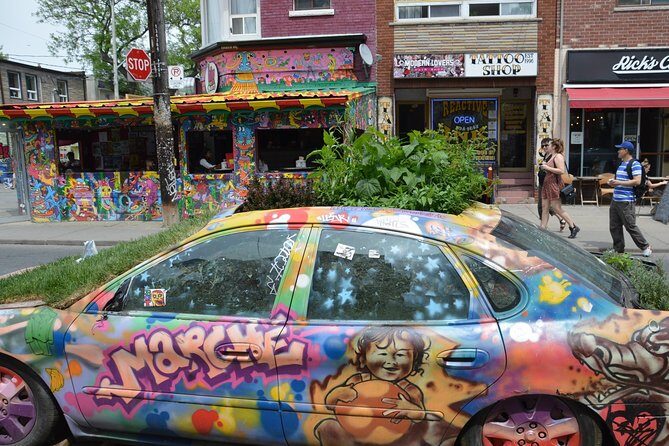
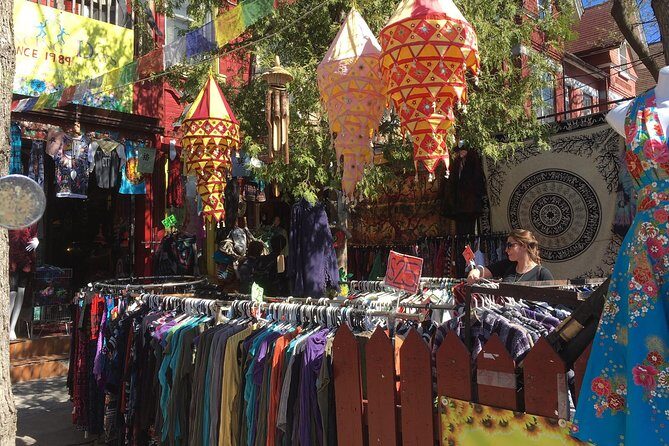
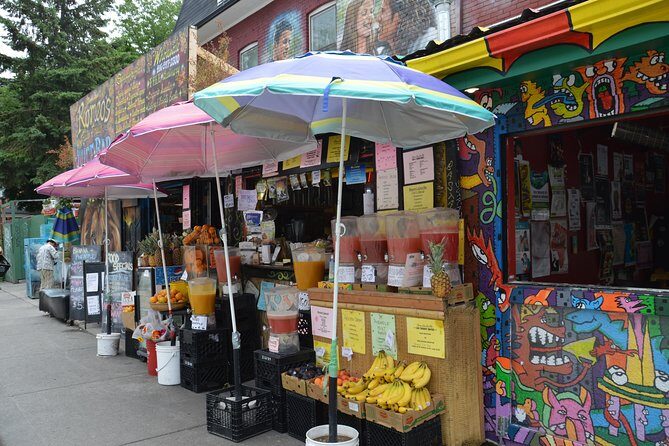
Kensington Market is built for lingering, and this tour matches that energy. You’ll pass through a neighborhood-market mix with over 240 unique shops, restaurants, bars, and cafes.
The narration gives you a lens on why Kensington feels the way it does. It’s a multicultural marketplace with a large community of writers, artists, and musicians, living alongside an immigrant community. That matters because Kensington isn’t only about places to eat. It’s about people and identity showing up in storefronts, signage, and the kinds of goods that get sold right there on the sidewalk.
What I like about how the tour handles Kensington is that it doesn’t force a “one-size-fits-all” experience. You’re free to drift toward what grabs you. If you love street snacks, you’ll likely find yourself slowing down. If you prefer browsing, Kensington rewards that too.
Also, Kensington is a great neighborhood to use for timing. Because it’s a market area, you’ll often notice a shift across the day. If you start too late, you may find some stalls winding down. If you start earlier, you can catch more of that daily-market rhythm.
If you’re sensitive to crowds, Kensington can feel busy. That said, the self-guided format lets you step aside, wait a moment, then rejoin the route.
Other scavenger hunts & escape rooms we've reviewed in Toronto



Chinatown street-life: herbs, produce mounds, and dried seafood
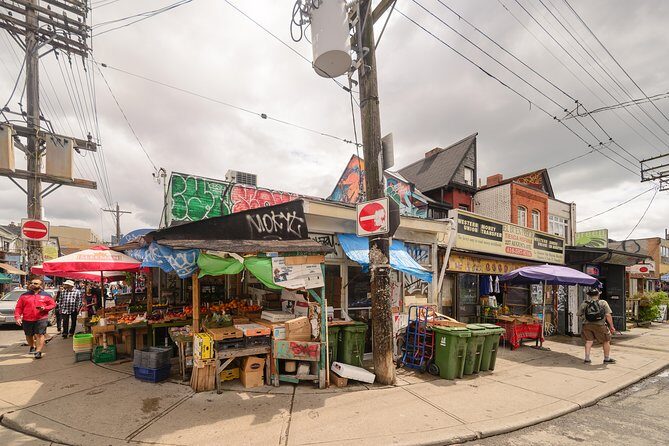
Toronto Chinatown is not a single static block. The tour frames it as an area with major cultural, social, and economic importance for Chinese-Canadian communities, and it notes that there are multiple Chinatowns across Toronto and the Greater Toronto Area.
On most days, the street scene is almost immediate: the flavor spills onto the sidewalk. You’ll pass produce markets and grocers with piles of herbs and produce, including fruits and vegetables that look unfamiliar if you’re used to standard supermarket selections. You’ll also see dried seafood, with vendors lining sidewalks and setting up wares out of grocery carts and pop-up tables.
This stop is valuable because it teaches you how to read the street. Instead of treating Chinatown like a background for photos, you’re learning what you’re looking at: why those goods are displayed so openly, and how the neighborhood functions as a hub.
A practical consideration: if you’re uncomfortable around strong food smells, this area is intense in the best way. You’ll notice it, especially right near sidewalk vendors. Plan accordingly—bring a mask if that helps you feel comfortable, and keep your time flexible so you don’t feel rushed.
OCAD University and the Kiever Synagogue: Toronto’s creative and faith landmarks
The route doesn’t stop at markets. It also threads through educational and historic landmarks that help downtown feel connected.
OCAD University shows up as Canada’s largest and oldest educational institution for art and design. The tour context matters if you’re trying to understand why Toronto has such a visible creative layer. You’ll hear about the university’s role and the broader structure of its faculties, including art, design, liberal arts and sciences, plus alternative programs.
Then comes the Kiever Synagogue. The narration covers how the congregation originally resided in the Ward and later purchased property in 1914 from the Denison family estate, building a synagogue there.
That Denison connection ties back into the route’s broader local story. The land that Kensington and nearby areas occupy was originally tied to the Denison family. George Taylor Denison used part of what’s now park land as a parade ground for a volunteer cavalry troop he commanded during the Rebellion of 1837.
If you like walking tours for this reason, you’ll enjoy these stops. They give you a sense of how Toronto keeps reinventing spaces—manor grounds become public areas, family estates become institutions, and community buildings mark the city’s waves of settlement.
One watch-out: these are points you pass near or through as part of the walking route. The tour won’t promise indoor access or a full building tour. If you want deeper time inside any site, you’ll need to plan that separately.
How to walk it smart: comfort, pacing, and tech that behaves
This is a smartphone audio tour, so the small choices you make matter.
First, headphones. Use comfortable ones, not the earbuds that fall out when you turn your head. You’ll be walking and listening for long enough to want stable audio.
Second, battery life. Offline audio is included, but your phone still needs power. If you’re out all day, keep an external battery if you have one.
Third, pacing. The tour is about 1 hour 15 minutes, but the neighborhood stops are the kind where you’ll want to look around. Give yourself a little buffer. If you’re the type who stops to browse, plan closer to 1.5–2 hours total for the whole experience.
Finally, keep expectations right about admissions. Since tickets or entrance fees are not included, treat the museum and other attractions as narrated stops rather than a guaranteed entry experience. The audio helps you understand what you’re seeing, and that’s often enough.
Who this tour is for (and who might not love it)
This tour suits you if:
- you like walking independently and hate waiting for group timing
- you want neighborhood context while you’re seeing it with your own eyes
- you’d rather pay for an audio guide than for a more expensive guided group
It’s especially good if this is your first visit and you want an easy way to understand the city’s neighborhoods without signing up for multiple tours.
You might skip this style if:
- you hate relying on your phone outdoors
- you want indoor museum time as part of the main plan
- you want a talking-to-you human guide for questions on the spot
The upside for most people: it’s private in the sense that only your group participates, and it’s available every day in the listed hours.
Should you book this Kensington Market and Chinatown audio walk?
Book it if you want a low-cost way to connect three downtown anchors—Grange Park/Art Gallery area, Kensington Market, and Chinatown—with story-driven narration and easy navigation. At $9.99, lifetime access, and offline support, it’s the kind of add-on that can turn a random afternoon walk into a memorable neighborhood tour.
Skip it if you’re looking for a guided museum day or you don’t want to use a smartphone while walking. In that case, you’d likely feel constrained by the tech-first format.
If you like to explore at your own speed, this one fits Toronto’s vibe perfectly: part history, part street food energy, and all neighborhood.
FAQ
How long is the self-guided Kensington Market and Chinatown tour?
It’s approximately 1 hour 15 minutes.
What does it cost?
The price is $9.99 per person.
Is the tour in English?
Yes, the audio narration is offered in English.
Does the audio tour expire?
No. It includes lifetime access to the tour in English.
Do I need internet on the day of the tour?
Not necessarily. It includes offline access to audio, maps, and geodata through the VoiceMap app.
What app do I use for the audio?
You use the VoiceMap app for Android and iOS.
Do I need to bring a smartphone and headphones?
Yes. Smartphone and headphones are not included.
Are museum tickets included for stops like the Art Gallery of Ontario?
No. Tickets or entrance fees to any museums or other attractions en route are not included.
Where does the tour start and end?
Start: Grange Park Dog Off Leash Area, Beverly Street & McCaul St, Toronto. End: College St & Augusta Ave, Toronto.
Can I cancel and get a refund?
No. This experience is non-refundable and cannot be changed for any reason.
Is it available year-round?
It’s listed as operating Monday through Sunday from 12:00 AM to 11:59 PM during the service period shown (09/25/2019 to 02/16/2027).