REVIEW · TORONTO
Toronto: Casual Historic Walking Tour
Book on GetYourGuide →Operated by Idle-Hour Tours · Bookable on GetYourGuide
Two hours can feel like a week of planning. This easygoing Toronto historic walking tour strings together the city’s key sights at a pace that won’t bully you into rushing. You start at Sankofa Square and work your way through Nathan Philips Square, Old and New City Hall, and the famous underground pedestrian maze people call the Path.
I especially like how the tour blends big landmarks with human details, so the downtown doesn’t turn into just photos. I also love the fact that it ends at St. Lawrence Market, which means your day stays practical: you can grab local food right after without hunting around.
One drawback to think about: it’s not a sit-down tour, and it’s not suitable for wheelchair users. Also, it runs in all weather, so you’ll want comfortable shoes and the right layers.
In This Review
- Key highlights worth your attention
- Sankofa Square to the Downtown Core: Getting Your Bearings Fast
- Nathan Philips Square and Old/New City Hall: Where the City Shows Its Teeth
- The Path Stop: A Quick Lesson in How Toronto Walks in Winter
- Financial District Walk and the Suits Building: Pop Culture Meets Place
- Berczy Park Break and the Gooderham Flatiron Building: Parks and Heritage in One Move
- St. Lawrence Market Finish: Eat Local Without the Rush
- Price and Pace: How $18 Works for a 2-Hour Walk
- Who Should Book This Tour (and Who Might Not)
- What to Bring for a Comfortable Downtown Walk
- Should You Book This Toronto Walking Tour?
- FAQ
- How long is the Toronto casual historic walking tour?
- Where does the tour meet?
- What landmarks are included?
- Is food included in the tour price?
- Does the tour run in bad weather?
- Is the tour suitable for wheelchair users?
Key highlights worth your attention
- Small group size (up to 10) keeps the walk conversational, not lecture-style
- Nathan Philips Square plus Old and New City Hall gives you major downtown context fast
- The Path reference helps you understand how Toronto stays walkable in winter
- Financial district stop with the Suits building spot that fans recognize
- Berczy Park break plus a look at the Gooderham Flatiron Building
- St. Lawrence Market finish lets you eat locally at your own pace
Sankofa Square to the Downtown Core: Getting Your Bearings Fast
Meeting at the stage by Yonge and Dundas Square (Sankofa Square) is a smart choice because it’s one of those intersections where everything feels connected. You’re not starting out in some far-flung neighborhood; you’re placed right in the center of Toronto’s day-to-day energy and transit web. That matters because a historic walk goes way better when you quickly understand where you are.
From there, the tour eases you into downtown through landmarks people use as reference points even if they’ve never studied Toronto’s past. Think big public space first, then move into civic buildings, and only after that head toward the business district and parks. It’s a logical flow for your legs and your brain.
You’ll also appreciate the tour’s casual tone. It’s built as a relaxed walk, not a marathon of memorizing dates. And with a guide named CJ who brings extra effort like photographs and restroom breaks, the experience tends to feel more personal than the typical “follow me” sightseeing line.
Other walking tours we've reviewed in Toronto

Nathan Philips Square and Old/New City Hall: Where the City Shows Its Teeth
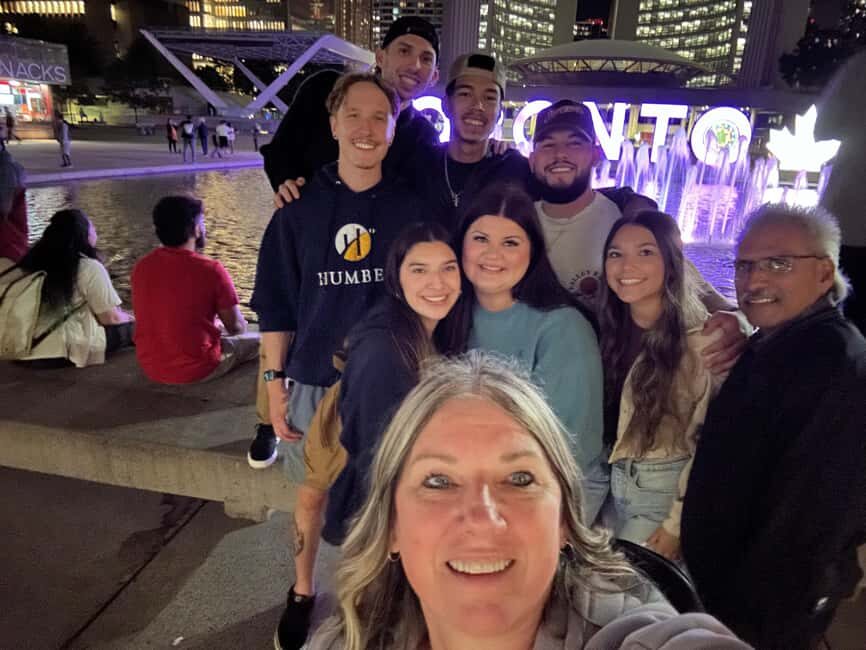
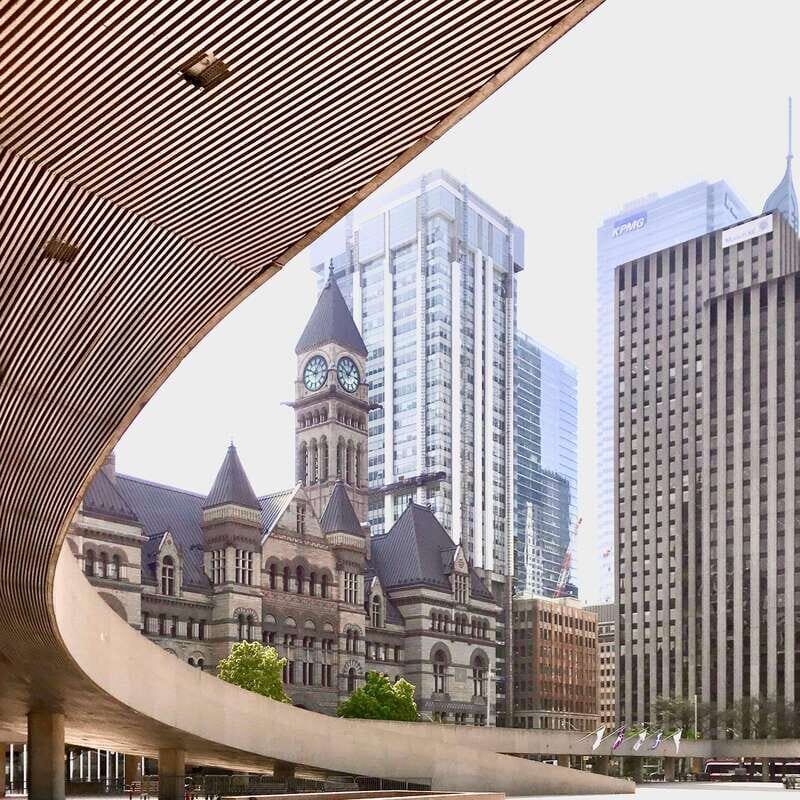
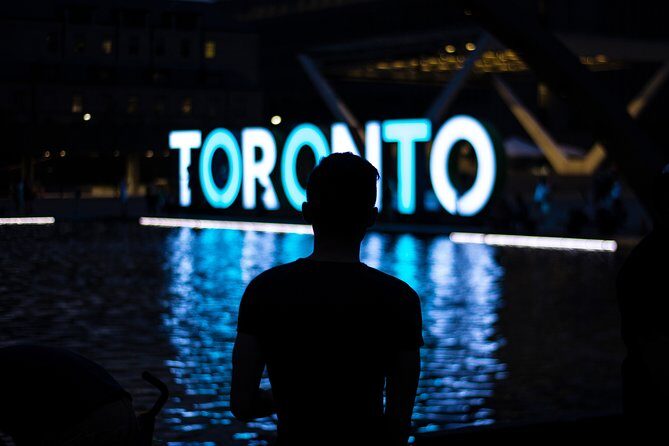
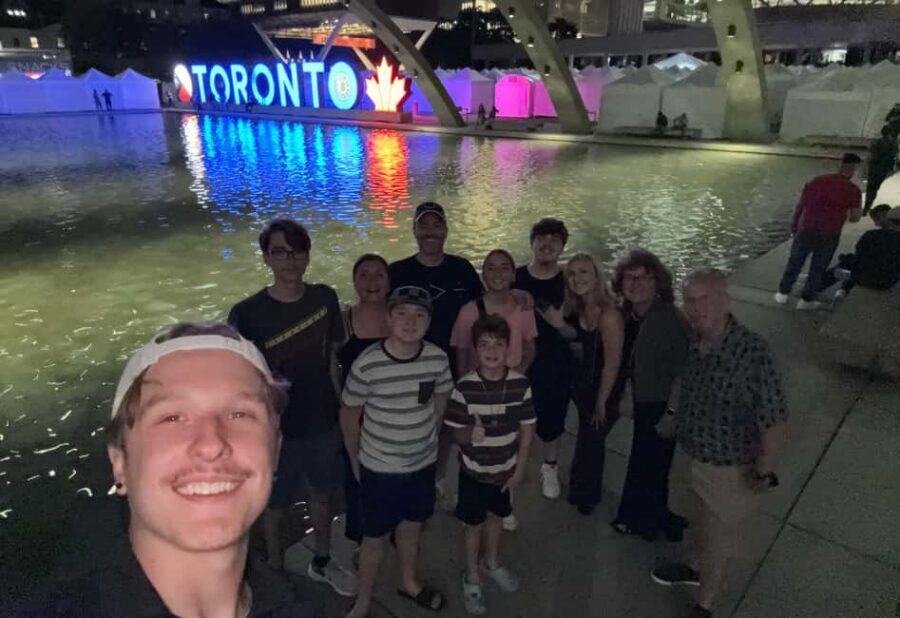
Nathan Philips Square is one of those places that instantly tells you you’re in the heart of government and civic life. It’s open, iconic, and easy to orient around. In about a half hour, you get more than a glance—you get context on why the square exists and how it connects to the surrounding City Hall complex.
Then you shift into Old Toronto civic architecture with Old and New City Hall together in your view. That pairing is useful because it shows Toronto’s evolution without forcing you into a museum. You’re essentially comparing eras with your eyes instead of reading long panels.
What I like about this portion is the way the guide links what you see to how people actually used these spaces. You get the feeling that the buildings aren’t just backdrops. They’re part of how the city organized itself, staged events, and projected identity. It also helps you understand why locals still point to these places when describing “downtown” to someone new.
Practical tip: bring your camera and be ready to stop often. You’ll want a few different angles of the City Hall surroundings, not just one quick shot.
The Path Stop: A Quick Lesson in How Toronto Walks in Winter
When the tour mentions the Path, it’s not just a fun fact. It’s a real part of how you can experience downtown without getting pummeled by cold weather. The Path is Toronto’s underground pedestrian network, and knowing it exists changes how you plan your winter walking days.
In other words, this stop gives you a map for your future self. Even if you’re only in town for a weekend, the idea is simple: downtown can be navigated on foot in seasons when walking outdoors gets miserable.
I like that the Path is treated as context rather than an obligation. You’re not forced into an underground detour. Instead, you learn what it is and why it matters, so when you see entrances later, you’ll recognize what you’re looking at. That’s the kind of information that pays off after the tour ends.
Financial District Walk and the Suits Building: Pop Culture Meets Place
Next comes the financial district, and it’s a playful change of pace. You’ll be walking through streets where office towers and business addresses shape the feel of downtown. The best part here is the practical attention to detail: you’ll see the building associated with the TV series Suits.
This is a great stop if you’re even loosely aware of the show. You don’t need to be a superfan to appreciate it. The value is how you see Toronto through a different lens. Pop culture makes the setting feel familiar, and then the guide ties it back to real place and time—so it becomes more than name recognition.
One more benefit: this section is where you can notice how Toronto’s downtown “works.” You’ll observe how pedestrian flow shifts between open public squares and more tightly focused blocks. It’s a quick education in city rhythm that’s hard to get from a bus window.
If you want a good photo, keep an eye out for clean lines and street-level framing. The financial district can look best when you shoot from the sidewalk rather than from across the street.
Berczy Park Break and the Gooderham Flatiron Building: Parks and Heritage in One Move
After the business blocks, the tour gives you breathing room at Berczy Park. A park stop on a short walking tour is more than a kindness for your feet—it’s a chance to reset your attention. You get greenery, open space, and a slower feeling before the final stretch toward St. Lawrence Market.
Then you head toward a landmark that’s impossible to ignore once you see it: the Flatiron (Gooderham) Building. You’ll get a view of it, and it’s tied to an important piece of Toronto’s industrial story. The building connects to the old headquarters for the Distillery District, which gives the structure a deeper meaning than its shape.
Here’s why this part works well: it turns the tour from civic and commercial into cultural. You end up with a more balanced downtown picture—city life, business life, and the heritage layer underneath.
Practical tip: this is a good moment to hydrate. The tour is short, but the downtown walking adds up, especially if you’re also stopping for photos.
Other historical tours in Toronto


St. Lawrence Market Finish: Eat Local Without the Rush
Ending at St. Lawrence Market is a smart payoff. It’s one of the best ways to turn a guided walk into a full experience, because you don’t have to suddenly switch gears and figure out where to eat. You finish in a place that’s already set up for food.
Even though meals and drinks aren’t included, finishing here keeps your options open and lets you choose what you want—whether you’re craving something quick or you want to browse first and decide later. For a two-hour tour, that freedom is a big deal. You avoid the classic problem of ending too early or ending nowhere near good food.
This ending also makes the tour useful for different travel styles. If you like to wander afterward, you can. If you prefer to eat immediately, you can. Either way, you’re not stuck at an awkward location with hunger and no plan.
Price and Pace: How $18 Works for a 2-Hour Walk
At $18 per person for a 2-hour guided walk, the value mostly comes from concentration. You’re not paying for a half-day bus ride or an all-day commitment. You’re paying for a focused downtown route that hits recognizable landmarks and gives you a guide who can explain what you’re seeing.
The small-group setup (limited to 10 participants) also matters for value. When you’re not squeezed into a crowd, you can actually ask questions and get answers in real time. That’s where CJ’s style stands out—people mention he brings enthusiasm and that the tour stays personal, which is exactly what you want for this kind of short experience.
The one thing to consider is that the price stays the same regardless of headcount. Since groups are capped, there can be times when the group is quite small. If you’re the kind of person who wonders whether you’re “getting your money’s worth” when there are only a few people, that thought may pop up. The practical answer is: on a short walking tour, the guide can still tailor attention even if you’re fewer.
Who Should Book This Tour (and Who Might Not)
This tour fits you if you want a calm, structured way to understand downtown Toronto without building your own route from scratch. It’s especially good if you like mixing:
- landmark photos with real-world context
- architecture with practical city navigation ideas
- a park reset followed by a classic food stop
It’s also family-friendly and in English, so it’s easy to follow. And the meeting point is simple enough that you can get started without complicated logistics.
I’d hesitate if you have mobility limits that make walking hard, because it’s not suitable for wheelchair users and it’s built around walking between stops. I’d also think ahead if you’re visiting in a season with nasty weather. The tour operates in all weather conditions, so you’ll want a jacket you can move in and shoes that won’t slip.
What to Bring for a Comfortable Downtown Walk
This is one of those tours where the details are boring until you’re the one standing in the cold. Bring comfortable walking shoes first. Then bring water, because a short tour still gets you moving, and downtown streets can drain you faster than you expect.
A camera helps, because the major stops are photo-friendly—Nathan Philips Square, the City Hall area, the Flatiron building, and the streetscape in between. If you’re the type who likes a few solid shots instead of constant snapping, you’ll be happy with how often you get natural opportunities to pause.
And dress for the weather. The tour doesn’t cancel just because conditions are less than perfect, so layer up and plan for wind and rain.
Should You Book This Toronto Walking Tour?
Yes, if your goal is a smart introduction to downtown Toronto in a 2-hour window. This is a strong choice for first-timers and for anyone who wants to connect Toronto’s major landmarks into a single, easy story you can remember later.
I’d book it if you appreciate a guide who actually works the room—CJ’s reputation for making the tour personal, adding extra touches like photos, and keeping the pace comfortable makes a difference when your time is limited.
I’d skip it if walking long distances is tough for you, or if you need fully accessible routes. And if you hate spending time outdoors in variable weather, make sure you pack accordingly, since the tour runs in all weather conditions.
Bottom line: for $18, this is one of the more efficient ways to get downtown orientation plus a finish at a place where eating is already solved.
FAQ
How long is the Toronto casual historic walking tour?
It lasts 2 hours.
Where does the tour meet?
You meet by the stage at Yonge and Dundas Square (Sankofa Square).
What landmarks are included?
You’ll see Nathan Philips Square, Old and New City Hall, the Path area, the financial district, Berczy Park, and a view of the Flatiron (Gooderham) Building. The walk finishes at St. Lawrence Market.
Is food included in the tour price?
Meals and drinks are not included, but you finish at St. Lawrence Market where you can eat local food.
Does the tour run in bad weather?
It operates in all weather conditions, so dress appropriately.
Is the tour suitable for wheelchair users?
No, it is not suitable for wheelchair users.