REVIEW · TORONTO
Sports, Street Skateboarding, Economics, History & Culture
Book on Viator →Operated by Savant Tours · Bookable on Viator
Toronto’s downtown has a secret skate economy. This 90-minute walk links Toronto history with what’s happening now in media, sports, and even sidewalk tricks, all while you cross some of the city’s most recognizable landmarks. You’ll start at Queen Street West, wind through the Financial District and the PATH, then finish near Scotiabank Arena.
I love how the tour mixes big-city themes with real street-level details. Two standouts for me: the story-based stop at Nathan Phillips Square (including the Toronto Sign at the ice rink area), and the way street skateboarding is explained as part of Toronto’s downtown culture, not just a hobby.
One thing to consider: this experience is weather-dependent, and it’s a lot of walking through core downtown and the PATH, so comfy shoes matter more than you’d think.
In This Review
- Key highlights you should know before you go
- A downtown Toronto walk that mixes skating, screens, and money
- Nathan Phillips Square to the Toronto Sign at the ice rink
- Bay Street Corridor: Suits filming, press encounters, and production realities
- The PATH section: pandemic changes, wayfinding tech, and why it matters
- Financial District context: employment, evolution, and a city that runs on numbers
- Street skateboarding in downtown Toronto: from urban tricks to today’s scene
- Brookfield Place architecture and the NHL Situation Room in the southwest tower
- Legends Row outside Scotiabank Arena: Maple Leafs names, Raptors change, Kawhi era
- The value beyond landmarks: the Duncan recommendation map
- Who should book this Toronto tour, and who should pass
- Should you book this downtown Toronto skate-and-economics walk?
- FAQ
- How long is the Toronto walking tour?
- What does the tour cost?
- Where does the tour start and where does it end?
- Is this tour in English?
- Is admission included for specific stops?
- How many people are in the group?
- Is this tour dependent on weather?
- Do I need to tip?
- Is there a cancellation window?
Key highlights you should know before you go
- Nathan Phillips Square + the Toronto Sign and the area’s major-event past
- Suits filming lore on Bay Street and how production changed after the spotlight moved
- The PATH route with wayfinding tech and a clear look at pandemic-era shifts
- Street skateboarding history in downtown Toronto and the present-day scene
- Brookfield Place + the NHL Situation Room in the southwest tower
- Legends Row and Raptors culture outside Scotiabank Arena (Kawhi Leonard era included)
A downtown Toronto walk that mixes skating, screens, and money
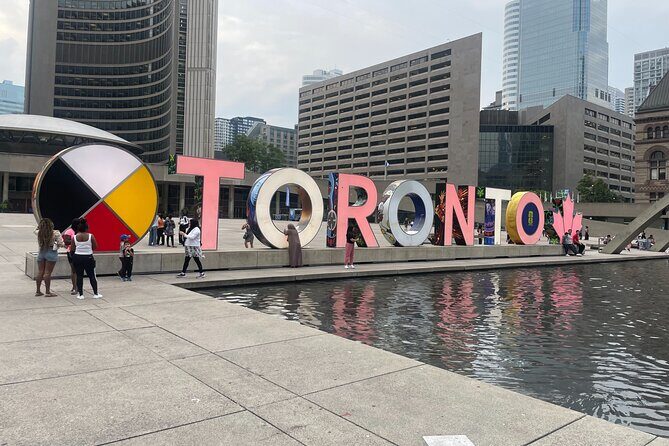
This isn’t a generic sightseeing loop. It’s built like a city puzzle, with sports, street skateboarding, economics, and culture snapping together as you walk. You’ll cover what shaped downtown Toronto, then connect it to what’s still shaping it today.
The price is low for a guided, story-heavy walking tour: $11.22 per person for about 1 hour 30 minutes. At this level, you’re not paying for entrances or a museum ticket. You’re paying for a local guide’s angle, plus the mental map you’ll leave with.
The group stays small, capped at 25 people, which helps when you want to ask questions and get real answers. And yes, you get more than just facts: the tour includes a Google Map of Duncan’s Toronto Recommendations, including food, drink, and dessert, which adds practical value for your next day in the city.
Other historical tours in Toronto

Nathan Phillips Square to the Toronto Sign at the ice rink
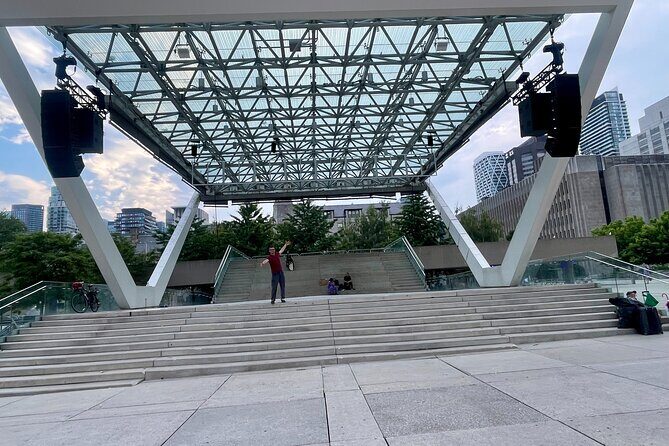
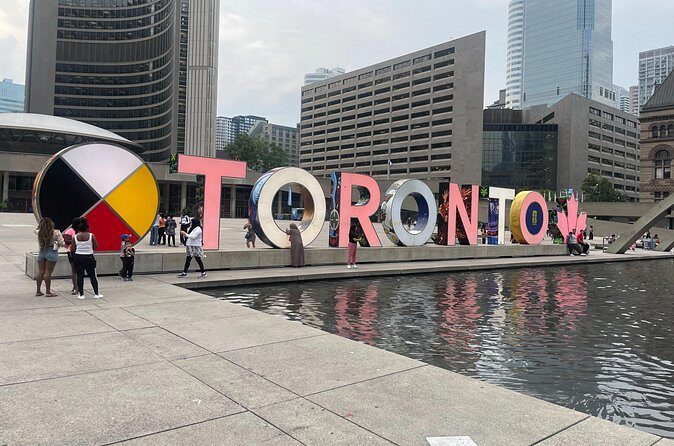
Your tour begins at 100 Queen St W, and the first landmark stop grounds you fast. Nathan Phillips Square is one of those places that looks simple until you learn what happened there. You’ll hear how it hosted the largest event in Canadian history and how the space keeps reinventing itself around what the city needs in different eras.
A key visual is the famous Toronto Sign at the ice rink area. Even if you’ve seen photos, it hits differently in person because you can connect the sign to the seasonal rhythm of the square. This is also where you’ll pick up a local culture layer, including the mention of the Reconciliation Garden next to the square.
If you like walking tours that explain why a location matters, this is a strong start. The drawback is that the square can be busy on some days, so if you hate crowds, plan your visit with that in mind.
Bay Street Corridor: Suits filming, press encounters, and production realities
From the civic center of downtown, you shift into the city’s media and business brain. On the Bay Street Corridor section, you’ll learn about the TV show Suits and the lobby location used in the series. You’ll also hear about Meghan Markle’s role on the show as a paralegal, plus what filming meant when cameras and attention followed cast members in real life.
This stop also covers how other film productions used the same area and the challenges Toronto’s film industry faces now. That matters for you because it’s not just fan-service. It’s a practical look at how a production city manages demand, attention, costs, and the constant question of what keeps filming happening when the hype shifts.
It’s brief at about 10 minutes, so treat it like a concentrated story stop. You’ll get ideas, not a full lecture. If you want long Q&A on TV trivia and film locations, you’ll likely have to save deeper questions for other parts of the walk.
The PATH section: pandemic changes, wayfinding tech, and why it matters
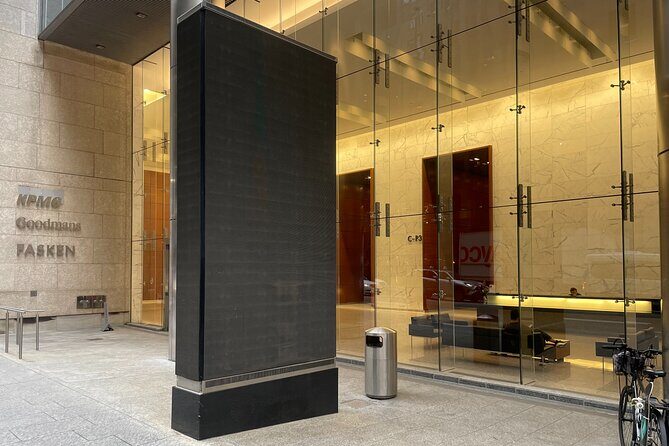
One of the best parts of this tour is that you don’t only stay on open streets. You’ll walk through part of The PATH, Toronto’s underground pedestrian system, and learn why it exists and how it changed.
You’ll hear about the impact of the PATH closure during the pandemic, then how businesses adjusted when foot traffic didn’t return the same way. This is the kind of story that helps you understand Toronto beyond skyline photos. It also gives you a clue for what to expect on a winter visit, when the PATH becomes your best friend.
There’s also an excellent practical element: the wayfinding technology the PATH uses to help people navigate. That’s useful because the system can feel like a maze if you’re on your own. Even if you never go far underground, you’ll come away with a better sense of how to move through downtown efficiently.
One caution: if you’re the type who dislikes underground spaces, this section could feel less fun than street stops. Still, it’s short enough that it won’t take over the whole experience.
Financial District context: employment, evolution, and a city that runs on numbers
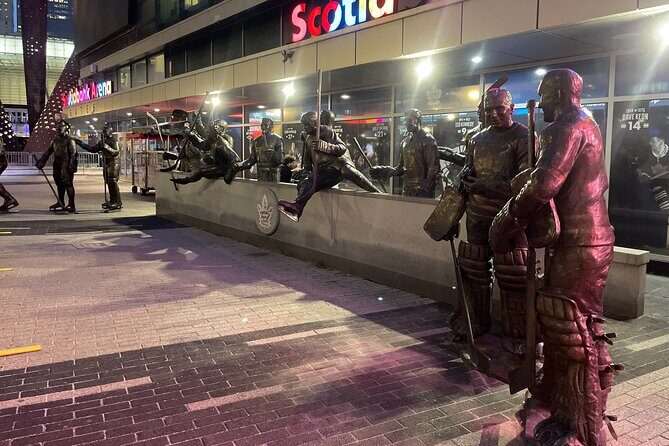
You’ll spend time learning about the history of Canada’s Financial District and why it matters to the Canadian economy. The tour also mentions the number of people employed in the district, which is a helpful detail because it turns “finance downtown” from an abstract idea into a real workforce picture.
In my view, this portion is valuable even if you don’t care about markets. Knowing how economic power clusters in a city explains why certain buildings, streets, and civic spaces develop the way they do. It also helps you read Toronto like a system, not a collection of landmarks.
As you walk, you may also spot cultural details that connect finance to art and public memory, including the reference to a 2020 statue of a mesmerizing head sculpture seen around the financial area. It’s one of those moments where the city’s public art becomes part of the story, not just something to glance at.
This part can feel more “informational” than “photogenic,” so if your goal is mostly photos, bring your camera but expect a little more listening. The upside is that the information sticks because it’s tied to what you’re standing in front of.





Street skateboarding in downtown Toronto: from urban tricks to today’s scene
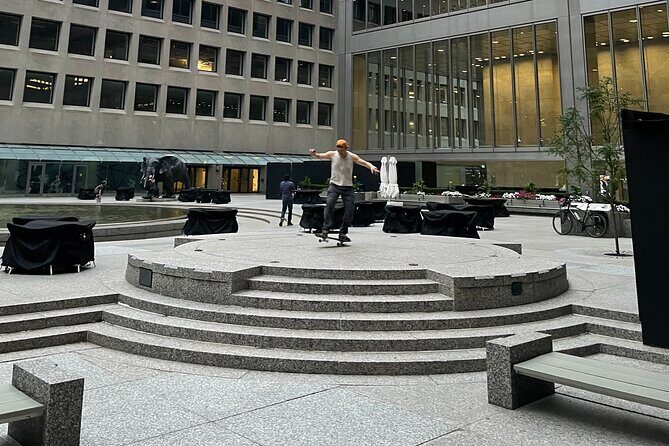
Here’s the heart of the experience: street skateboarding, downtown Toronto, and how the urban environment shapes the sport. You’ll hear about the history and evolution of street skateboarding in Toronto’s downtown core, including how professional skateboarders got their careers started by filming tricks on real architecture in the city.
This is where the tour becomes more than history. It looks at the present climate for street skateboarding in downtown Toronto, which gives you context for why you might see activity in some places and not in others. The key value for you is perspective: you’ll understand how a city’s rules, design, and culture affect a sport that depends on both creativity and “spot selection.”
The guide angle matters here too. From what I’ve gathered from how Duncan teaches, he’s a local skateboarder with deep city knowledge, and you can feel the difference when someone explains skating in Toronto with actual lived-in details. The result is that even if you’ve never tried skating, you’ll walk away understanding why downtown feels the way it does.
Practical tip: don’t wear brand-new soles on a long downtown walk. This section is still a walking tour, but you’ll likely slow down to look at spots and details.
Brookfield Place architecture and the NHL Situation Room in the southwest tower
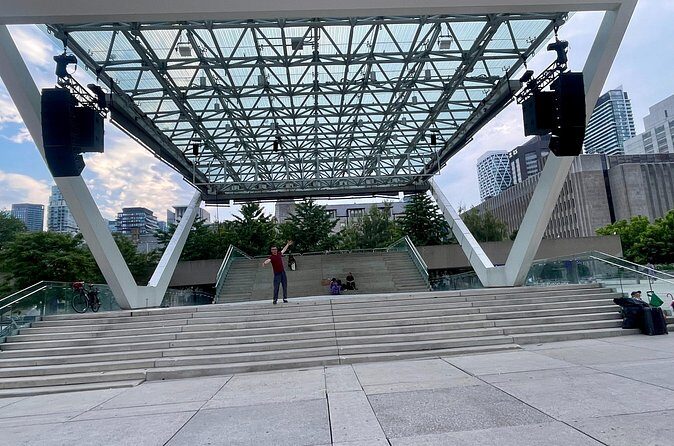
Next up is Brookfield Place, where the tour shifts again from culture to power structures and architecture. You’ll learn about the history of Brookfield Place and what makes the building space significant.
Then comes a fun, specific detail that sports fans will appreciate: the NHL Situation Room and its role in the National Hockey League. It’s located in the southwest tower at Brookfield Place, so you’re not just learning hockey trivia. You’re getting a sense of where behind-the-scenes decisions connect to the on-ice product.
This stop is about 20 minutes, which feels like the right length. Long enough to understand the story, short enough to keep the energy up. If you’re not a hockey fan, you’ll still get the architecture and organizational angle, which helps explain why downtown Toronto is shaped by more than one industry.
Legends Row outside Scotiabank Arena: Maple Leafs names, Raptors change, Kawhi era
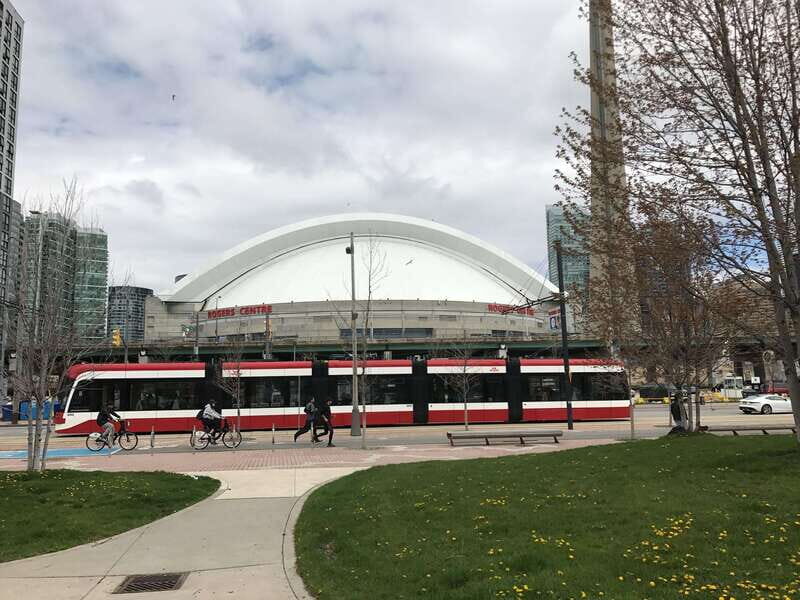
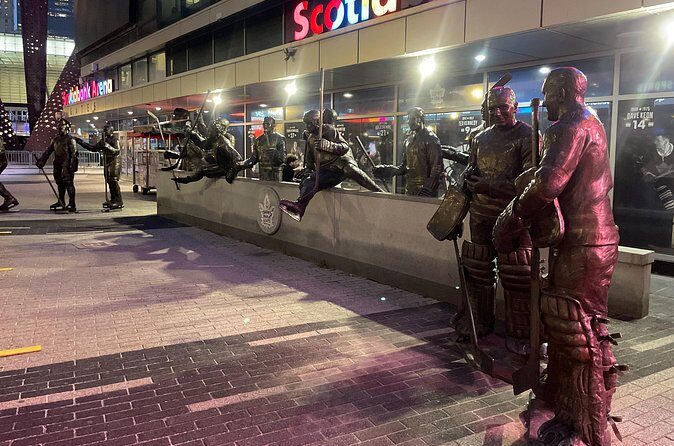
The final big story zone ends near Scotiabank Arena, with the tour finishing at Legends Row on Raptors Way. You’ll learn about the sculpture, Legends Row, featuring former Toronto Maple Leafs players located outside Scotiabank Arena.
Then the tour connects the arena neighborhood to the Raptors’ NBA story. You’ll hear about the Toronto Raptors acquisition of NBA superstar Kawhi Leonard, their winning of the 2019 NBA Finals, and the renaming of Bremner Street to Raptors Way. That street-name change sounds small, but it’s the kind of branding shift that reflects how cities build identity around teams.
You’ll also cover the challenges the Raptors face in attracting and signing top NBA talent as the only Canadian team in the NBA. Even without getting too technical, this helps you understand what it means to be “local” while still competing in a league where people choose teams for lifestyle, contracts, and timing.
If you’ve ever wondered why sports geography matters, this is where you’ll feel it. The walk ends in a sports corridor, but the stories explain why that corridor is such a strong marketing and cultural magnet.
The value beyond landmarks: the Duncan recommendation map
One of the most practical pieces of this tour is the included Google Map of Duncan’s Toronto Recommendations. It’s focused on food, drink, and dessert, which is exactly what you want at the end of a walking tour when you’d rather not guess.
This matters because downtown Toronto has too many options. A local-curated list can save you time and help you avoid places that are convenient but forgettable. And since it’s part of the tour, it feels like something you’ll actually use, not just a freebie you ignore.
Who should book this Toronto tour, and who should pass
Book this if you want a downtown Toronto walk that connects sports culture, economics, and street life in one loop. It’s especially a good fit if you like city stories told through specific locations, or if you enjoy street skateboarding history and want to see how a sport is tied to architecture and public space.
You should also like it if you enjoy film and TV locations, because the Suits content and the Bay Street corridor stories give you a different angle on Toronto than you get from standard landmark tours.
Pass if you dislike walking, or if you hate weather-dependent outdoor time. Also, if you want a quiet museum-style tour with lots of seated time, this isn’t that. It’s moving, talking, and referencing the city as you go.
Should you book this downtown Toronto skate-and-economics walk?
Yes, if you want a smart value-priced guide that helps you read downtown Toronto like an insider. At $11.22 for about 90 minutes, you’re paying for stories, orientation, and that recommendation map, not ticketed attractions.
I’d book it for first-timers who want more than postcard sights, and I’d also book it for locals who feel like they’ve “done” downtown already. The tour’s whole pitch is that familiar buildings can feel new when someone connects them to economics, media, sports, and street culture.
If the weather looks rough or you’re short on walking stamina, wait for a better day. The tour is designed to work when you can move comfortably.
FAQ
How long is the Toronto walking tour?
It’s about 1 hour 30 minutes (approx.).
What does the tour cost?
The price is $11.22 per person.
Where does the tour start and where does it end?
It starts at 100 Queen St W, Toronto, ON, and ends at Legends Row on Raptors Way outside Scotiabank Arena (near The PATH – Maple Leaf Square area).
Is this tour in English?
Yes, it’s offered in English.
Is admission included for specific stops?
Some stops note free admission tickets (for example, Bay Street Corridor and Brookfield Place).
How many people are in the group?
The maximum group size is 25 travelers.
Is this tour dependent on weather?
Yes. It requires good weather, and if it’s canceled due to poor weather, you’ll be offered a different date or a full refund.
Do I need to tip?
Gratuity or tip is not included.
Is there a cancellation window?
Free cancellation is available up to 24 hours in advance for a full refund.