REVIEW · TORONTO
Casual Historic Toronto Walking Tour
Book on Viator →Operated by Idle-Hour Tours · Bookable on Viator
Toronto history fits into a short walk. This casual downtown tour ties together major squares, the Financial District, and an easy finish at St. Lawrence Market so you get your bearings fast. You’ll also get smart, plain-language context for why these places matter in Toronto’s day-to-day culture.
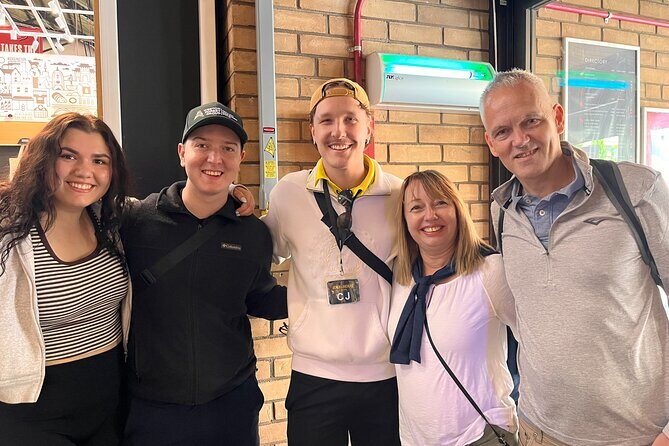
I especially like how the route is compact and efficient, so it works even if your schedule is tight. I also like the small group size (max 10), which keeps questions easy and makes the stories feel less like a lecture. In the guide department, people have had strong experiences with guides such as CJ and Cam—both are praised for showing up on time and keeping the tone friendly and fun.
One possible drawback: this is a quick overview, so if you’re after deep, museum-level detail, you’ll want to pair it with a longer activity later. Also, the food option at St. Lawrence Market is an extra cost, not included.
In This Review
- Key Highlights You Should Not Miss
- A Short Downtown History Walk That Helps Toronto Click
- Price, Pace, and Small-Group Comfort (What You’re Really Paying For)
- Meeting at Sankofa Square (Former Yonge-Dundas Square) and Getting Oriented Fast
- The Downtown Mall Walk: Canadian Stores and Canada-Meets-America Comparisons
- Nathan Phillips Square: Toronto Sign, City Hall Then-and-Now, and the PATH
- Financial District Focus: Suits Filming Spot, Toronto Stock Exchange, and MINT Intersection
- Berczy Park’s Dog Fountain: A Quick, Fun Reset for Photos
- Gooderham Flatiron Building: A Distillery District Connection in One Landmark
- St. Lawrence Market Finish: Where the Tour Naturally Feels Like a Meal Break
- What the Best Guides Do With a Small Group
- When This Tour Is the Right Move (And When It Isn’t)
- Should You Book This Casual Historic Toronto Walking Tour?
- FAQ
- How long is the Casual Historic Toronto Walking Tour?
- How much does it cost?
- What language is the tour offered in?
- Where does the tour start and end?
- Is food included at St. Lawrence Market?
- Do I need tickets for the stops?
Key Highlights You Should Not Miss
- Sankofa Square (Yonge-Dundas Square) for the big downtown event history from the start point
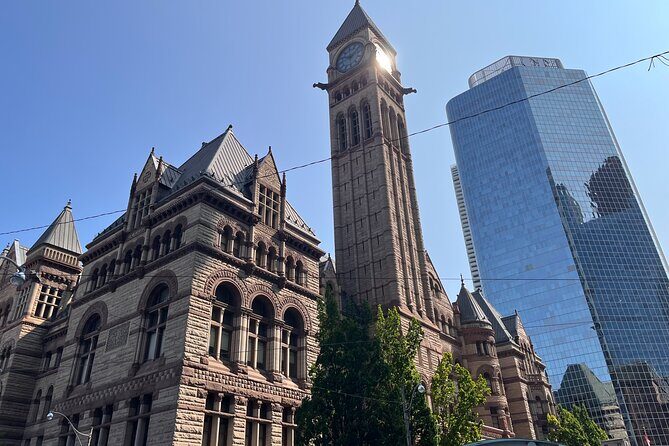
- Nathan Phillips Square: Toronto sign, City Hall contrast, and a look toward the PATH system
- Financial District photo and culture moments around the Suits filming location and the Toronto Stock Exchange area
- Berczy Park dog fountain as an easy, classic photo break
- Gooderham Flatiron Building: a distinctive Toronto landmark with Distillery District connections
- St. Lawrence Market finish with time to choose lunch or dinner on your own
A Short Downtown History Walk That Helps Toronto Click
This is the kind of Toronto tour I like for day one. You’re not trying to sprint across the city; you’re walking through the downtown spaces that shape how Toronto looks, works, and performs. Even if you’ve visited before, it’s still a good way to connect dots—because the tour doesn’t just point at buildings, it explains what’s going on around them.
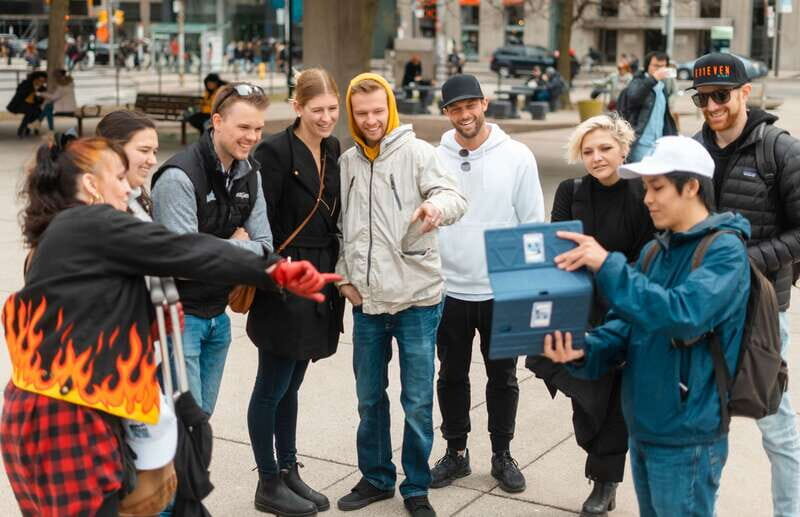
The format is built for real schedules: about 1 to 2 hours, with a walk that stays manageable. The price is $22.48 CAD per person, which is modest for a guided, organized city overview. And because the group is limited to up to 10 travelers, it’s easier to ask questions and get context that actually helps you later when you’re wandering on your own.
The vibe is casual. You’ll be outside for most of it, so dress for weather and keep your energy for the walk. If you’re traveling with kids, this can work well too—most stops are public and straightforward, and it’s designed so most people can participate.
Other walking tours we've reviewed in Toronto


Price, Pace, and Small-Group Comfort (What You’re Really Paying For)
Let’s talk value, not just cost. $22.48 for a guided walk covering multiple downtown landmarks is a fair deal—especially since you’re not paying for a long, all-day commitment. This is also the type of activity that can save you time. If you use this tour to learn what to prioritize next, you’re effectively spending a little money to buy back hours of decision-making.
The pace is another quiet win. You’ll spend short stretches at several places (think in the 5–20 minute range per stop), which keeps things from dragging. It also makes the tour flexible. If you’re the type who wants to see a lot but doesn’t want to be stuck for hours, this fits.
The mobile ticket is convenient, and you get confirmation at booking. Service animals are allowed, and the meeting area is near public transportation—so you don’t have to build a complex transit plan around it.
Potential downside on value: because the tour is short, you won’t get the kind of deep dives that take weeks to absorb. But for first-time orientation or a midday reset, that’s not a flaw. It’s the point.
Meeting at Sankofa Square (Former Yonge-Dundas Square) and Getting Oriented Fast
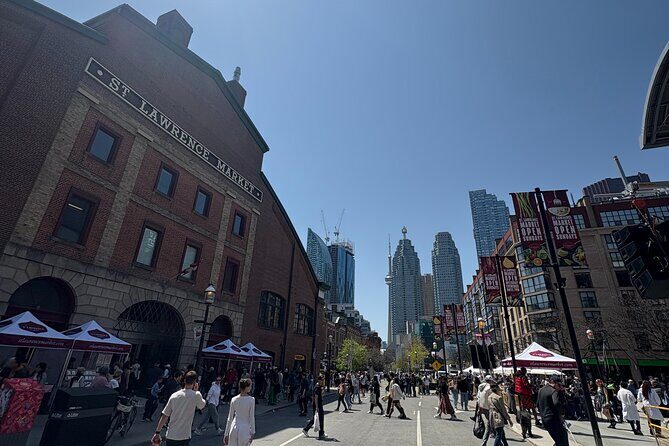
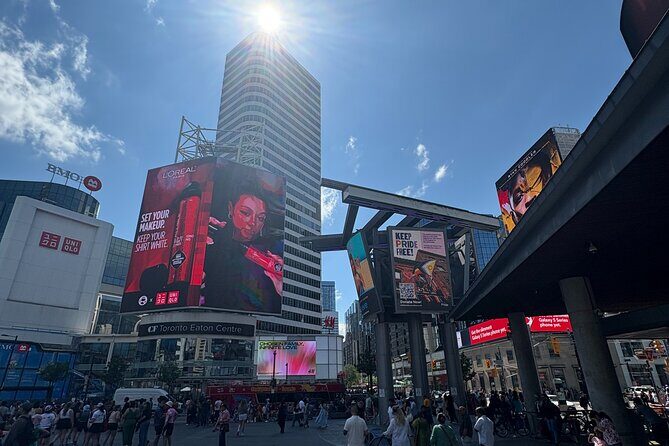
The tour starts at Sankofa Square, 1 Dundas St E, Toronto, ON, which used to be known as Yonge-Dundas Square. This matters because it’s a spot many visitors recognize instantly—right in the center of downtown life.
From here, you learn the history and the types of events that commonly happen in this area. It’s the kind of context that helps you understand why the streets feel the way they do: where crowds gather, why this location became a recognizable hub, and how Toronto’s public spaces reflect its cultural rhythm.
One practical tip: plan to arrive a few minutes early. The tour begins at a specific starting point, and downtown sidewalks can be crowded around major intersections. If you get there on time, the walk starts smoothly—which sets the tone for the whole experience.
The Downtown Mall Walk: Canadian Stores and Canada-Meets-America Comparisons
There’s a stop on this route where you walk through a major downtown mall area—described as the busiest mall in North America—and you’ll get a theme-based lesson. The guide connects what you’re seeing with ideas about Canadian identity and how Canadian shopping culture compares with the U.S.
This is one of the clever parts of the tour. It isn’t only about famous landmarks and plaques. It’s also about how everyday commercial spaces reflect national culture. You’ll get a short, guided lens while you’re already there walking through the busiest-feeling blocks of downtown.
A consideration: since this section is inside or close to retail areas depending on your route and weather, don’t expect it to feel like an outdoor “scenic moment.” Instead, think of it as a quick interpretation break—part people-watching, part culture lesson.
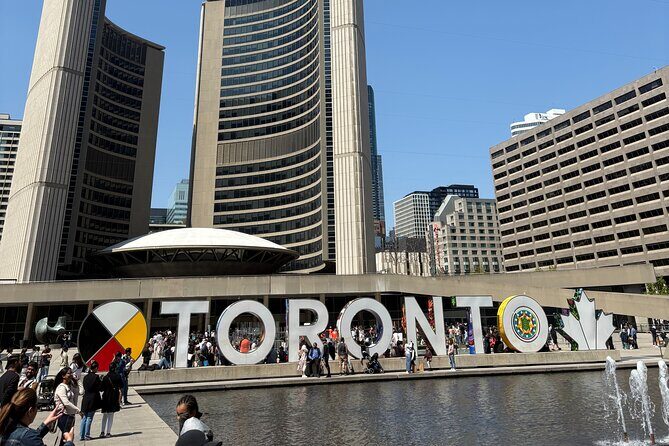
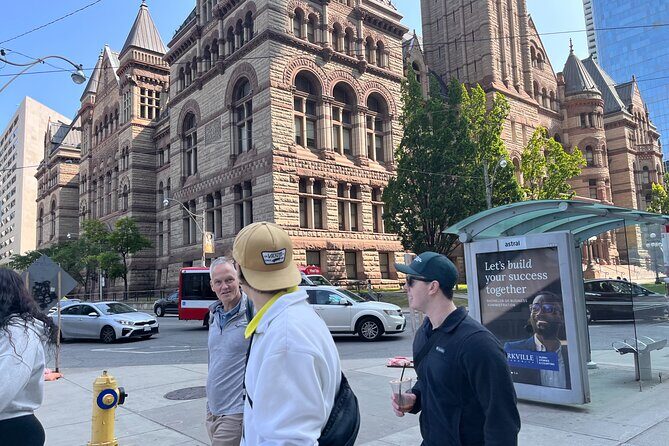
Nathan Phillips Square: Toronto Sign, City Hall Then-and-Now, and the PATH
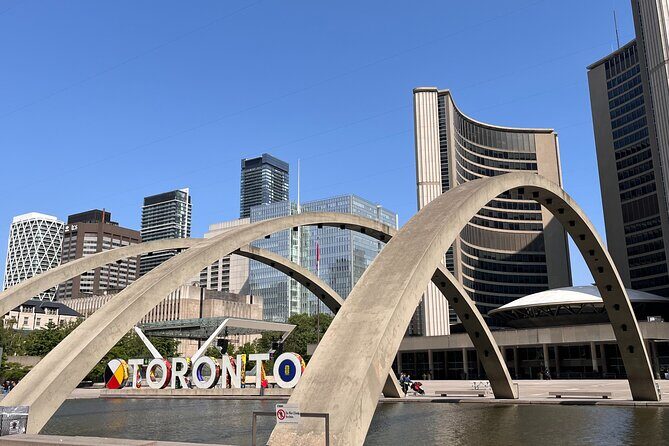
Next up is Nathan Phillips Square, a central landmark for photos and public events. You’ll spend about 20 minutes here, which is just right for getting the basics without feeling rushed.
The “must-sees” include:
- the Toronto sign
- the contrast between Old and New City Hall
- and a look at the PATH system
That last one is especially useful if you’re planning your next day on foot. The PATH is Toronto’s major underground/covered network that helps people get around in winter and during busy seasons. Even if you don’t use it immediately, understanding it helps you read the city better—like noticing where covered routes and entrances are likely to connect.
This is also a good stop to slow down. Sit for a moment if you can, take photos, and let your guide’s context sink in. Once you leave the square, the walk shifts into more financial and architectural territory.
Other historical tours in Toronto


Financial District Focus: Suits Filming Spot, Toronto Stock Exchange, and MINT Intersection
In the Financial District, the tour turns into a “recognize what you’ve seen on TV” moment and a “this is how power is organized” moment at the same time.
You’ll look at:
- the building used for the TV series Suits
- the Toronto Stock Exchange
- and the MINT Intersection, known as the Major Banks of Canada area
This is a great pairing for visitors who like pop-culture cues. A lot of people already feel they know downtown because they’ve seen Toronto locations on screen. The tour gives that familiarity a real-world context—what the buildings are, what the neighborhood represents, and why these financial corridors matter to the city’s economy.
A note on pacing: this section is shorter (around 10 minutes), so keep your photo habits ready. If you want a clean shot without blocking foot traffic, wait for a quieter moment and let the group move first.
Berczy Park’s Dog Fountain: A Quick, Fun Reset for Photos
Then you hit Berczy Park, with a short stop around the famous dog fountain. It’s about 5 minutes, so this isn’t the place to linger for a long rest—more like a quick break to reset your legs and get a classic Toronto photo.
The dog fountain is one of those landmarks that feels instantly approachable. It’s playful. It also helps break up the denser blocks of architecture and business streets with something whimsical.
Practical tip: bring your phone/camera ready. The fountain is an easy photo target, and the surrounding area lets you take pictures from different angles. It’s also the kind of stop that works even if you’re traveling with someone who doesn’t care much about financial districts.
Gooderham Flatiron Building: A Distillery District Connection in One Landmark
The next short stop is the Gooderham (Flatiron) Building, described as the only Flatiron building in Toronto. You’ll also hear about its old headquarters connection to the Distillery District.
This is a smart stop because it connects two kinds of Toronto appeal:
- classic architecture you can photograph
- and the idea that downtown isn’t only about business; it also has deeper industrial roots
The stop is only about 5 minutes, so you won’t get a full architectural seminar. But you will come away knowing what makes this building distinctive and why it shows up on “don’t miss” lists.
If you like street-level architecture, you’ll enjoy this one more than you might expect. Small feature stops like this are where the tour can feel memorable, even though the tour itself is compact.
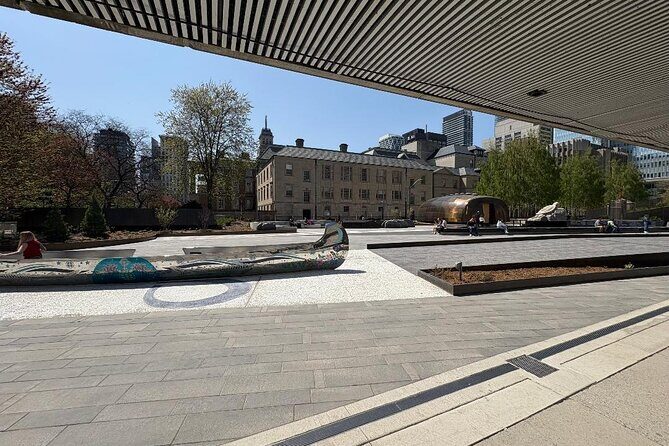
St. Lawrence Market Finish: Where the Tour Naturally Feels Like a Meal Break
The tour ends at St. Lawrence Market, and you’ll have time to say goodbye and choose what you want next. Depending on the time of day, you can get lunch or dinner there.
This is where the tour becomes more than just history and viewpoints. St. Lawrence Market is a place you can immediately use what you learned—because you’re ending in a neighborhood where food, local culture, and daily routine all overlap.
Important practical note: the food element is not included. The tour specifically mentions trying local food at St. Lawrence Market as an optional extra, so budget for whatever you choose to eat.
If you’re planning your day, this finish point is also convenient. After the tour, you’re in an area where it’s easy to keep exploring at your own pace without getting trapped in a rigid schedule.
What the Best Guides Do With a Small Group
A short walking tour succeeds or fails based on the guide’s storytelling. Here, the experience is repeatedly praised for being friendly, fun, and guided by people who show up ready to lead.
Two names you may see associated with strong experiences are CJ and Cam. CJ is noted for arriving promptly and reconfirming the meeting, while Cam is praised for an engaging approach and an easy pace. The common thread in how guides are described: they don’t just recite facts. They explain them in a way that helps you look at the city with new eyes.
Because the group cap is 10 travelers, you’re more likely to feel like a person instead of a number. That matters for questions like:
- what to prioritize next
- where to go if the weather turns
- what you should notice when you pass these places again
When This Tour Is the Right Move (And When It Isn’t)
This tour is ideal if you want:
- a first-time downtown orientation
- an easy way to understand the city’s public spaces and major corridors
- a short guided experience you can fit between other plans
- a friendly group setting where questions are welcome
It can also work for repeat visitors. Even if you’ve walked downtown before, you’ll likely pick up new connections—like how the city’s event-center squares connect to identity, or how financial landmarks shape the city’s everyday rhythm.
I’d skip it or treat it as a warm-up only if you’re craving:
- a long, detailed historical study
- museum-level depth
- a tour format focused heavily on one neighborhood
In other words, this is a “get your bearings and enjoy the walk” experience. You can then go deeper with another activity if you want.
Should You Book This Casual Historic Toronto Walking Tour?
Yes, if you want a short, well-structured intro to downtown Toronto that helps you understand what you’re looking at while you’re already surrounded by iconic places. The price is reasonable for the amount of ground it covers, and the small group size is a real quality booster.
Book it especially if:
- you have limited time and need an efficient overview
- you like learning in small chunks rather than a long lecture
- you’re heading toward St. Lawrence Market anyway and want a guided lead-in
Don’t expect it to replace longer tours. Instead, think of it as the best kind of first step: you finish knowing where you’ve been, why it matters, and what to chase next on your own.
FAQ
How long is the Casual Historic Toronto Walking Tour?
The tour is approximately 1 to 2 hours.
How much does it cost?
The price is $22.48 per person.
What language is the tour offered in?
The tour is offered in English.
Where does the tour start and end?
It starts at Sankofa Square, 1 Dundas St E, Toronto and ends at St. Lawrence Market, Toronto.
Is food included at St. Lawrence Market?
No. You can get lunch or dinner at St. Lawrence Market depending on the time of day, but food is an extra expense.
Do I need tickets for the stops?
The tour includes stops where admission tickets are not included, and other stops are described as free. A mobile ticket is provided for the tour itself.