Toronto hides stories in plain sight. This 2-hour walk connects Old City Hall’s Romanesque Revival clock tower, the digital energy of Sankofa Square, and the soaring St. James Cathedral spire—so you get context fast, without bouncing between far-flung neighborhoods.
I like that the tour keeps it practical: you’re guided through downtown’s main landmarks and also shown the details most people miss. The guide (Kieran) is especially strong at explaining what you’re seeing and answering questions with patience, plus a sense of humor when the group is curious.
One thing to note: this is a paced route with about 30 minutes per main stop, so it’s not built for long “sit and study” time inside churches or for extended wandering off-route.
In This Review
- Key highlights worth planning around
- A tight 2-hour walk with smart downtown stops
- Old City Hall’s clock tower: Romanesque Revival made practical
- Sankofa Square (formerly Yonge-Dundas Square): screens, crowds, and street meaning
- St. James Cathedral spire and stained glass: what to look for
- Market Street and the route’s “surprise” final stretch
- Price and value: $32 with a pro guide and free stop admissions
- Who should book this Toronto walk (and who should plan differently)
- Should you book this Toronto walking tour?
- FAQ
- How much does the Toronto walking tour cost?
- How long is the tour?
- What time does the tour start?
- Where do I meet, and does it end nearby?
- Is the tour offered in English, and do I get a mobile ticket?
- How big is the group?
- Are there admission fees for the stops?
- Can I cancel and get a refund?
Key highlights worth planning around
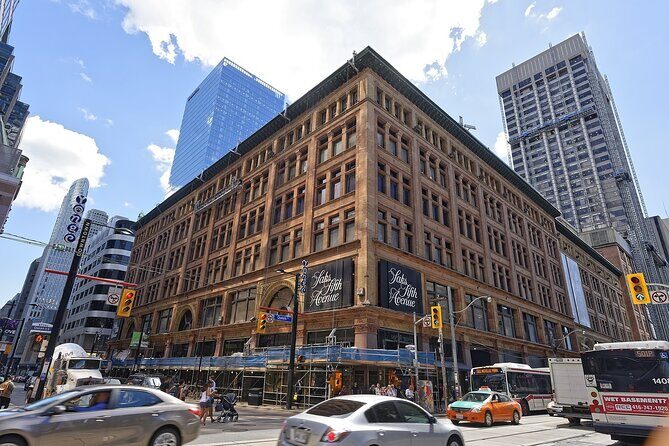
- Old City Hall (completed 1899): Romanesque Revival design details, clock tower, and stone carvings
- Kieran’s Q&A style: clear answers and an easy back-and-forth flow during the walk
- Sankofa Square’s location at Yonge & Dundas: a concentrated slice of Toronto’s street-life energy
- St. James Cathedral spire: Gothic Revival architecture plus stained glass and an historic organ
- Market Street plus surprise stops: the route stays a little flexible to keep things interesting
A tight 2-hour walk with smart downtown stops
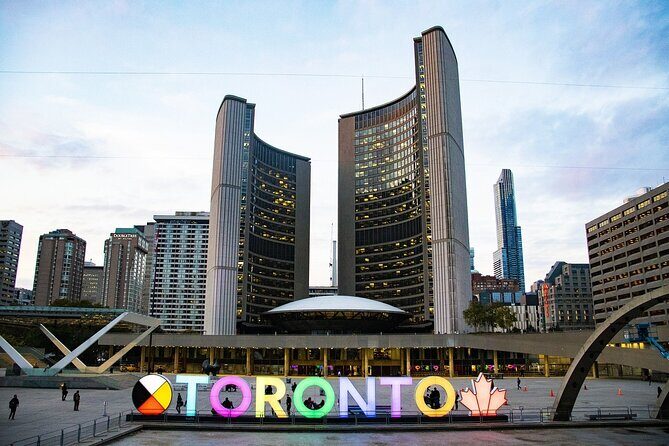
If you want Toronto’s center of gravity in one go, this tour is built for that. You start at Toronto City Hall (100 Queen St W) and finish back at the same meeting point, which keeps navigation simple when you’re tired or you’re watching the clock.
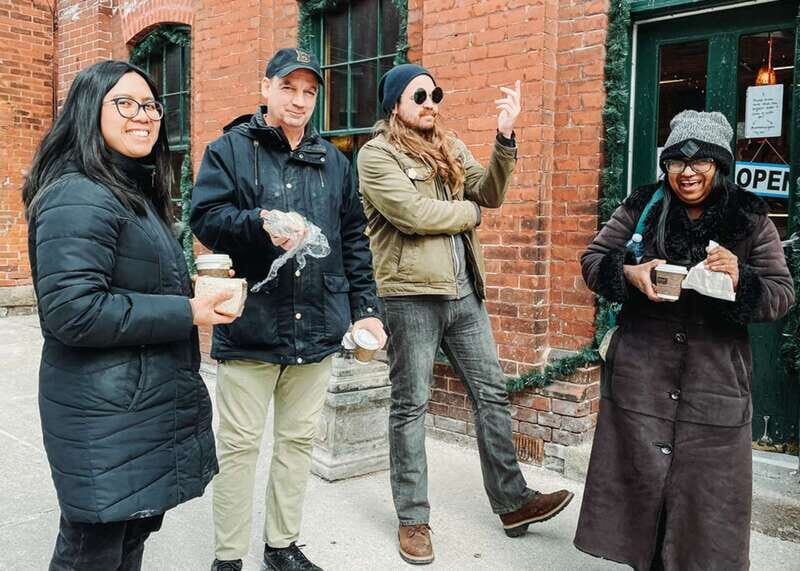
The group stays small, with a maximum of 15 people, and that matters more than it sounds. With fewer people, it’s easier to ask questions, hear the guide over street noise, and actually focus on architectural details instead of just hearing bullet points from afar.
This tour runs about 2 hours total and starts at 10:30 am. It’s in English and uses a mobile ticket, which is handy if you’re juggling reservations on your phone. It also lists the stops as free for admission, so you’re not getting hit with entrance fees while you’re trying to keep your day budget-friendly.
Timing matters here because you only get about half an hour at each main stop. That’s enough to orient yourself, learn what to look for, and get a couple of photos. It’s not enough to treat this like a slow museum visit, and that’s a fair trade if your goal is seeing the big ideas of downtown quickly.
Other walking tours we've reviewed in Toronto



Old City Hall’s clock tower: Romanesque Revival made practical

Old City Hall is one of those buildings you recognize even if you don’t know the name. The impressive clock tower and carved stone details give it instant presence in Toronto’s downtown core.
Here’s why this stop works so well on a walking tour: it’s not just a pretty facade. The building was completed in 1899 and served as Toronto’s city hall for over 60 years. The architect credit goes to E.J. Lennox, and you’ll hear how the Romanesque Revival style shows up in the look of the masonry and the overall massing.
What you can do with the time you’re given: I’d use your half hour to walk around the frontage and clock tower area, then slow down for the stonework details. The guide’s job is to help you notice the structure behind the surface—what kind of architecture it is, why it looks the way it does, and what that meant for a city hall building at the time.
A practical bonus: today, Old City Hall is home to courtrooms. So you’re not just viewing a “closed museum piece.” The building is still actively part of the city, which makes the story feel less like history behind glass and more like history living in the present.
Sankofa Square (formerly Yonge-Dundas Square): screens, crowds, and street meaning
From Old City Hall, the mood shifts fast. You’ll reach Sankofa Square, which is the current name for what was formerly Yonge-Dundas Square. It sits right at the intersection of Yonge and Dundas, so it’s basically impossible to miss—and that’s exactly why it’s a smart tour stop.
This is one of Toronto’s clearest examples of how public space and modern media collide. The square is known for its towering digital billboards and the way it pulls people in for events, concerts, and public gatherings. It opened in 2003, and since then it’s become a common meeting point for both locals and visitors because it’s surrounded by shopping and dining.
The best way to use your time here is to watch the street patterns. Look at where people naturally gather, how the space funnels foot traffic, and how the signage shapes the feel of the intersection. The guide’s role is to tie it together—how the city uses this kind of central square to project energy and to create a destination rather than just a transit junction.
One consideration: this stop can feel louder and more visually intense than the other ones. If you’re sensitive to flashing lights or prefer quieter settings, you’ll want to keep your eyes on the guide’s points and do quick photos rather than trying to linger the way you might at a calm plaza.
St. James Cathedral spire and stained glass: what to look for
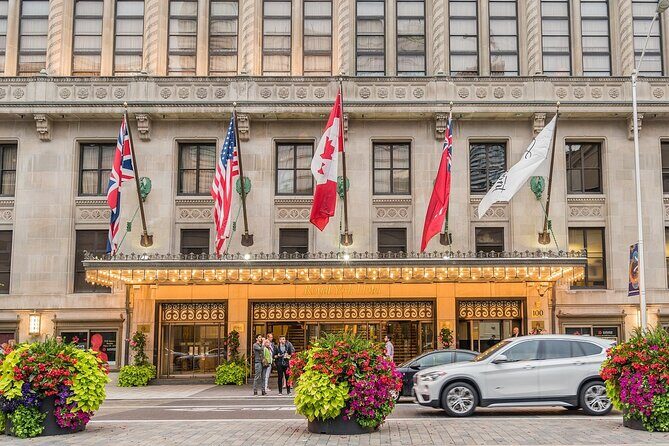
St. James Cathedral is the kind of stop that resets your senses after the downtown noise. Even from outside, the Gothic Revival style shows up in the shape and drama of the building, and the spire becomes a landmark you can orient to from nearby streets.
This cathedral was completed in 1853 and it’s home to the Anglican Diocese of Toronto. One detail that gives the building extra gravity: its spire is one of the tallest in Canada, and it helps frame why this church matters in Toronto’s skyline.
What I love here is that the stop isn’t only about a big exterior. Inside, the cathedral features stained-glass windows, intricate woodwork, and a historic organ. With about 30 minutes, you can actually do a focused walk-through: take in the light from the stained glass, then look for the craftsmanship in the woodwork. If you like music, keep an eye out for the organ mentioned in the tour—cathedrals often feel different once you remember they were built for sound, not just silence.
A small realistic note: you’re on a tight schedule. So don’t plan to spend 45 minutes reading every corner label or seeking out every nook. This stop is ideal for quick appreciation guided by someone who knows what matters most.
Admission is listed as free for this main stop, which makes it a great value add. Even if you’re not religious, the architecture alone is worth the pause.
Market Street and the route’s “surprise” final stretch
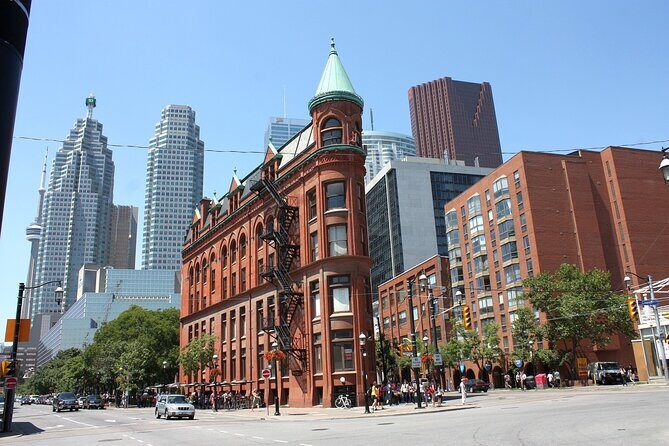
The last part of the tour shifts into lighter mode: you’ll head toward Market Street and you’ll also get a few more quick stops along the way, kept as surprises to keep the route feeling fresh.
Because the exact extra sights aren’t listed in advance, your best strategy is simple: stay flexible and pay attention. A “surprise” segment can go two ways—either it feels random, or it feels like your guide is choosing moments that fit the story they’ve built from the earlier stops. In this case, it’s clearly meant to round out the downtown view: you start with civic architecture, then you hit a modern public-media square, then you slow down with a major cathedral. The final section on Market Street is where you get a sense of how the area’s texture changes.
What you can expect during this time: fewer lectures, more guided observation. If your goal is “show me what to notice,” this is where a good guide earns their money by pointing out the small cues—how street corners, building edges, and pedestrian flow hint at Toronto’s character.
One practical tip: if you’re aiming for photos, treat this segment as your final chance to get clean shots without trying to rush your camera earlier. Start with quick snaps, then slow down for your favorite angle once you’ve heard what the guide thinks is worth seeing.






Price and value: $32 with a pro guide and free stop admissions
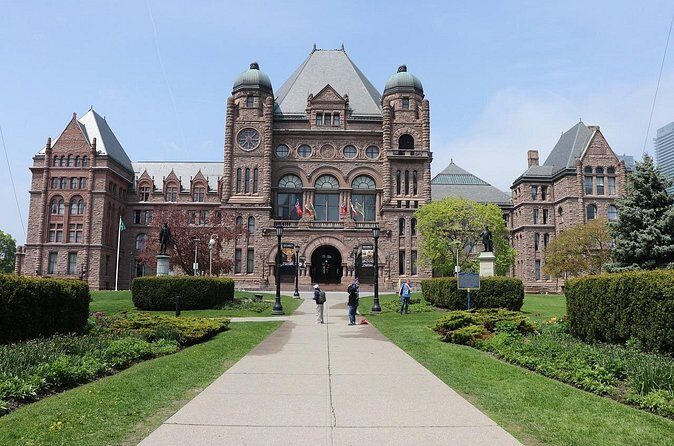
At $32 per person for about 2 hours, the value here comes from three things: a professional guide, tight downtown efficiency, and free admission at the main stops listed.
Let’s translate that into real-world sense. You’re not just paying for someone to point at buildings from the sidewalk. The guide (Kieran) is specifically praised for bringing Toronto’s history to life and answering questions. That’s a big deal on a walking tour because the difference between okay and excellent often comes down to how well the guide responds when you ask something unexpected.
The route also covers high-interest anchors: Old City Hall, Sankofa Square, and St. James Cathedral are all places people use as reference points. You’re getting context for why they look the way they do and what role they’ve played in Toronto’s story—without spending your day hopping between far destinations.
And yes, admission is listed as free for the main stops. That reduces friction. When you’re planning a sightseeing day, “free entry” stops your budget from bleeding out on small fees, especially when you’re also paying for transit, coffee, and whatever snack you’ll definitely justify as necessary.
The demand signal also matters: this tour is booked on average about 28 days in advance. If you travel in busy seasons or on weekends, grab a spot sooner rather than later so you’re not stuck with inconvenient times.
Who should book this Toronto walk (and who should plan differently)
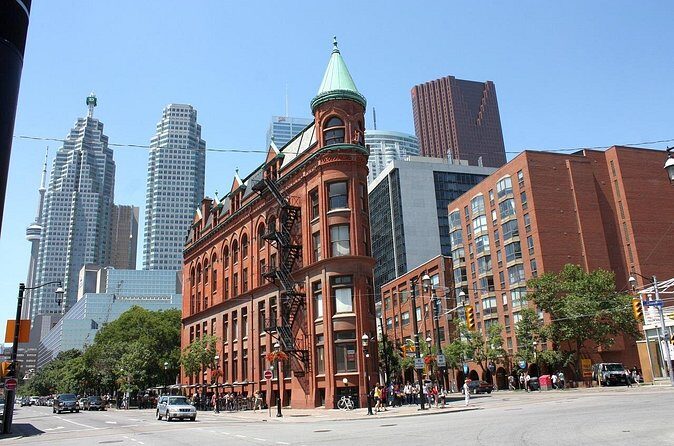
This tour fits best when you want a guided structure for downtown Toronto. If you like architecture, enjoy learning how cities evolved, or you’re the kind of person who stares at building facades long enough to miss your train, you’ll get along great with this route.
It’s also a good choice if you travel with someone who has questions. The guide’s strength is answering the room and staying patient, and the reviews put that skill front and center. If you’re traveling solo, a small group of up to 15 helps you feel like the guide is actually talking to you, not reading from a script.
Who might plan differently: if you want a deep, slow religious or architectural study with lots of time inside, this pace may feel too tight. This is a “see it, understand it, move on” format. You’ll leave with solid orientation, not a multi-hour immersion in any one building.
What to bring is straightforward: comfortable walking shoes for downtown pavement, and a quick check of the weather before you go. You’ll be outside between stops, and the tour is only about two hours, so conditions can matter more than you’d think.
Should you book this Toronto walking tour?
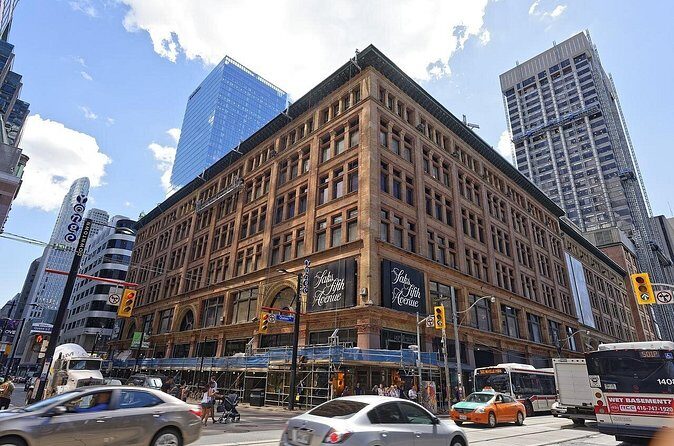
I’d book it if you want an efficient downtown overview with real guide value. For $32, you’re getting a pro guide, a small group, and free entry at the key stops, plus a route that moves from civic history to modern street energy to a major Gothic church.
Skip it only if you need long time inside one site or you hate paced schedules. If your goal is to understand Toronto’s center quickly and walk away with names, architectural cues, and story context, this one checks the boxes.
FAQ
How much does the Toronto walking tour cost?
It costs $32.00 per person.
How long is the tour?
The tour lasts about 2 hours.
What time does the tour start?
The start time is 10:30 am.
Where do I meet, and does it end nearby?
You meet at Toronto City Hall, 100 Queen St W, Toronto, ON M5H 2N3, Canada, and the tour ends back at the same meeting point.
Is the tour offered in English, and do I get a mobile ticket?
Yes, it’s offered in English and you receive a mobile ticket.
How big is the group?
The tour has a maximum of 15 travelers.
Are there admission fees for the stops?
The main stops listed on the tour show admission ticket free.
Can I cancel and get a refund?
Yes. You can cancel up to 24 hours in advance for a full refund. Cancellation less than 24 hours before the start time is not refundable.