REVIEW · TORONTO
Toronto: Must Do NonTouristy Street Art Tour by local Artist
Book on GetYourGuide →Operated by Spade & Palacio Non-Touristy Tours · Bookable on GetYourGuide
Street art hits different when someone local explains it. This 2-hour Dundas West walk led by artist-guide Chloe shows how Toronto’s outside walls became a working urban studio, from wheat paste to big murals. I especially liked the small-group pace (max 10) and how the stops focus on real technique and meaning, not just pointing at pretty walls.
The one thing to plan for: you’ll be doing a zigzag of walking and alleys, so comfy shoes matter, and the terrain may not be ideal if you need mobility support. The good news is that the guide keeps the flow friendly and you get practical takeaways for food and more art after the tour.
In This Review
- Key highlights that make this tour worth your time
- Street Art Without the Tourist Trail: College West and Dundas West
- Where the Tour Starts at 1430 Dundas St W (Gladstone/Dufferin)
- The First Walking Stretch: Little Portugal to Your First Real Wall Lesson
- The Dundas West Urban Art Corridor: Wheat Paste, Yarn, Stickers, and Graffiti
- How the Street Artist Reads the Wall: Meaning, Techniques, and the Lingo
- The Zigzag Walk Experience: What the 2 Hours Feels Like in Practice
- After the Walk: Your Restaurant and Art Cheat Sheet
- Price and Value: How $8 Makes Sense for a Local-Led 2-Hour Walk
- Who Should Book This (and Who Might Want to Ask First)
- Should You Book This Non-Touristy Street Art Walk?
- FAQ
- Where does the tour meet?
- How long is the street art tour?
- How much does it cost?
- What should I bring?
- What kinds of street art will I see?
- Is the tour wheelchair accessible?
- Is the tour in English and is it a small group?
Key highlights that make this tour worth your time
- Local artist-led explanations of technique, symbolism, and how works fit the neighborhood
- Dundas West as an urban art corridor, with everything from sticker art to graffiti
- A mix of “big mural” and small hidden installations, including Sapien-style figures
- A restaurant and bar recommendations cheat sheet you can actually use the same day
- College West to Little Portugal area routing that avoids the most over-followed spots
- English tour with a group size capped at 10 for better questions
Street Art Without the Tourist Trail: College West and Dundas West
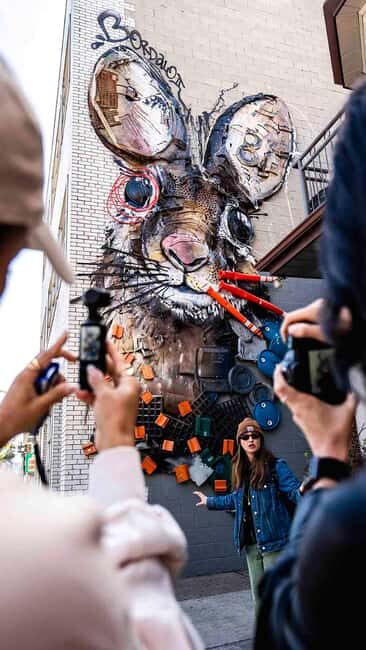
Toronto has street art everywhere, but most people only skim the surface. This walk is built for seeing the city’s wall culture up close, in the parts of College West and Dundas West that feel like an outdoor studio rather than a staged attraction. You start near Little Portugal and then head into the Dundas West corridor where murals, paste-ups, and tags overlap like layers of conversation.
What makes it feel worth doing is the “why,” not just the “what.” Chloe talks about the local push behind this scene—how municipal and nonprofit groups, sponsors, and even guerrilla-style creativity helped shape what you see now. That context changes how you look at the art. Instead of treating it like random decoration, you start noticing purpose: who made it, what it says, and how the street itself becomes a canvas.
I also liked that this isn’t a one-note mural tour. You get a range of styles in one circuit, so you can start sorting out what you personally like—clean painted pieces, graffiti energy, soft-textile effects, sticker storytelling, and even the smallest surprise installations you might otherwise miss.
Other Graffiti Alley & street art tours we've reviewed in Toronto

Where the Tour Starts at 1430 Dundas St W (Gladstone/Dufferin)
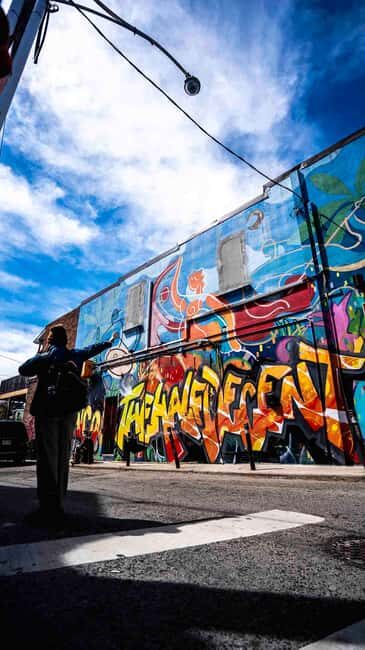
The meeting point is straightforward: in front of 1430 Dundas St W, outside Loveless Café & Bar, right at the Gladstone/Dufferin intersection. Important detail: stand on the sidewalk in front of the address, not inside the bar.
Public transit is easy here. The Dundas West streetcar stop sits right on the corner. If you’re coming via the subway, take the Green Line (2) Bloor–Danforth to Dufferin station, then walk about 12 minutes. Since it’s a walking tour, plan to arrive a little early so you don’t feel rushed while the group gathers.
Because the group stays small (up to 10 people), this first moment matters. You’ll get a clean introduction and a sense of how the walk will work, plus you can ask basic questions before you’re moving.
The First Walking Stretch: Little Portugal to Your First Real Wall Lesson
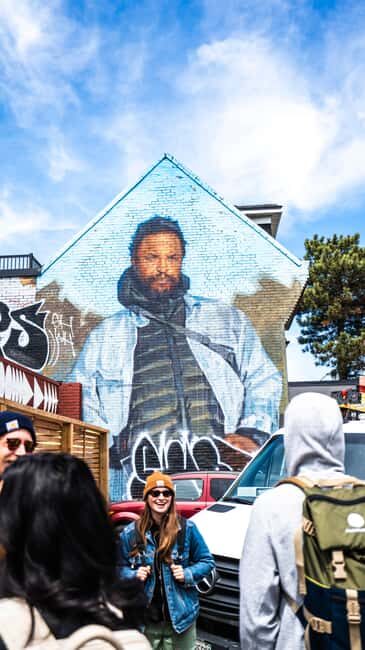
The tour begins with a quick first viewing period right around the opening area. Then you move toward Little Portugal. This part is less about racing forward and more about building your visual “vocabulary” so later pieces land harder.
As you walk, you’ll notice the route is designed as a zigzag through streets and alleys rather than a straight line. That matters because a lot of street art in this kind of neighborhood is tucked along side walls, near nooks, and where pedestrian flow naturally thins out. Taking side routes means you don’t just see the obvious wall-size murals—you also catch the pieces that live one turn off the main path.
And because Chloe is a practicing street artist herself, the early explanations set expectations for what comes next: techniques, the difference between styles, and what artists are aiming for. It’s the kind of start that makes you start looking before the tour even hits the big corridor stretch.
The Dundas West Urban Art Corridor: Wheat Paste, Yarn, Stickers, and Graffiti
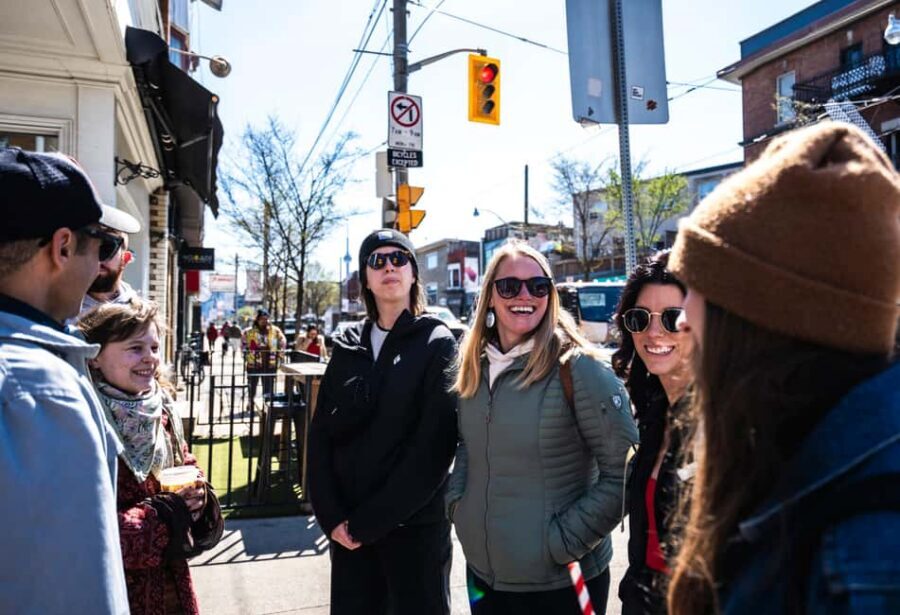
Once you’re in the Dundas West corridor, the walls start acting like a gallery with changing exhibits every few blocks. You’ll see multiple formats of street art on the same walk, including:
- Wheat paste pieces
- Yarn bombing
- Sticker art
- Classic painting techniques
- Graffiti styles in the district
Each style has a different “how.” The tour’s real value is that Chloe doesn’t treat these as interchangeable. You learn that the method affects how a piece is made, how long it might last, and how it interacts with the surface around it. You also learn that meaning can be visual, cultural, or political—sometimes all at once.
Another reason this works for me: the corridor isn’t just murals on the main strip. It includes hidden installations and small surprises that reward slow looking. A highlight from the experience is the mention of Sapien little figures, which are the kind of detail you might miss if you’re only scanning for big recognizable art. That’s also why a camera helps—you’ll want to save details that your memory will otherwise skip.
How the Street Artist Reads the Wall: Meaning, Techniques, and the Lingo
A lot of street art tours stop at description. This one adds interpretation. Chloe explains technique and meaning, and you get an actual sense of the creative choices behind each piece. That includes practical “how-to” context—what tools or processes lead to certain textures, layers, and finishes.
In the notes from participants, one thing comes up repeatedly: Chloe’s explanations make the work feel real. The tour includes time to answer questions thoroughly, and the guide’s approach is direct, with what people call graffiti lingo and honesty. Translation: you won’t feel talked down to, and you’ll come away understanding how to “read” street art instead of just admiring it.
You also get a local perspective on why Dundas West developed into the kind of corridor where art can grow. The neighborhood’s transformation isn’t framed as a sudden trend. It’s presented as a mix of organizations, sponsors, and also guerrilla creativity—meaning the art scene is both supported and stubborn.






The Zigzag Walk Experience: What the 2 Hours Feels Like in Practice
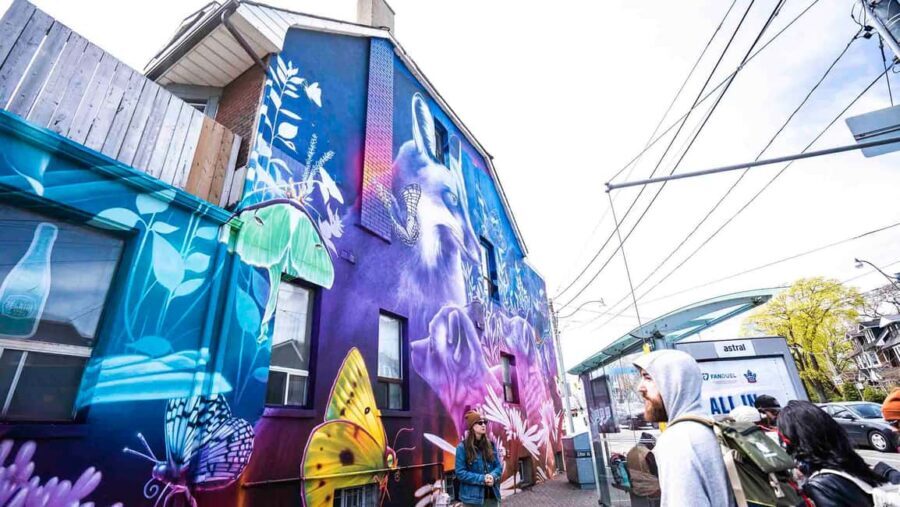
This is a 2-hour walking tour, and the experience is set up as a steady rhythm: view, talk, walk, repeat. In the provided timing, you’re looking at multiple segments of around 30 minutes each, plus walking time between locations. In real terms, you can expect a light-to-moderate pace that stays active, not a long sit-and-watch format.
Since it’s all outdoors, weather matters. In summer, plan for heat; bring water. In winter, dress like you mean it—layer up like a Canadian, and wear shoes that handle cold sidewalks without sliding.
You’ll also want comfortable walking shoes and a camera. Street art details can be tiny or layered, and if you want to remember what you saw later (or compare styles across neighborhoods), you’ll thank yourself for taking photos as you go.
One more “practical tip” angle: this is about seeing and learning, so keep your phone charged. You’ll likely end up wanting to match what you just learned to what you notice on your own immediately after.
After the Walk: Your Restaurant and Art Cheat Sheet
One of the smartest parts of this tour is the payoff after your last stop. You get recommendations for restaurants, bars, and galleries so you can keep your afternoon going without guessing.
Participants specifically mention using the list in the real world, including going to Martines after the walk. That’s a good sign: these suggestions aren’t generic “nearby” advice. They fit the neighborhood mood you just walked through.
The guide also shares a kind of cheat sheet effect—so you can remember what you learned about style and meaning when you spot street art elsewhere. That changes your self-guided exploring. Instead of just snapping photos, you start noticing technique and intent.
And yes, the corridor keeps offering you more to see after the tour ends. Once you’ve learned the visual clues, you’ll spot wheat paste edges, yarn texture, and layered sticker stacks on your own route home. The city becomes easier to read.
Price and Value: How $8 Makes Sense for a Local-Led 2-Hour Walk
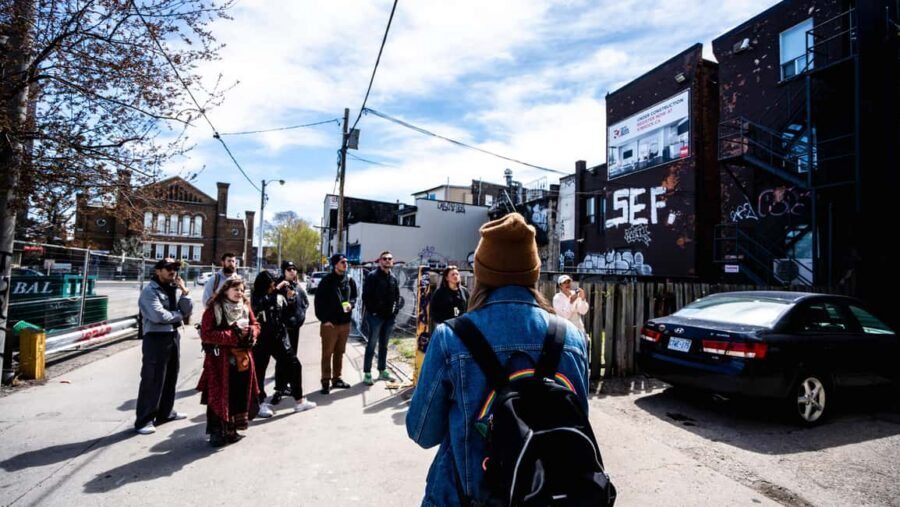
At $8 per person, this isn’t priced like a flashy “experience.” It’s priced like access. You’re paying for a local street artist’s time, plus the effort to route you through a meaningful area and explain the art so you actually understand what you’re seeing.
Is it a lot of money? No. But the value is in the format:
- Artist-led learning beats passively looking
- A small group helps you ask questions
- Recommendations you’ll use right away extend the value past the walk itself
- Multiple street art styles mean you get variety without bouncing across the city
Also, the tour sits at a sweet spot for first-time street art lovers and returning fans. If you’ve never done a street art walk, it teaches you how to see. If you’ve done a few, it still gives you new angles by focusing on the Dundas West/College West corridor and its local creative ecosystem.
Who Should Book This (and Who Might Want to Ask First)
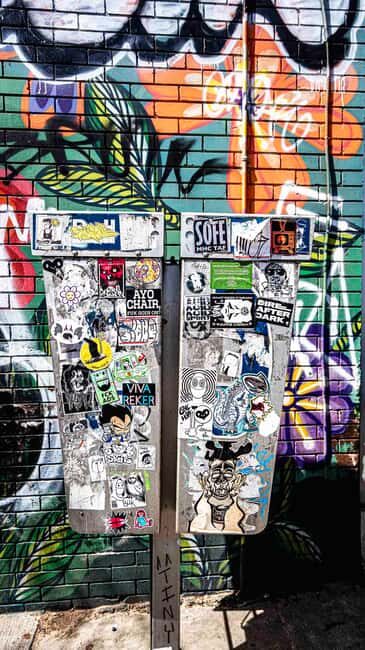
This is best for you if you like street art and want more than surface-level spotting. It’s also a strong match if you enjoy hands-on learning—people who like asking why something looks the way it does, and who want a guide who can talk technique and meaning.
It’s also a good fit if you want a neighborhood walk tied to real food and bar recommendations afterward. One of the practical upsides here is that you leave with a plan, not just pictures.
If you have mobility needs, read the fine print carefully. The activity is listed as wheelchair accessible, but the notes also say it’s not suitable for people with mobility impairments and not suitable for wheelchair users. That contradiction means you should contact the operator before booking to confirm whether the sidewalks, distances, and street crossings work for your needs.
Should You Book This Non-Touristy Street Art Walk?
If you’re aiming to see Toronto street art like a local reader—method, meaning, and neighborhood context—then yes, book it. For $8, a two-hour guided walk with an artist like Chloe is a rare deal where you get both learning and immediate payoff.
Skip it only if you strongly prefer low-walking tours or you know you’ll need specific accessibility support that the operator should verify for your situation. Otherwise, come ready for photos, good shoes, and a fresh way of looking at the city’s walls.
FAQ
Where does the tour meet?
The tour starts in front of 1430 Dundas St W, outside Loveless Café & Bar, at the Gladstone/Dufferin intersection. It’s on the sidewalk, not inside the bar.
How long is the street art tour?
It lasts 2 hours.
How much does it cost?
The price is $8 per person.
What should I bring?
Bring comfortable shoes, a camera, and water (especially in summer). Dress for the weather, including winter layers.
What kinds of street art will I see?
You’ll see a mix including wheat paste, yarn bombing, sticker art, and more classic painting techniques and graffiti.
Is the tour wheelchair accessible?
The activity is listed as wheelchair accessible, but it also notes that it is not suitable for wheelchair users and people with mobility impairments. It’s worth asking the provider to confirm.
Is the tour in English and is it a small group?
Yes, the live guide speaks English and the group is small, limited to 10 participants.