REVIEW · TORONTO
Toronto Discovery District 2hr Walking Tour
Book on Viator →Operated by Vancouver Toonie Tours Ltd. · Bookable on Viator
Toronto’s core comes into focus fast.
This 2-hour Discovery District walk turns landmark hopping into a story trail, starting at Nathan Phillips Square and ending at the Royal Ontario Museum. You’ll get a local guide who points out what matters, plus photo help so your shots actually capture the scenes you came for.
I like two things a lot: first, the small group size (up to 15) keeps it interactive, not lecture-y. Second, you’re not just walking past buildings—you’re getting the reason behind the design, the symbols, and the memories tied to places like Queen’s Park and the University of Toronto.
One thing to consider: the tour ends at the ROM, so plan your next ride while you still have your bearings. Also, the meeting spot at Nathan Phillips Square can be tricky to spot at busy times, so arrive a few minutes early.
In This Review
- Quick highlights you’ll feel right away
- Price and time: what $34.99 buys you in 2 hours
- Nathan Phillips Square: the Toronto sign, the selfies, and the civic pulse
- College Place: a hospital story hidden in architecture and gardens
- Queen’s Park: Ontario condensed into one big park
- University of Toronto: war memory and a campus walk that changes the pace
- Convocation Hall and Soldiers’ Tower: the emotional architecture
- Philosopher’s Walk and Koerner Hall: art, culture, and a planned break
- Royal Ontario Museum: ending with outdoor architecture
- What you’ll learn (and what the best guides actually do)
- Logistics that matter more than you think
- Who should book this tour?
- Should you book the Toronto Discovery District 2hr Walking Tour?
- FAQ
- FAQ
- How long is the Toronto Discovery District walking tour?
- What is the price per person?
- How big is the group?
- Where does the tour start and end?
- Is the tour offered in English?
- Is admission included at the stops?
- Is there a restroom or snack break during the tour?
- Does the guide help with photos?
- Can I cancel for a full refund?
Quick highlights you’ll feel right away
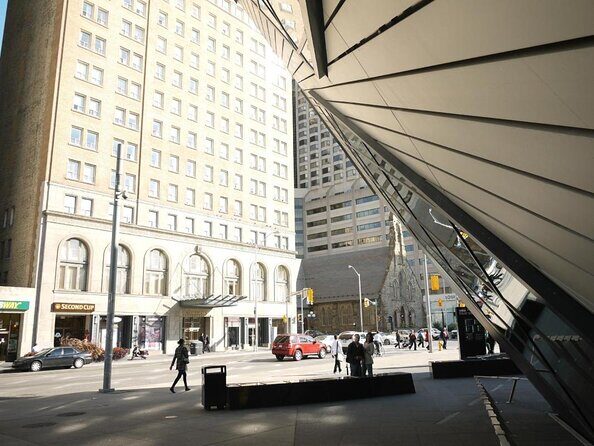
- Small group (max 15): enough people for a lively group, not so many you lose the guide.
- Photo assistance: your guide helps you snap pictures of major landmarks.
- A story for each stop: civic square, hospital heritage, war memorials, and university traditions.
- Real photo targets: statues, major architectural features, and viewpoints built into the route.
- Smart break at Koerner Hall: a built-in pause for washroom and snack.
- Ends at the ROM: you finish at one of Toronto’s most recognizable attractions.
Price and time: what $34.99 buys you in 2 hours
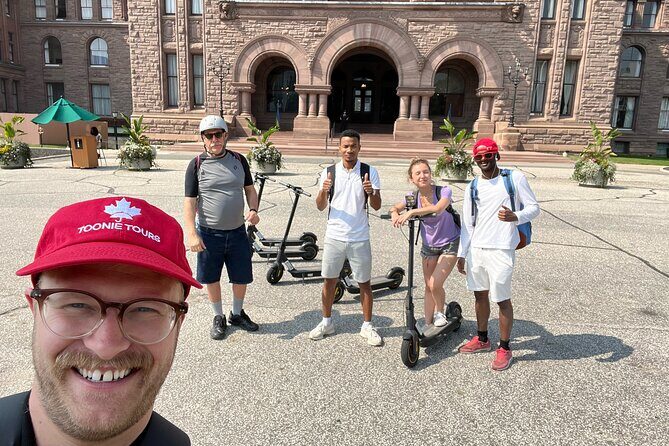
At $34.99 per person, this tour is priced like a “serious orientation walk” rather than a casual stroll. You’re paying for three practical things: a local English-speaking guide, a direct route that keeps you moving efficiently, and tips for the rest of your day in Toronto.
Two hours doesn’t sound long, but the itinerary is tightly packed. Each stop is roughly 10 minutes, which means you’ll get just enough context to understand what you’re looking at before you’re onto the next site. If you’re trying to compress Toronto into a first-day plan, this is a solid format.
You’ll also see that many stops are marked as free admission on the itinerary. That matters, because it keeps the experience from turning into a pile of ticket lines and surprise costs mid-walk.
Other walking tours we've reviewed in Toronto

Nathan Phillips Square: the Toronto sign, the selfies, and the civic pulse
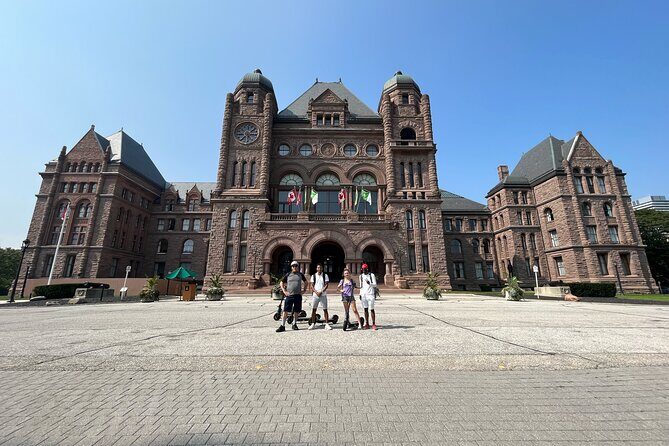
Your tour starts at Nathan Phillips Square on Queen St W (100 Queen St W). If you’ve been to Toronto before, this is the one you’ve likely seen in photos. If you haven’t, it’s the right beginning point—because it’s a civic square that people actually use, not just a backdrop.
This stop is built for the easiest win of the day: the Toronto sign selfie. Your guide will help you time photos so the sign, the surrounding architecture, and the open space all make it into the frame. Beyond the photo, Nathan Phillips Square has a real rhythm—it can fill up with markets, festivals, and protests. That’s part of why it works as a first stop: you’re landing in the city’s public-life zone.
Consideration: if it’s busy (or snowy), give yourself extra minutes. One piece of feedback highlighted how difficult it can be to find the exact meeting point, so arriving early isn’t paranoia—it’s planning.
College Place: a hospital story hidden in architecture and gardens
Next you head to College Place, where the focus is the heritage of Toronto’s General Hospital—specifically the third iteration that once called this area home. The story here is less about today’s celebrity landmarks and more about how the city’s services and institutions evolved.
You’ll learn why this building design is unique, and what the artistic and cultural gardens around the place mean in context. The itinerary also frames this hospital as groundbreaking for its time—described as the most complete and modern hospital in the world during its era. The value for you is simple: you’ll understand the why behind what looks “official” on the outside, instead of treating it like scenery.
If you like your history tied to places you can still see, this stop is a nice pivot from the big-sky civic square feeling.
Queen’s Park: Ontario condensed into one big park

Queen’s Park is where the tour compresses a lot of political and cultural history into a walkable setting. The itinerary describes it as Ontario’s—and Canada’s—history condensed into one large park, and the route supports that idea.
This is also one of the most photo-friendly moments in the day. Expect statues and a major architectural centerpiece you can use as a focal point. A big plus here is that your guide helps you read the symbols and stories around the park—so you’re not just taking pictures of stone, you’re learning what the pieces were meant to represent.
Why it’s worth it: it’s one of those stops where the setting makes the lesson easier. You don’t have to hunt for plaques all afternoon; the guide steers you toward the meaning.
University of Toronto: war memory and a campus walk that changes the pace

From Queen’s Park you move into the University of Toronto area. This part of the tour is about more than campus beauty. It includes the university’s war efforts and the ways it remembers those who paid the ultimate sacrifice.
The stop description even hints at a “two-wheels” feel, which suggests the campus portion may cover ground faster than a slow, purely foot-based walk. Either way, this is the segment where the tour shifts tone: from civic and governmental symbols to education and commemoration.
Practical note: campuses are sprawling. Even if you’re covering a section quickly, wear shoes you can trust. You’ll be walking through a place that’s built for pedestrians, but your focus should stay on the guide’s pointers so you don’t get lost in the scenery.


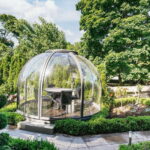



Convocation Hall and Soldiers’ Tower: the emotional architecture
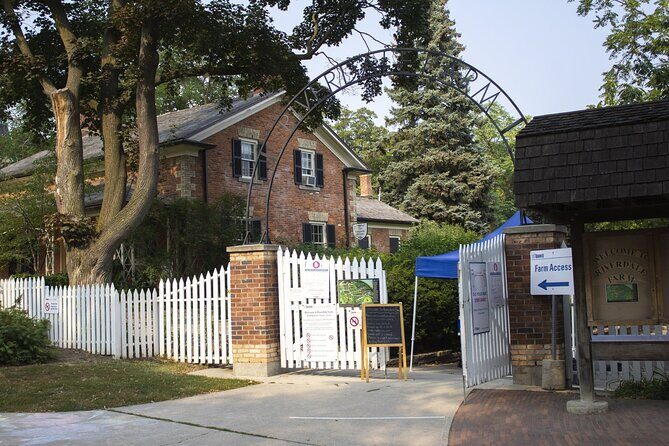
Two of the most memorable stops are paired back-to-back: Convocation Hall and Soldiers’ Tower.
At Convocation Hall, the tour focuses on origins and meaning, including how the building rose after the 1890 fire. You’ll also see how the University honors graduates through what the itinerary calls the Alumni Plaza. This is the kind of stop that rewards attention: the “why” makes the hall feel bigger than a pretty landmark.
Then you move to Soldiers’ Tower, framed as a war memorial for those lost during the First and Second World War. If you want Toronto in human terms, this is where it shows up. The details are focused, and the intent is clear: remembrance made visible in stone and structure.
Balanced perspective: this section can feel heavier than the rest of the tour, but that’s also why it lands. It’s not just a sightseeing day. It’s a civic memory day, with buildings as the book.
Philosopher’s Walk and Koerner Hall: art, culture, and a planned break

Next comes Philosopher’s Walk, a winding path that connects multiple themes: art, history, music, and culture. The itinerary highlights the story behind how the path was built, including what it was built on, and how it links people to cultural life. It’s the kind of stop that changes how you see a campus. Instead of viewing it as a background, you understand the campus as a system of ideas.
Then you reach Koerner Hall, described as the crown jewel of the Royal Conservatory of Music. The focus here is the building’s role in culture and the way new architecture integrates with classic elements. This is where the tour shifts from memorial tone to creativity.
And yes, there’s a very practical perk: this stop is also where you can take a washroom and snack break. That matters more than people think on a two-hour tour. If your next plan involves more walking or meals, you’ll be glad you paused before the day drained you.
If you’re the type who hates rushed bathroom hunts, this built-in pause is a strong reason to choose this tour format.
Royal Ontario Museum: ending with outdoor architecture
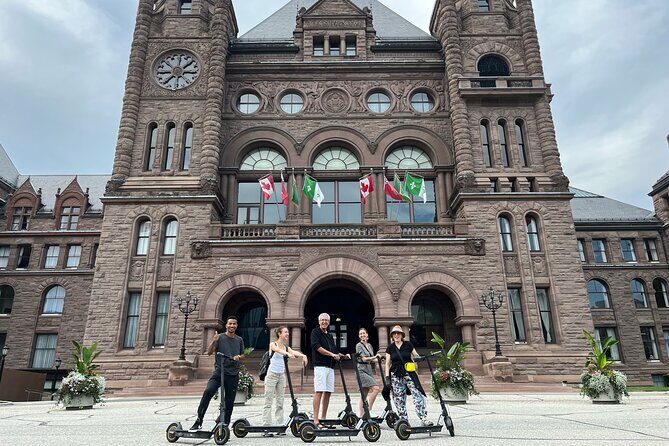
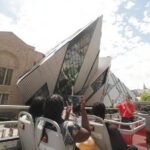
Your tour finishes at the Royal Ontario Museum (100 Queens Park). The itinerary describes this as an outdoor only stop focused on the building’s architecture.
This ending is smart because it avoids the time sink of going inside when you have only two hours. By the time you reach the ROM, you’ve already learned how to notice design and symbolism in earlier stops. So even if you’re only seeing the exterior, you’ll be better at reading what you see.
Also, finishing at the ROM helps if you want a clean next step. You can stay nearby for more time in the area, rather than starting a completely new commute immediately after.
What you’ll learn (and what the best guides actually do)
The biggest value here isn’t a list of facts. It’s how the guide turns the buildings into understandable stories. The itinerary promises passionately researched history and culture, but the real-world difference shows up in interaction.
In feedback, guides like Joel, Tai, Wei-Ting, and Joshua are praised for staying engaging, mixing humor with history, and adapting to what the group cares about. That’s exactly what you want on a first-day tour: not just delivery, but flexibility.
Photo help is another standout. The tour explicitly includes help snapping photos at major landmarks. In practice, that means fewer blurry shots, less standing around guessing angles, and more time enjoying what’s in front of you.
One caution, based on feedback: if English is a second language for you, communication smoothness can vary by guide. For most people it’ll be fine, but if you’re very sensitive to language barriers, consider that.
Logistics that matter more than you think
Even though this is a straightforward route, a few details help you enjoy it instead of wrestling it.
- Group size: max 15 means you should be able to hear and ask questions, but still expect to move at a tour pace.
- Mobile ticket: make sure your phone battery is reliable. You don’t want a ticket screen problem at the first stop.
- Near public transportation: planning your arrival and departure is easier because you can connect without relying on one specific route.
- Meeting spot visibility: Nathan Phillips Square is large. If it’s crowded, give yourself extra time so you’re not scanning for the guide in the last minute.
And keep in mind: this tour is often booked about 32 days in advance on average. If your dates are set, don’t wait until the last week.
Who should book this tour?
This is a great fit if you want:
- an easy first-day orientation to Toronto’s civic and university core
- a history-with-architecture style experience
- photo moments that aren’t left to chance
- a guided plan that saves you from jumping between far-apart areas
It’s also a good choice if you like structured walking with clear stop points and short bursts of context.
You might choose something else if:
- you dislike any commemorative content (Soldiers’ Tower and the war efforts topic are part of the itinerary)
- you need a totally free-form walk where you control every stop
- you strongly prefer going inside museums/buildings (this route is mostly about seeing and learning from the outside, and the ROM portion is described as outdoor only)
Should you book the Toronto Discovery District 2hr Walking Tour?
If you’re asking whether this delivers value, here’s my take: yes, it’s worth booking for the right traveler. At $34.99 for about 2 hours, you’re getting a guided route through major institutions, with photo support, and lots of chances to ask questions in a small group.
Book it if you want to leave with a better mental map of downtown Toronto—why certain places exist, what they stand for, and where to head next. The finish at the Royal Ontario Museum is a convenient capstone if you’re continuing your day nearby.
If you’re the kind of person who needs deep museum time instead of stop-and-story pacing, you may find the format a bit quick. But for an efficient, guided “Toronto core in a nutshell” plan, this tour checks the boxes.
FAQ
FAQ
How long is the Toronto Discovery District walking tour?
The tour lasts about 2 hours.
What is the price per person?
The price is $34.99 per person.
How big is the group?
The tour has a maximum of 15 travelers.
Where does the tour start and end?
It starts at Nathan Phillips Square, 100 Queen St W, Toronto, ON M5H 2N3, Canada, and ends at the Royal Ontario Museum, 100 Queens Park, Toronto, ON M5S 2C6, Canada.
Is the tour offered in English?
Yes. The tour is offered in English with a local English-speaking guide.
Is admission included at the stops?
The itinerary lists admission tickets as free at the stops, and the Royal Ontario Museum stop is described as outdoor only.
Is there a restroom or snack break during the tour?
Yes. There’s a washroom and snack break at Koerner Hall.
Does the guide help with photos?
Yes. The guide helps you snap photos of Toronto’s most popular landmarks.
Can I cancel for a full refund?
Yes. You can cancel up to 24 hours before the experience for a full refund.