REVIEW · TORONTO
Private Toronto City Highlights Walking Tour
Book on Viator →Operated by Vancouver Toonie Tours Ltd. · Bookable on Viator
Toronto’s downtown tells its story on foot.
This private walking tour strings together major sights and the in-between places that make Toronto feel real. I like how the route mixes big landmarks with small “how did they do that?” details, so you don’t just see buildings—you understand them. The walk is also a quick way to get your bearings if you only have a day or two.
Two things I really like: you move at a human pace with a guide who shares practical context at each stop (not just dates), and you cover a lot of ground without the stress of transit transfers. The itinerary leans on free, outdoor-view style stops, so you can keep your day flexible. One watch-out: it’s a lot of stops in 2–3 hours, so wear comfortable shoes and be ready to walk.
In This Review
- Key things to know before you go
- A fast, smart way to orient yourself in Toronto
- Berczy Park: start whimsical, learn something specific
- The Gooderham (Flatiron) Building: Toronto’s “how did they build that?”
- Old Toronto: facades, film vibes, and a quick history lesson
- The Financial District: the “small decisions” behind big towers
- The PATH: your shortcut through downtown
- Old City Hall: Renaissance details you can actually spot
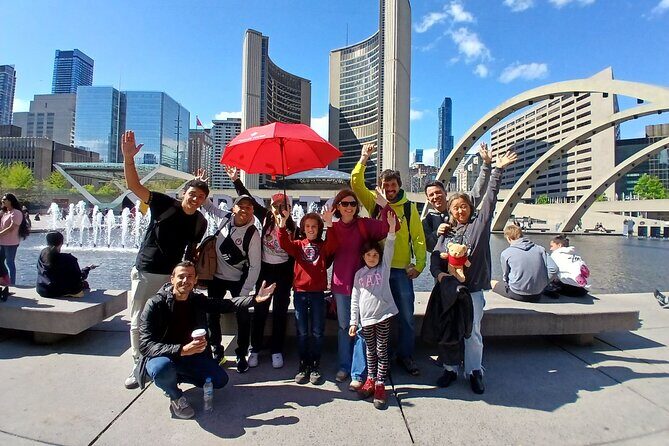
- Toronto City Hall: still a public space, still active
- Campbell House Museum area: early Toronto without the inside commitment
- Entertainment District: murals, music venues, and theatre energy
- David Pecaut Square and the Terry Fox stop that lands
- Nathan Phillips Square: Toronto Sign photo time plus a real break
- Brookfield Place: high ceilings and hockey history nearby
- Roy Thomson Hall and the Royal Alexandra Theatre: theatre architecture you can feel
- TIFF Bell Lightbox: film festival energy on a schedule
- Hockey Hall of Fame: memorabilia and the Stanley Cup draw
- Toronto Union: the transit hub that shapes how you move
- CN Tower: the final skyline moment with your best photo angles
- Price and value: why $149 for a small private group can make sense
- Who this tour fits best
- Should you book this private Toronto highlights walk?
- FAQ
- How long is the Private Toronto City Highlights Walking Tour?
- What does the tour cost?
- Where does the tour start and end?
- Is this tour private?
- What languages are available?
- How do I get my ticket?
- Are there admissions fees during the tour?
- Is there a restroom stop?
- What kind of weather do you need?
- Can I bring a service animal?
- How far in advance is it usually booked?
Key things to know before you go
- Private pace, public sights: It’s just your group, yet you’re seeing Toronto’s best-known streets and facades.
- Architecture nerd stops: Berczy Park, the Gooderham Flatiron building, and Old City Hall each come with specific details you’ll spot after the talk.
- The PATH underground connection: You get a guided intro to Toronto’s underground link between major downtown blocks.
- A thoughtful emotional stop: David Pecaut Square includes the Eternal Flame of Hope for the Disabled and Terry Fox context.
- Entertainment District to sports history: The route threads theatre, TIFF, and ends with hockey stops near the Hockey Hall of Fame area.
- Designed for orientation: The day finishes at Union Station, which helps you plan what to do next.
A fast, smart way to orient yourself in Toronto
Toronto is big. Downtown can feel like a maze. This tour helps because it’s laid out like a guided map you can actually follow—starting in the eastern downtown core and ending at Union Station. If you’re the type who likes to step outside your hotel and start learning immediately, this fits well.
What also helps is that the stops are mostly outdoors or viewable from the sidewalk. That means you can keep moving even if someone in your group gets hungry or needs a restroom. The one planned break around Nathan Phillips Square gives you time to reset.
And because it’s a private tour, you’re not stuck with a loud group that keeps asking the same question. In the guide reviews, I saw names like Alex, Joel, Mark, and Zak—different people, same idea: stories tied to what you’re looking at right now.
Other walking tours we've reviewed in Toronto

Berczy Park: start whimsical, learn something specific
You begin at Berczy Park on Wellington Street East. The park isn’t just a pretty starting point. It’s a perfect warm-up because the guide typically connects the space to William Berczy and explains how the park came to be.
Then comes the part that makes walking tours worth your time: you’re pointed toward details you’d likely miss on your own. The dog fountain is a standout, and the guide also shares little secrets that only make sense when someone tells you where to look. Even if you’re not usually into parks, this opener sets the pattern for the rest of the day: look closely, then listen.
Practical note: parks make a great first stop because you can stretch your legs before the taller-city core.
The Gooderham (Flatiron) Building: Toronto’s “how did they build that?”
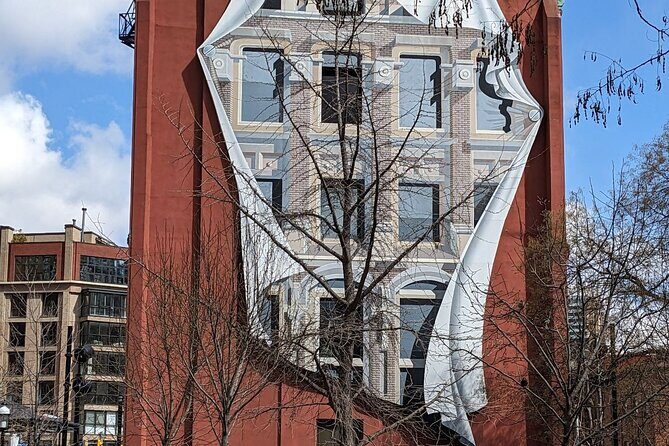
Next you head to the area around the Gooderham (Flatiron) Building, one of Toronto’s most recognizable red-brick silhouettes. Flatiron-style buildings are iconic everywhere, but here the guide focuses on what makes the Gooderham story matter—especially the street-level context around Front Street and how the builders pulled off something that was described as the most expensive building in Canada in the year it was built.
If you’re into architecture, this stop is satisfying because it’s not vague praise. You get a reason behind the shape and a sense of how downtown commerce drove these ambitious projects.
If you’re not an architecture person, that’s fine—this is still a good photo stop because the geometry works from multiple angles.
Old Toronto: facades, film vibes, and a quick history lesson
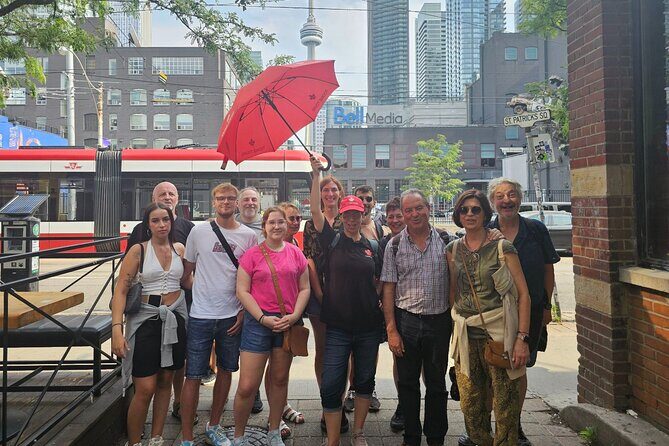
Then the tour turns toward Old Toronto, where building facades carry a lot of stories at street level. The highlight here is the Old Toronto Post Office area. The guide points out the building’s presence and may mention that it sometimes feels like it’s playing a role in film or TV production.
The best part of this section is that you’re not just told history—you’re taught how to read the neighborhood. Facades become clues: what type of building it is, why it looks the way it does, and what that says about Toronto’s growth.
Drawback to consider: you’ll move quickly through this area. If you like to linger and fully explore inside neighborhoods, you may want to add extra time later on your own after the tour ends.
The Financial District: the “small decisions” behind big towers
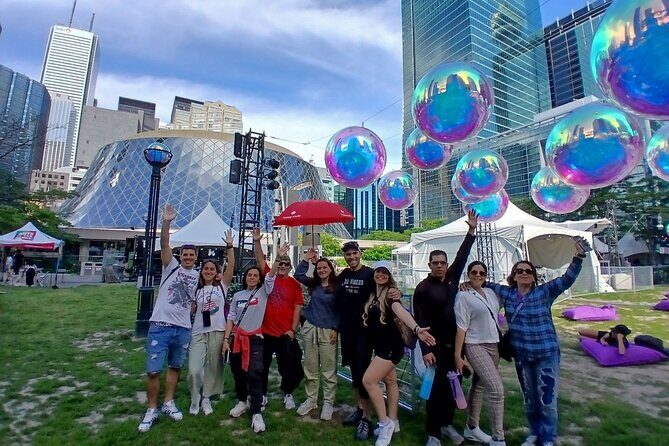
Next up is the Financial District, where skyscrapers take over the skyline. The guide brings the area to life by connecting the office block vibe to the banks that call these blocks home, and then zooms in on something oddly specific: window tint colors and the choices made within these downtown blocks.
You’ll also hear about the sound and feel of tall-city construction—like how metalwork and finishes interact with the skyline. It makes the district feel less like generic downtown and more like a designed system.
If you’ve ever wondered why cities don’t look the same even when they share a skyline style, this stop helps. It’s where you understand that tiny planning decisions shape the look of everything.
Other city tours we've reviewed in Toronto



The PATH: your shortcut through downtown
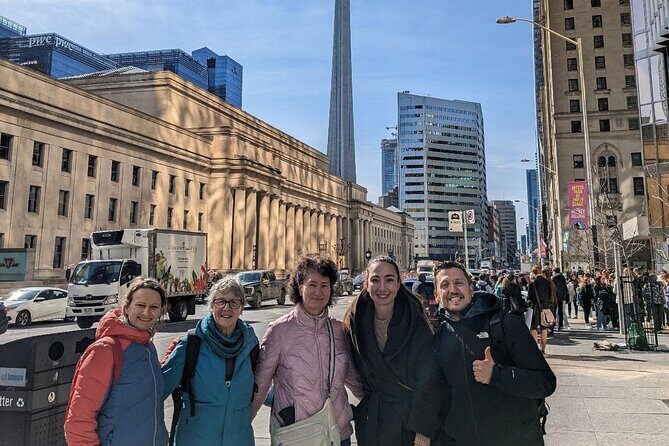
One of the most useful parts of Toronto for visitors is the underground system called The PATH. You move underground near Commerce Court and enter the network that links a lot of downtown.
The guide explains that PATH sections connect through different building owners, which is why the styles can vary as you walk. Even if you never go far into it on your own, just learning the idea makes future wandering easier. It turns the downtown core from intimidating to manageable.
Practical value: if you visit in cooler months—or if it’s raining—you’ll know where to go to stay comfortable without losing your orientation.
Old City Hall: Renaissance details you can actually spot
Next is Old City Hall, known for Renaissance-style architecture. This is one of those stops where the guide’s job matters a lot. Hidden details can be hard to see from the street, but you’re pointed toward them and given a story about E.J. Lennox and his attitude toward city councilors.
This stop pays off if you like to look for patterns: carvings, proportions, and how the building balances authority with artistic flair.
If you’re short on time elsewhere in Toronto, this is still a solid stop because it’s visually distinctive and the explanation makes it stick.
Toronto City Hall: still a public space, still active
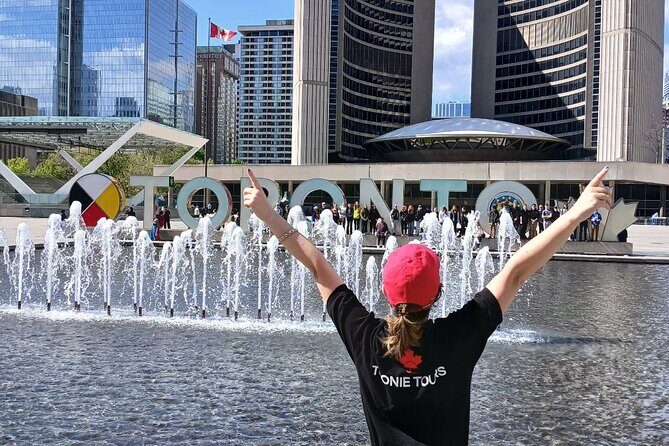
From there you continue to Toronto City Hall to see where public service happens. This stop is more about atmosphere and function than hidden architecture tricks. Still, it matters because it reminds you Toronto isn’t just offices and landmarks—it’s also civic life.
This is also a good “reset moment” between heavier architecture and museum/theatre areas ahead.
Campbell House Museum area: early Toronto without the inside commitment
You reach Campbell House Museum, built in 1822. The tour format here is useful: you get facts and conversation, and even without going inside, you learn what makes the house a key survivor of early Toronto.
The guide also ties in cultural context, including references to maple syrup and a distant Canada Life weather tower, plus stories about Court Justice Campbell.
This stop works well if you don’t want museum crowds today. It also gives you a reason to return later if you’re curious, especially because the museum runs cooking classes.
Trade-off: you’re not touring the interior on this walk, so if you love museum deep cuts, you’ll want to plan a follow-up visit.
Entertainment District: murals, music venues, and theatre energy
Then you enter the Entertainment District, where the street scene changes. Murals and the feel of music venues show up, and you start seeing more theatre-style energy.
The guide talks about nightlife options in a way that helps you decide what kind of evening you want later—dancing and drinks versus theatre shows—without forcing a specific plan.
This section is also where your photography instincts get rewarded, since the CN Tower sometimes peeks into view above the buildings. It’s a nice visual reminder that your final big landmark isn’t far off.
David Pecaut Square and the Terry Fox stop that lands
You pause at David Pecaut Square, centered around the Eternal Flame of Hope for the Disabled. The guide shares context about Terry Fox, including the challenge he faced and how his determination shaped Canada.
This part of the tour is powerful because it’s not trivia. The story connects to real emotion, and the guide’s tone typically makes the square feel like a place worth respecting, not just passing through.
If you prefer upbeat history only, you might find this stop more reflective than the others. But it’s one of the most meaningful moments on the route.
Nathan Phillips Square: Toronto Sign photo time plus a real break
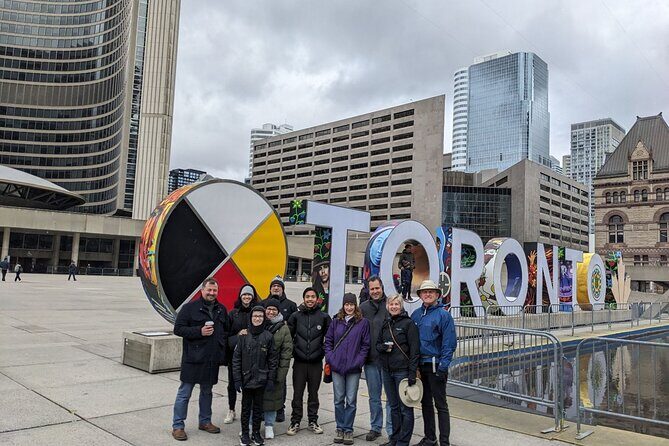
You head to the Toronto Sign at Nathan Phillips Square for a classic candid photo. Then you spend time in the same area so you’re not rushed.
The tour includes a planned chunk for a restroom break and to do light shopping or check out what’s happening around the square. The timing matters because by this point you’ve already walked a lot, and you’ll appreciate not having to guess where to stop.
If you’re traveling with friends or family, this is also where you can regroup easily.
Brookfield Place: high ceilings and hockey history nearby
Next is Brookfield Place, where the setting feels big even at street level. The guide points out the high ceilings, the white arches, and the old banking facade details.
Then the story turns to hockey: you hear about the Hockey Hall of Fame connection and why this area matters for sports in Canada. Even if you don’t go inside today, the context makes the buildings feel tied to something more than business.
One caution: this stop is great for photos, but you’ll want to keep moving. It’s easy to lose time standing in the wrong place for the best shot.
Roy Thomson Hall and the Royal Alexandra Theatre: theatre architecture you can feel
After Brookfield Place, you visit Roy Thomson Hall, known as an intimate concert venue with notable acoustics and as home to the Toronto Symphony Orchestra. Even without a performance, the guide helps you understand why it’s famous.
Then comes the Royal Alexandra Theatre, an opulent beaux arts style building hosting touring plays and musicals. The stop is essential if you like grand historic venues. The building has presence, and the guide’s job is to help you notice that you’re looking at a stage world, not just an exterior.
If your day is packed, these two stops might feel similar to each other. The difference is the vibe: one leans concert hall acoustics, the other leans classic theatre grandeur.
TIFF Bell Lightbox: film festival energy on a schedule
You continue to TIFF Bell Lightbox, where the guide explains this is where the TIFF festival happens. Even if you’re not attending an event, it helps you understand what this building represents in Toronto’s cultural calendar.
This stop is a good bridge between the theatre world and the later sports-history stops. It keeps the day feeling like culture, not just landmarks.
Hockey Hall of Fame: memorabilia and the Stanley Cup draw
Next is Hockey Hall of Fame, presented as a place with an impressive collection of hockey memorabilia, including famous gear and the Stanley Cup, plus interactive games.
Whether or not you go deep during your visit, the guide sets the stage so you’ll know what you’re seeing when you’re there.
If hockey isn’t your thing, don’t panic. The value here is that you’re still getting a sense of why Toronto identity is tied to sport culture.
Toronto Union: the transit hub that shapes how you move
The tour ends near Toronto Union. This is more than a landmark. It’s where you get practical answers about getting around—TTC, GO Train, VIA Rail, or buses—based on your questions.
Union also sits close to Royal York Fairmont, and the guide connects Union’s role to how Toronto and The PATH fit together. That kind of explanation makes it easier for you to plan after the walk.
CN Tower: the final skyline moment with your best photo angles
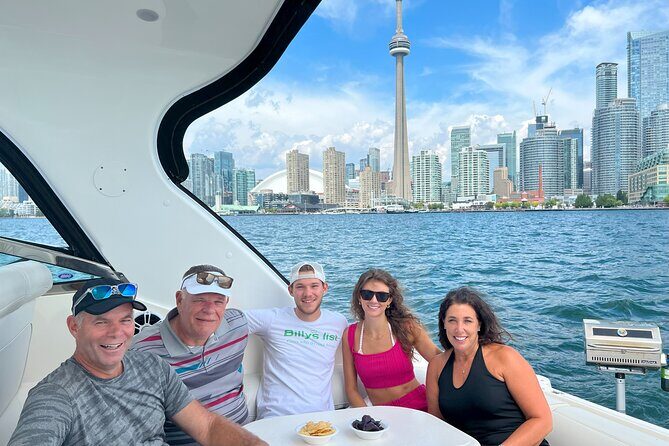
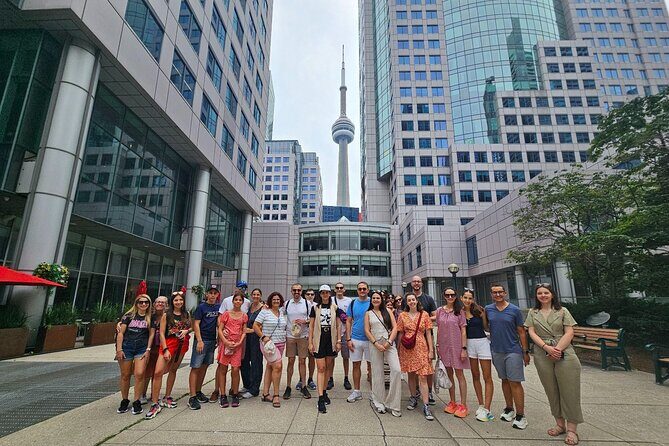
You finish at the CN Tower area. You get the big-picture intro: a landmark tower over 553 metres, plus references to the glass floor and the revolving eatery for panoramic views.
Even if you don’t go up today, you’ll know what makes the place special. The guide also points you toward good candid-photo possibilities, including angles where the tower can look like it photo-bombs you in the best way.
Price and value: why $149 for a small private group can make sense
At $149.00 per group (up to 2), this is a private tour price, not a cheap group bus deal. The value comes from two things you don’t get on standard walking routes:
First, you get a tight route that covers a lot of recognizable downtown space in about 2–3 hours. For short trips, time is the most expensive thing you own.
Second, the tour is structured around guided stops with story-driven details. It’s not just a sightseeing list—it’s the reason you’ll notice the dog fountain detail at Berczy Park or understand the reasoning behind specific architectural choices at places like Old City Hall and the Gooderham Building.
If you’re traveling with a second person, the per-person cost can feel reasonable for the privacy and for the fact that most stops are free to view from public space. If you’re solo, it’s still workable, but you’ll want to judge if you value the private pace enough to pay for it.
Who this tour fits best
This is a great match if you:
- want a guided orientation walk without committing to paid museum entrances
- like architecture, streets, and story-based city history
- want a plan that ends at a major transit hub so you can continue easily
- prefer private group attention over large-group tours
It’s less ideal if you want long museum time, deep interior access, or lots of off-route wandering with zero structure.
Should you book this private Toronto highlights walk?
If you have a limited schedule and you want Toronto to make sense fast, I think it’s a solid yes. The route hits the places you’ll hear about later—Toronto Sign, TIFF Bell Lightbox, the Financial District, Union Station—and it also adds context that helps you recognize what you’re seeing on your own after.
Book it especially if you like walking and you want a guide who can turn facades, parks, and towers into something you’ll remember. Skip it if you hate walking or if you’re hoping for extensive indoor museum time, because this is built as a brisk, stop-and-talk downtown loop.
FAQ
How long is the Private Toronto City Highlights Walking Tour?
It runs about 2 to 3 hours.
What does the tour cost?
The price is $149.00 per group (up to 2).
Where does the tour start and end?
It starts at Berczy Park, 35 Wellington St E, Toronto and ends at Union Station, 55 Front St W, Toronto.
Is this tour private?
Yes. It’s a private tour/activity, so only your group participates.
What languages are available?
The tour is offered in English. If Spanish or Russian is selected, the guide may speak those languages too.
How do I get my ticket?
You receive a mobile ticket.
Are there admissions fees during the tour?
The stops are listed as admission ticket free for the sights included on the route.
Is there a restroom stop?
Yes. There is a planned break at Nathan Phillips Square with time for using the public toilet.
What kind of weather do you need?
This experience requires good weather. If it’s canceled due to poor weather, you’ll be offered a different date or a full refund.
Can I bring a service animal?
Yes. Service animals are allowed.
How far in advance is it usually booked?
On average, it’s booked about 55 days in advance.