Toronto’s Jewish past is on every corner. This private walking tour connects you to the stories behind Toronto’s Jewish neighbourhoods, from early mass immigration to the institutions that shaped daily life. You’ll move through landmarks and streets that feel like a living map of Jewish Toronto history, ending in the heart of Kensington Market.
I especially love how the route is built like a narrative. You don’t just stop at buildings—you learn why people arrived, how government rules affected them, and what communities built in response. The pacing works too: about 2 hours on foot, with short stops that keep the story flowing.
One thing to consider: this tour is strongly focused on the historic older community and what the street looked like then. If you’re hoping for a big look at the present-day Jewish community, you may want to pair this with extra time on your own.
In This Review
- Key things to look for on this Toronto route
- Why this private Jewish walking tour works in 2 hours
- Starting at the Art Gallery of Ontario: setting the immigration scene
- Beverley Street: where immigration becomes street-level institutions
- Learning schools’ histories at 70 D’Arcy St (and why it sticks)
- George Brown House at 186 Beverley: the non-Jewish context that matters
- Walking from Beverley toward Henry St: commercial street history in motion
- 23 Henry St: the Henry Street synagogue story inside Holy Trinity
- Cecil Street: the institutional hub and the mix of politics, school, and entertainment
- Spadina Avenue: the less traditional side, plus the neighbourhood’s commercial engine
- 10 St Andrew St: the Minsker Synagogue and Kensington as a “mini” world
- Who this tour suits best (and who might want to pair it)
- Practical details that affect your experience
- Price and value: what $41.16 gets you in real terms
- Should you book this tour of Toronto’s Jewish streets?
- FAQ
- Where does the tour start and end?
- How long is the private Jewish walking tour?
- Is this tour private?
- What language is the tour offered in?
- Do I need to pay for admission tickets during the tour?
- Is this tour good for people using public transportation?
- What happens if the weather is poor?
- What is the cancellation policy?
Key things to look for on this Toronto route
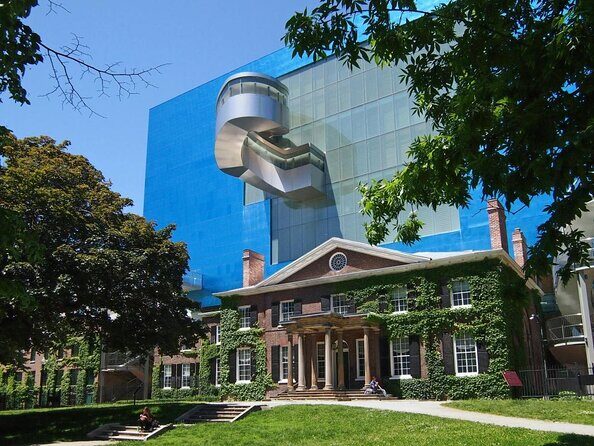
- Art Gallery of Ontario context: you start with the early period of mass immigration and how the community formed.
- Beverley Street immigration policies: you’ll connect street-level sites to the government rules that shaped reactions.
- Synagogue stories in plain sight: including the transformation of the Henry Street synagogue into the Holy Trinity Russian Orthodox Church.
- Cecil Street as an institutional hub: you’ll hear how places of worship, labour politics, and education overlapped.
- Spadina Avenue contrasts: the route shifts from older tradition toward the less traditional side of the neighbourhood.
- Kensington’s “neighbourhood in miniature”: the Minsker Synagogue area helps you picture how the whole district worked.
Why this private Jewish walking tour works in 2 hours
If you only have a small slice of time in Toronto, this format is smart. It’s a private tour, so your guide can slow down where questions pop up and speed up when everyone wants more walking and less talking. And because it’s on foot, you get something you can’t get from a museum-only visit: the sense that history happened on the same streets you’re standing on now.
The other reason it works is structure. The stops are short, but each one points to a different “chapter.” Early immigration and community formation. Then policy and response. Then education and schooling. Then synagogue life, architecture, and the political and social institutions that grew around it. By the time you reach Kensington Market, the neighbourhood stops feeling like random streets and starts feeling like a coherent story.
Price is fair for what you’re getting. At $41.16 per person for about 2 hours, it’s positioned for serious sightseeing rather than a quick photo walk. The value is in the guidance: a trained storyteller can turn a street corner into context—why that building mattered, and what changed over time.
Other private tours in Toronto


Starting at the Art Gallery of Ontario: setting the immigration scene
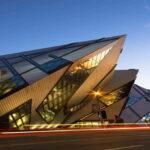
You begin at the Art Gallery of Ontario on Dundas Street West. Admission for this first stop isn’t included, so you’re not paying museum entry fees as part of the tour. The payoff is that your guide uses this area as a historical starting point, pointing you toward the late 19th to early 20th century wave of mass immigration that shaped Toronto’s Jewish community.
This matters because Toronto’s Jewish story can’t be understood as one single “theme.” It’s about movement, rebuilding, and adapting to local rules and local neighbourhood life. Starting with the big picture helps you later interpret what you see on the streets: why certain institutions appear where they do, and why some buildings carry layered meanings.
Drawback? If you strongly prefer mostly outdoors and minimal “intro” time, you might want to plan your expectations. This first stop is brief, though, and it functions like a mental map.
Beverley Street: where immigration becomes street-level institutions
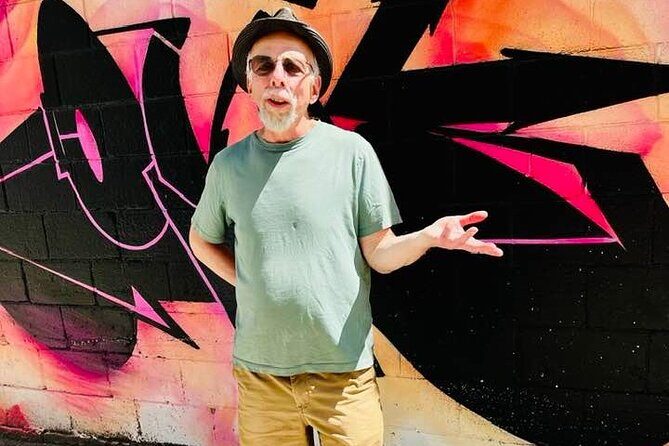
Next you head to 136 Beverley St. This stop is about the original character of the neighbourhood and how Jewish institutions grew as immigrants arrived. The key idea here is community absorption—how newcomers weren’t just passing through, but finding ways to build services, routines, and support.
Then you move to 147 Beverley St. Here the story shifts from community building to government immigration policies and how Jewish people responded. This is where you learn why street-level history is never only about architecture or old signage. It’s also about legal pressure, uncertainty, and practical choices.
If you like social history—who had access to jobs, housing, and safety—these Beverley Street stops are likely to be your favourite. They make the tour feel grounded and real, not just “heritage sightseeing.”
Learning schools’ histories at 70 D’Arcy St (and why it sticks)
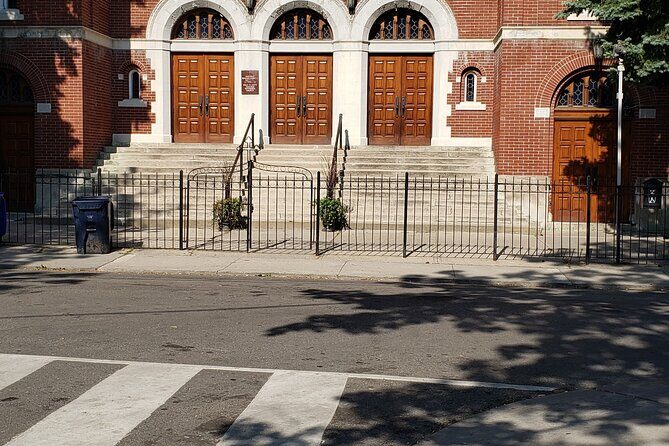
At 70 D’Arcy St, you’re in the orbit of a former Eitz Chaim school. Schools are one of the fastest ways to understand a community’s priorities. Even when you don’t know the neighbourhood yet, a school tells you what mattered enough to plan for.
This stop focuses on colourful characters in the school’s history. That phrasing is important: it suggests you’ll hear the human side, not only dates and names. A good guide uses these stories to make the past feel personal—what students might have faced, what teachers tried to teach, and how education fit into daily survival and identity.
At a practical level, these educational stops also give you a break from staring at religious buildings. If your travel style is “I want variety, not one theme all the way,” this is a nice balance.
George Brown House at 186 Beverley: the non-Jewish context that matters
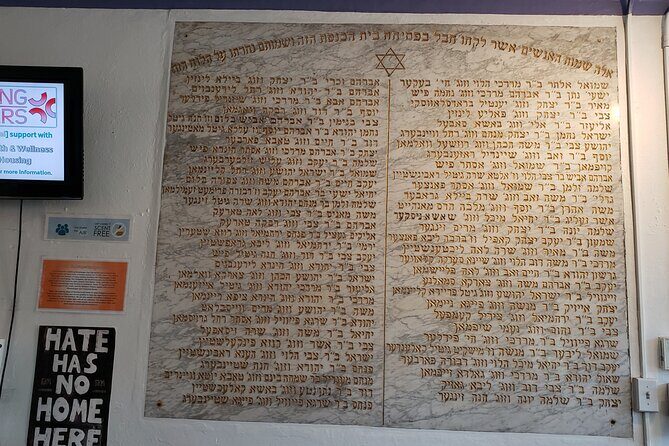
186 Beverley St brings you to the George Brown House. The tour doesn’t treat Jewish history as isolated. Instead, it adds a non-Jewish Canadian context and points to the Jewish history of the public school next door.
This is one of those moments where the tour becomes more useful for real life. Communities don’t exist in a bubble, and schools are a shared civic space. When your guide connects the Jewish story to the broader public setting, you come away understanding the neighbourhood as a whole system—not as separate “silos.”
This can be a small drawback if you were hoping for strictly Jewish-only sites with no wider references. But if you like context, it’s a win.




Walking from Beverley toward Henry St: commercial street history in motion
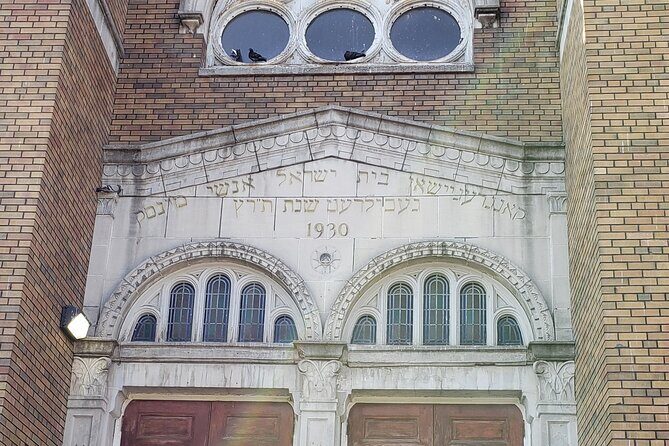
Between stops, you’ll learn interesting details about the commercial history of the street as you move through toward Henry St. This “in-between” walking time is often what makes a walking tour feel like it belongs in a real city.
You’re not stuck in one location long enough to get bored. Instead, the guide uses the direction and street feel—what used to draw people, what storefront life looked like, and how commerce supported community life. For me, this part is where you start to see why the area developed the way it did.
If you’re the type who likes to scan buildings and imagine old crowds, pay attention here. The tour sets you up for better noticing later.
23 Henry St: the Henry Street synagogue story inside Holy Trinity
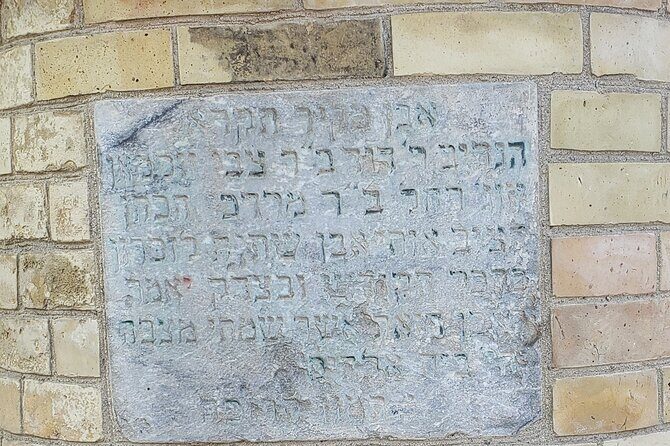
At 23 Henry St, you’ll see Holy Trinity Russian Orthodox Church, formerly the Henry Street synagogue. This stop is a standout because it focuses on more than a single religious function. You’ll learn about synagogue architecture, early synagogues, and Toronto’s first Jewish architects.
The deeper value is in the transformation. A building changing hands is never just a switch of names—it reflects demographic shifts, community needs, and how urban Toronto evolved. When a guide connects the architecture to the story, the walls stop being “old stone” and start being evidence.
Admission is listed as free for this stop, which makes this a good value moment. You get the interpretive story without extra ticket costs.
Cecil Street: the institutional hub and the mix of politics, school, and entertainment
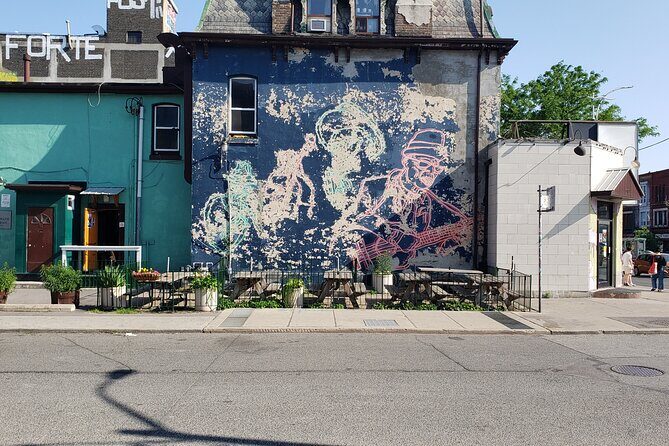
Cecil Street is where the tour becomes dense—in a good way. You’ll hear about the rabbi of the Henry Street Synagogue, and you’ll get an introduction to Cecil Street as an institutional hub of the older Jewish community.
Then the route becomes more specific. At 24 Cecil Street, you learn about the Labour Zionist HQ and school, plus how its later political history played out. At 33–58 Cecil Street, you’ll get an overview of the Jewish organizations and institutions once housed there. This stretch helps you picture what “community” meant beyond worship: schooling, politics, support networks, and social life.
One of the most interesting stops here is the Cecil Street Community Centre, described in the tour as having a past as a synagogue and a centre for traditional entertainment. That’s a key point. Community centres and entertainment spaces weren’t side projects—they were part of cultural continuity.
If you prefer your history to include ideas and debate—not only prayer services—Cecil Street will satisfy you.
Time-wise, this is one of the longer segments at about 24 minutes, so it’s worth being comfortable walking and listening without needing frequent breaks.
Spadina Avenue: the less traditional side, plus the neighbourhood’s commercial engine
Then you shift to Spadina Avenue, and the tone changes. Northbound from Cecil St to the El Mocambo, the tour looks at the less traditional side of the neighbourhood. You’ll hear about Spadina Avenue cowboys of the 1930s and ’40s—a reminder that the area’s identity wasn’t only shaped by one cultural lane.
On the way southbound back to Cecil Street, the guide highlights Grossman’s Tavern and the commercial development on the street, plus the Spadina music scene. This is where you see how old community spaces can evolve while still keeping a link to their roots.
Then you’ll consider how Kensington became a market, tied to Spadina’s west side at Baldwin Street. The tour also focuses on the stretch between Dundas and St. Andrew St, including Yiddish theatre, delicatessens, dairy restaurants, and the history of the hat trick.
That mix of food, entertainment, and local commerce is not random. It’s how communities keep going day after day—through shops, shows, and social routines. If you like the everyday texture of cities, this segment may be the most fun.
10 St Andrew St: the Minsker Synagogue and Kensington as a “mini” world
Your final major stop is 10 St Andrew St, the Minsker Synagogue. Here the guide uses St Andrew St like a neighbourhood-in-miniature. That framing is useful. It encourages you to look at one street and understand what the wider Kensington area was doing culturally and socially.
You’ll also learn about the Labour Lyceum across the street and the synagogue’s history as the first in the Kensington area. The point isn’t only the synagogue itself. It’s how religion, labour education, and political life could sit side by side and support the same community.
This is one of the best places to slow down your thinking. Your route ends in the heart of Kensington Market at the corner of Kensington Ave and St Andrew St, so after listening you can keep wandering with a better sense of what you’re actually looking at.
Who this tour suits best (and who might want to pair it)
This is ideal for you if:
- You like walking tours with real narrative structure, not just stops for photos.
- You want Toronto-specific Jewish history, tied directly to streets and institutions.
- You enjoy social history: immigration policy, schools, organizations, and how people built support systems.
It might be less ideal if:
- You mainly want present-day community life and current institutions. This walk is geared toward older neighbourhood structures and what they represented at the time.
- You prefer lots of museum time or inside exhibits. This experience is built for outdoors and street-level learning.
A smart pairing if you have extra hours: spend time in Kensington Market after the tour. You’ll know what to look for—Yiddish theatre references, old commercial rhythms, and why the area became a market rather than just a place to shop.
Practical details that affect your experience
This is offered in English, and it’s a private tour, meaning only your group participates. You’ll get a mobile ticket, and service animals are allowed. It’s also near public transportation, which matters if you want easy return plans.
Duration is about 2 hours. That’s a sweet spot. Long enough to connect the dots across the neighbourhood, short enough to do without burning your whole day.
The one practical warning: it requires good weather. Toronto weather can change quickly, so plan layers. If the tour cancels for poor weather, you’re offered a different date or a full refund.
Price and value: what $41.16 gets you in real terms
At $41.16 per person for around 2 hours, you’re paying for interpretation. This isn’t just “show up and walk.” You’re paying for a guide who can explain why a former synagogue became an Orthodox church, why Cecil Street mattered for political and educational life, and how immigration policy shaped the neighbourhood.
That’s also why the tour’s design works as value: you cover multiple key areas—AGO area context, Beverley Street, Henry Street, Cecil Street, Spadina, and St Andrew St—without adding extra ticket costs for most stops. The AGO stop lists admission as not included, but other stops are indicated as free, which helps keep the total cost predictable.
In a city like Toronto, guided walking value comes from time compression. A self-guided stroll might take you past the same streets, but you’d miss the connections. Here, the connections are the product.
Should you book this tour of Toronto’s Jewish streets?
I’d book it if you want a focused, street-level way to understand historic Jewish Toronto, especially the older neighbourhood core around Henry Street, Cecil Street, and Kensington. The route is designed to make you feel the logic of the community: immigration, institutions, education, synagogue life, and the commercial and cultural texture that kept it going.
I would not book it as your only plan if your main goal is the present-day community. This tour is best for history and context. If you also want current perspectives, plan a separate activity afterward (like visiting modern community sites on your own schedule).
Bottom line: for the price, the time, and the amount of story you get per block, this is a strong choice for first-time visitors who want more than a photo stop.
FAQ
Where does the tour start and end?
It starts at the Art Gallery of Ontario at 317 Dundas St W, Toronto, ON M5T 1G4. It ends at 57 Kensington Ave, Toronto, ON M5T 1K6, at the corner of Kensington Ave and St Andrew St.
How long is the private Jewish walking tour?
The tour lasts about 2 hours.
Is this tour private?
Yes. It’s a private tour/activity, and only your group participates.
What language is the tour offered in?
The tour is offered in English.
Do I need to pay for admission tickets during the tour?
Admission is not included for the Art Gallery of Ontario stop. The other listed stops have admission marked as free.
Is this tour good for people using public transportation?
Yes. It’s near public transportation.
What happens if the weather is poor?
The experience requires good weather. If it’s canceled due to poor weather, you’ll be offered a different date or a full refund.
What is the cancellation policy?
You can cancel for a full refund up to 24 hours in advance. If you cancel less than 24 hours before the start time, the amount paid will not be refunded.