Toronto clicks into place on this walk. This small-group tour is made for people who want to skip planning and just follow a guide through key downtown sights, from the Toronto Sign area onward.
I especially love the skip-maps approach. You get the what-and-why as you walk, so you spend less time figuring things out and more time looking up at the architecture.
My second big plus is the mix of indoor and outdoor options. The route includes the PATH underground network, plus stops with free admission, so your money goes mostly to the guide and time-saving route, not ticket fees.
One thing to consider: it is still a walking tour. You’ll want walking shoes and a moderate fitness level, since the pace is active even though it stays manageable.
In This Review
- Key things that make this tour worth it
- Why a 2-Hour Toronto Starter Walk Works
- City Hall Square and the Toronto Sign: Your Orientation Point
- Old City Hall: Fast Photos, Real Downtown Center
- The PATH Underground: Warm, Dry, and Efficient
- Hockey Hall of Fame: The Canada Theme Stop
- Brookfield Place and the Allan Lambert Galleria: Architecture Details in Motion
- The Financial District: Skyline Views and Public Art
- Toronto Union: A Beaux-Arts Landmark at the Center of Transit
- Berczy Park and the Dog Fountain: A Fun Pause Mid-Walk
- Gooderham (Flatiron) Building: The Classic Toronto Shape
- St. Lawrence Market: Lunch-Time Stop With Real Local Choices
- Price, Group Size, and Timing: When $27.04 Feels Right
- Should You Book This Toronto Like a Local Tour?
- FAQ
- How long is the tour?
- How large is the group?
- What language is the tour offered in?
- What tickets or admissions are included?
- Is it walking the whole time?
- Does weather affect the tour?
- Does it run at different times during the day?
- What happens if I book close to my travel date?
- What is the cancellation policy?
Key things that make this tour worth it
- Small group size (max 18): easier Q&A and less crowd stress.
- Free-entry stops: you hit major landmarks without paying separate admissions.
- PATH for warmth and weather cover: the route helps on cold days and rain.
- A tight downtown loop: you see a lot without spending the day commuting.
- Food stop at St. Lawrence Market: it’s not just sightseeing, it’s practical lunch time.
Why a 2-Hour Toronto Starter Walk Works
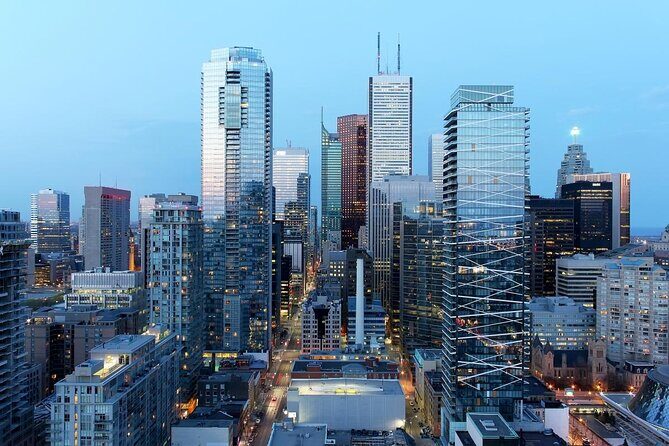
Toronto can feel spread out, especially downtown where the streets, transit hubs, and waterfront-facing towers all blend together. This tour is built to fix that. In about 2 hours, you get a guided route through the core sights so you leave with a mental map you can actually use later.
The price is $27.04 per person, and that number matters less than what’s included. The tour lists all fees and taxes, and it pairs that with stops that have free admission. In plain terms: you’re paying mainly for the person who knows where to stand, what to point out, and how to turn a scatter of landmarks into a story you can remember.
This is also a good fit for a lot of trip styles. If you only have one half-day in Toronto, you’ll still get the main downtown hits. If you’re here for a few days, this works as a smart warm-up tour before you tackle neighborhoods on your own.
And because it’s offered in English with a maximum of 18 people, you’re not stuck shouting over a huge busload of noise.
If you're still narrowing it down, here are other tours in Toronto we've reviewed.


City Hall Square and the Toronto Sign: Your Orientation Point
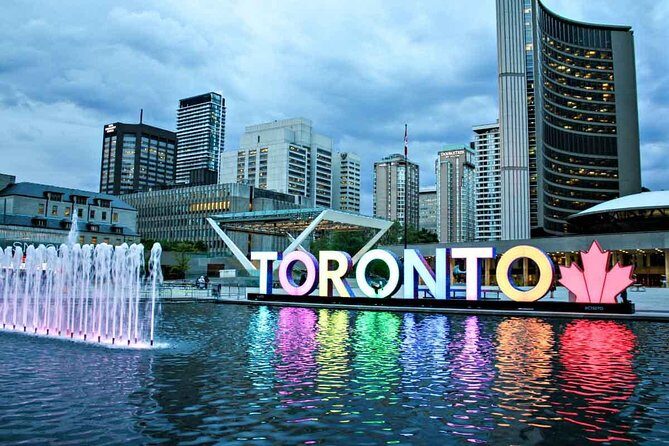
Most Toronto walks start with a photo moment. Here, the starting point is the City Hall square with the Toronto Sign. That matters more than it sounds, because it gives you a clear downtown anchor right away.
From there, you’re set up for quick visual context. City Hall is not just a landmark; it’s a reminder that Toronto’s civic identity sits at the center of the city’s grid. You get that sense of place early, which helps later when you’re tracing the route yourself.
This first stretch is also where you’ll likely get the tone of the guide. On this kind of tour, the first few minutes are usually about pacing and how they’ll handle questions. If you’re the kind of person who likes to ask what something used to be or why it looks the way it does, this is where you’ll see how comfortable they are answering in real time.
Old City Hall: Fast Photos, Real Downtown Center
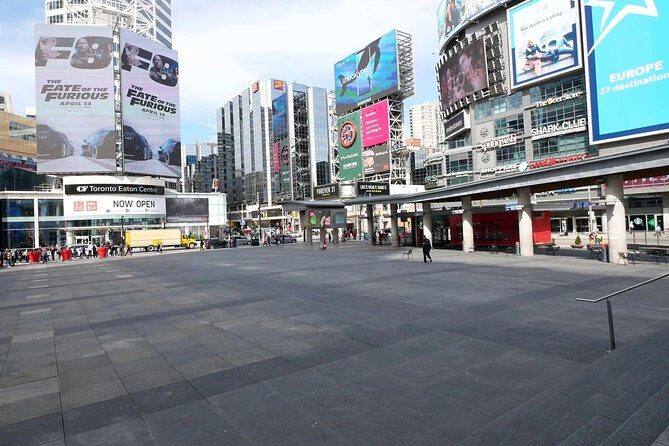
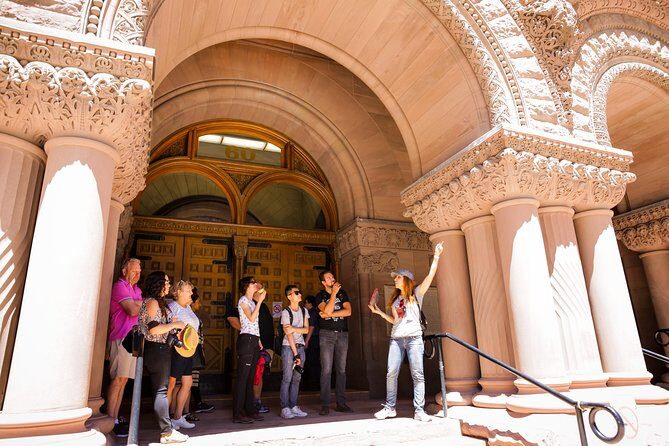
The first stop is Old City Hall, a classic building in the heart of downtown. The time here is short, about 5 minutes, so it’s not the “linger and learn for an hour” kind of stop.
That’s a good thing for most people. A short stop keeps the tour moving, and you’ll still get the key details without needing a full museum mindset. If you like architecture and street-level history, you’ll appreciate how the guide frames the building in the context of the area around it.
The main consideration is simple: because it’s central, this area can have foot traffic. Plan to watch your step and keep close to the group while you look. If you’re hoping for a super quiet photo, you may not get it right away, but you will get a meaningful first taste.
The PATH Underground: Warm, Dry, and Efficient
Toronto winters are real. And even in milder months, weather can turn fast. That’s why including the PATH is such a practical move.
You’ll spend about 10 minutes here, and it’s time well used because it does two things:
- keeps the walk comfortable when the air outside bites
- helps you move through downtown without dealing with every street crossing at once
The PATH can feel like a maze if you’re doing it alone. On a guided tour, you don’t have to worry about which corridor connects where, because the guide is managing the flow and timing. It’s also a reminder that Toronto’s downtown life is not just on the sidewalk—there’s a whole layer of city activity underground.
One drawback to note: if you’re the kind of person who hates enclosed spaces, you may find the underground segment a bit less exciting than the outdoor photos. The upside is that it usually buys you comfort and speed.
Hockey Hall of Fame: The Canada Theme Stop
Next up is Hockey Hall of Fame, kept to about 5 minutes with free admission listed for this stop. Even if you’re not a lifelong fan, the name alone tells you why it’s included: hockey is woven into Canadian culture, and downtown is where that story is easy to understand.
This is another example of a short stop that works because it’s contextual. You’re not expected to spend hours inside. Instead, you get a quick framing of why the site matters and what it represents in Toronto’s identity.
If you are a big hockey person, this stop is likely to be a highlight. Guides on this route tend to connect the sport to local history and traditions, and that can turn a brief stop into a memorable one.
If you’re not that into hockey, you might still enjoy it for the cultural spotlight. Think of it as a quick lesson in what people here care about, not just a building to check off.


Brookfield Place and the Allan Lambert Galleria: Architecture Details in Motion
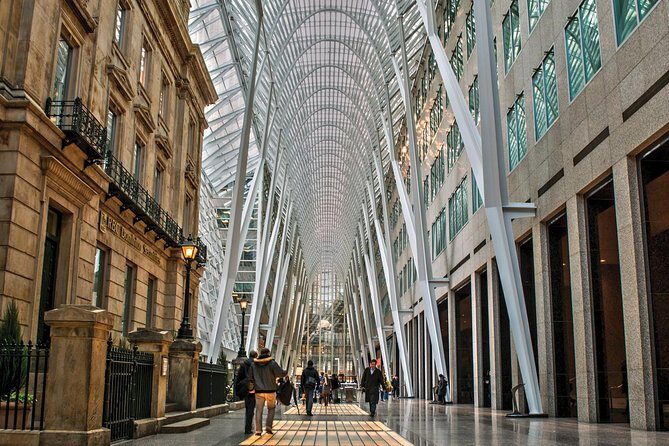
Then you’ll pass Brookfield Place and its Allan Lambert Galleria area. The stop is about 5 minutes, also free admission.
This is the kind of location that rewards looking up. The galleria space and nearby architecture are the sort of places where you’ll notice how downtown Toronto blends polished modern design with older urban energy. Even with limited time, the guide can help you spot what you’d otherwise miss.
Because the stop is short, don’t expect to read every sign or absorb every visual detail. Instead, treat it as a quick orientation point: you’ll learn what this area is, why it’s used, and how it fits into the wider downtown layout.
A practical note: this part of downtown can be busy with office crowds moving through. Keep your focus on where the guide is leading you rather than wandering off to explore every angle.
The Financial District: Skyline Views and Public Art
After that, you’ll move into the Financial District. The stop runs about 5 minutes and focuses on downtown skyline views, including mention of the biggest building in Canada and nearby public art.
This is where the tour becomes a mix of big-picture and small details. In a quick time window, a good guide helps you notice how the skyline changes feel as you walk, not just from one fixed viewpoint.
The main consideration here is weather. If it’s windy or cold, the skyline area can feel sharper than side streets. That’s another reason the PATH segment can help overall comfort. Bring layers and be ready for those quick shifts in exposure.
Toronto Union: A Beaux-Arts Landmark at the Center of Transit

Next you’ll reach Toronto Union Station (about 5 minutes). It’s described as a major transportation hub and the busiest passenger terminal in Canada, with a Beaux-Arts style.
This stop is great because it’s not only about pretty architecture. Union Station is where Toronto’s movement happens. The guide’s job is to help you see the station as a civic structure, not just a place you pass through to get somewhere else.
Union Station also gives you a chance to slow down slightly in your head, even if the tour time stays short. The interior can feel grand, and you’ll usually get a good sense of the building’s design logic: symmetry, materials, and how people flow through the space.
If you’re traveling with tight schedules later, this stop pays off immediately. Even a brief visit makes it easier to find your way back when you’re tired and carrying luggage.
Berczy Park and the Dog Fountain: A Fun Pause Mid-Walk
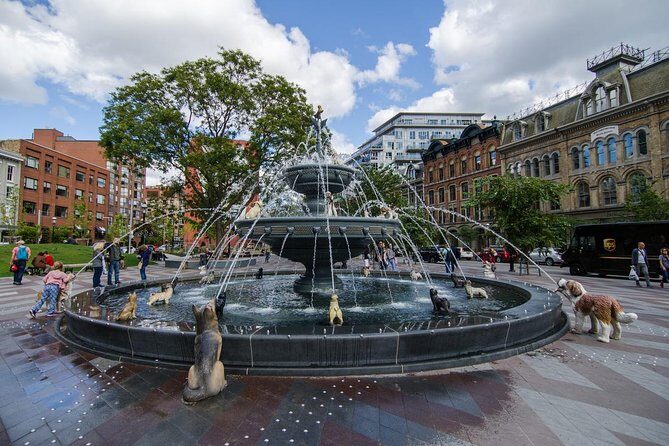
After the station, you’ll stop at Berczy Park, again about 5 minutes, and the highlight is the famous dog fountain.
This is one of those “good for photos, good for smiles” moments. It breaks up the more formal architecture and transit scenes with something playful and local.
It’s also a useful pacing tool. A park stop lets your body reset. If you start feeling the walking in your legs, this is typically where you can take a breath and rehydrate before the final architectural photo stretch.
Gooderham (Flatiron) Building: The Classic Toronto Shape
Then comes Gooderham (Flatiron) Building, the original Flatiron building on Front Street. Time here is about 5 minutes, free admission listed.
This is a “stand where the guide tells you” stop. The Flatiron shape works best from certain angles, and street-level architecture like this can look totally different depending on where you’re standing relative to the road.
Because the stop is short, you’ll likely get just enough time to see the geometry, take a couple of photos, and understand why it’s become a Toronto reference point. Don’t expect a long sit-down; it’s more about seeing the form correctly.
Also, Front Street is active. Keep close to the group and watch for traffic flow when you take photos.
St. Lawrence Market: Lunch-Time Stop With Real Local Choices
The last stop is St. Lawrence Market, Toronto’s oldest food market. It’s about 5 minutes in the tour flow, but it’s the stop where you can turn sightseeing into a practical meal decision.
This is also where the guide’s personal recommendations become especially useful. In this kind of market, knowing what to try can save you from guessing. A specific tip you can act on: ask for the guide’s pick involving peameal bacon. It’s a local classic and an easy way to experience Toronto food without overthinking it.
What you should expect here:
- lots of vendors and ready-to-eat options
- easy follow-on choices after the tour ends
- a chance to linger longer on your own if you want to extend the experience
A consideration: markets can be crowded at lunch hours. If you’re hungry, that’s great. If you need calm and quiet, plan to manage your expectations and keep your eyes on your feet while moving through stalls.
Price, Group Size, and Timing: When $27.04 Feels Right
At $27.04 per person for about 2 hours, this tour is priced like a practical “get oriented fast” experience. The value comes from three things working together:
- free admission stops throughout the route
- a route that keeps you moving efficiently through downtown
- a small group cap of 18, which makes questions and on-the-spot adjustments easier
You’ll also want to pay attention to the schedule availability. The tour offers choice of time slots, which is a big deal if you’re trying to fit Toronto into a day with other plans. It also helps if you’re chasing better weather windows.
Timing detail that can help you plan: the tour is often booked about 43 days in advance on average. That suggests it’s a popular starter experience, so if your trip dates are fixed, don’t wait too long.
You’ll likely receive a mobile ticket, and the tour is near public transportation, so it’s easy to slot in without a complicated logistics headache.
One more practical thing: the tour is designed for people with moderate physical fitness. That’s not a “race” tour, but it’s definitely a walking tour. If your day is packed with other long excursions, consider whether you want this now (to make future navigating easier) or later (when you’re more tired).
Should You Book This Toronto Like a Local Tour?
Yes, I think you should book it if you want an efficient downtown orientation and you care about getting context, not just photos. This is especially worth it if:
- you have limited time and want a high-impact route
- you dislike planning with maps and prefer a guided flow
- you’re traveling in cooler weather or you’re worried about rain, since the PATH is part of how the tour stays comfortable
- you want a real food moment at St. Lawrence Market, with guidance on what to try
Skip it (or at least adjust your expectations) if you’re looking for a long, deep museum-style experience at any single site. This is built for short stops and smart pacing, not for hours of inside time. You’re doing downtown by walking logic: see, understand, and then move on.
If you book, do one simple thing: wear shoes you can trust and bring layers. Toronto weather can change fast, and the comfort of this route shines when you’re dressed for it.
FAQ
How long is the tour?
The tour runs for about 2 hours.
How large is the group?
The group size is capped at 18 travelers.
What language is the tour offered in?
It’s offered in English.
What tickets or admissions are included?
The tour lists free admission tickets for the stops, and it also includes all fees and taxes.
Is it walking the whole time?
It’s a walking tour and calls for moderate physical fitness. The route also includes the PATH underground segment for warmth and comfort.
Does weather affect the tour?
Yes. It requires good weather. If it’s canceled due to poor weather, you’ll be offered a different date or a full refund.
Does it run at different times during the day?
Yes. There’s a choice of time slots, which helps you build a flexible schedule.
What happens if I book close to my travel date?
You’ll get confirmation at booking time unless you book within 6 hours of travel, in which case confirmation is sent as soon as possible based on availability.
What is the cancellation policy?
You can cancel for free up to 24 hours in advance for a full refund. If you cancel less than 24 hours before the start time, the amount paid is not refunded.